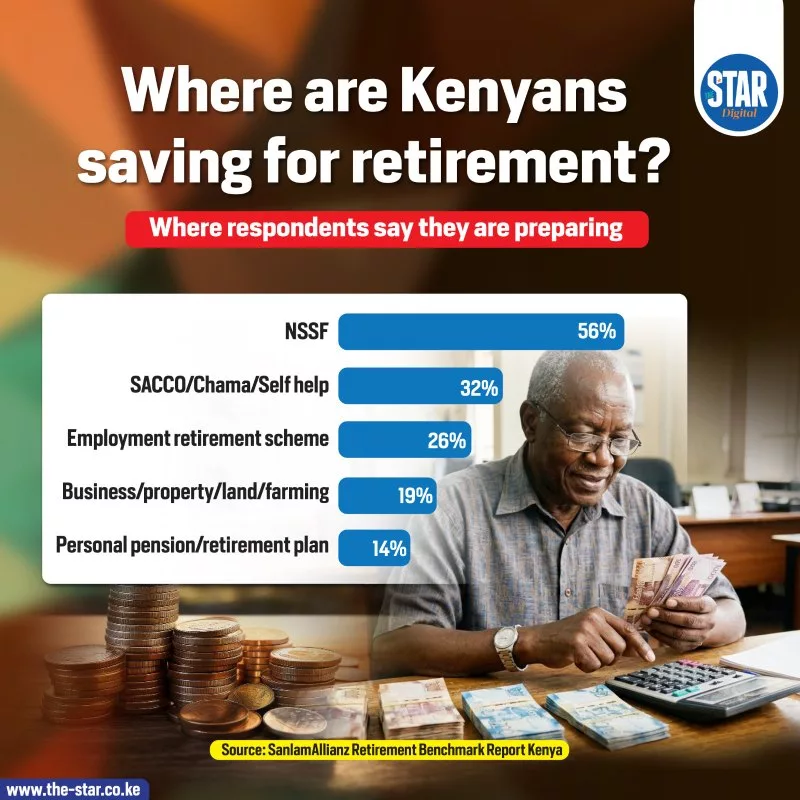
A vast majority of Kenyans rely on state-backed social security, community-based savings groups, and workplace pension plans to prepare for their post-retirement future
The National Social Security Fund (NSSF) stands as the primary retirement channel, with 56 per cent of survey respondents indicating they use it to prepare for retirement
Community and group-driven saving mechanisms also hold a significant share of financial planning
Formal employment-linked savings options continue to play a key role, with 26 per cent of respondents enrolled in workplace retirement schemes
Meanwhile, tangible investment channels—comprising businesses, property, land, and farming—serve as the retirement preparation choice for 19 per cent of surveyed individuals
Individual retirement coverage remains relatively low, as only 14 per cent of respondents report having a personal pension or individual retirement plan
These insights stem from the findings released in the SanlamAllianz Retirement Benchmark Report Kenya, highlighting how citizens balance public institutions, group savings, workplace benefits, real assets, and personal investments to build long-term security