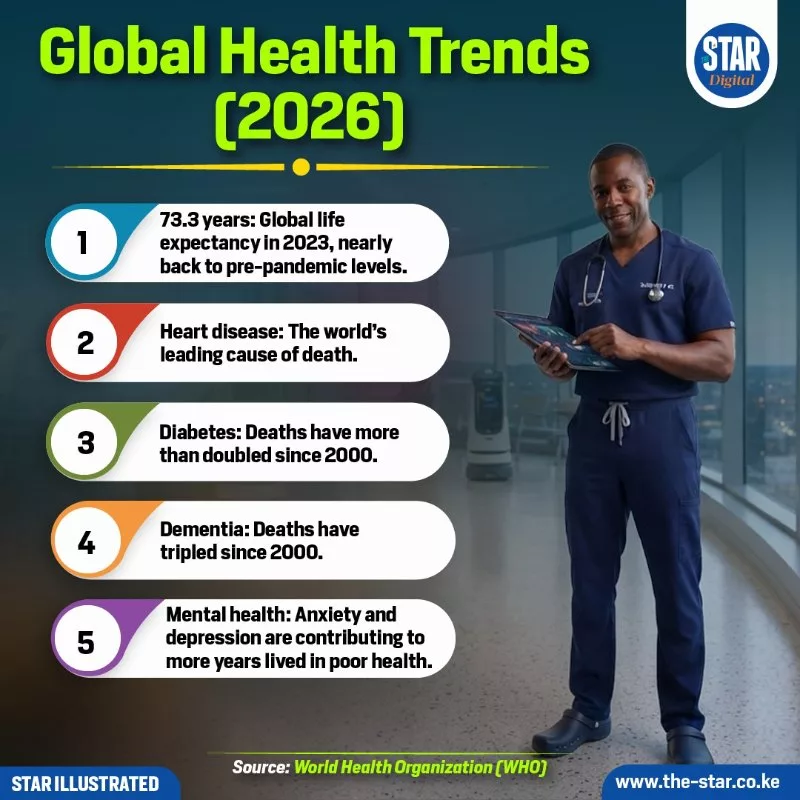
Global health trends reveal a complex landscape where life longevity is rebounding, even as chronic non-communicable diseases and mental health struggles place an increasing burden on populations worldwide. Average global life expectancy reached 73.3 years in 2023, marking a major recovery that brings life spans nearly back to pre-pandemic levels. However, extending life years has come alongside significant shifts in global mortality and morbidity patterns.
Heart disease continues to maintain its position as the world's leading cause of death. At the same time, metabolic and neurological disorders are accelerating rapidly. Fatalities linked to diabetes have more than doubled since the year 2000. Dementia has seen an even steeper rise, with related deaths tripling over the same two-decade period.
In addition to physical illnesses, mental health conditions are increasingly driving global disease burdens. Issues such as anxiety and depression are major contributors to an expanding number of years lived in poor health globally.
Advertisement
Advertisement
These findings, sourced from the World Health Organization (WHO), underline the persistent challenges facing public health systems as longer life expectancies collide with surging rates of chronic conditions and mental health issues.