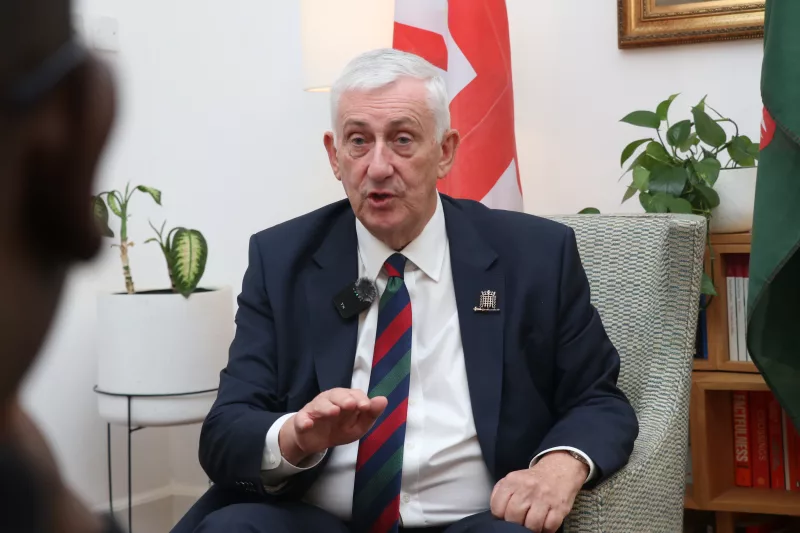
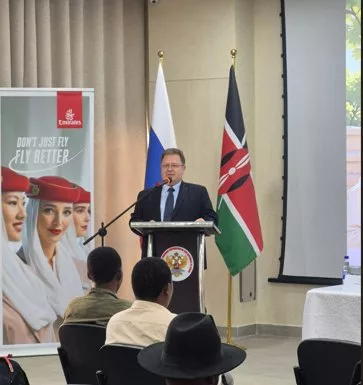
 Russian Ambassador to Kenya Vsevolod Tkachenko /HANDOUT
Three chickens live at the Russian Embassy in Nairobi. They were born in Western Kenya, but their lives took an unexpected turn when they were presented to the Russian Ambassador, Vsevolod Tkachenko, during one of his visits to the region.
The birds now have Russian citizenship, at least according to the ambassador, who says he granted them the unusual status after receiving them as a gift from local residents.
“I was presented with three chickens, which was a very unusual gesture to me,” he said during an interview with the Star at the embassy in Nairobi.
“They are still in the embassy, so I granted them Russian citizenship,” he added, laughing.
It is the kind of story unlikely to appear in a diplomatic communiqué, yet it offers a glimpse into the personal experiences that have shaped Tkachenko’s two years in Kenya.
Beyond official meetings, negotiations and bilateral agreements, the ambassador has been discovering the country through its people, food, music, language and landscapes.
This has been in an unexpected way, through three chickens that have become a memorable part of his diplomatic experience.
For Tkachenko, the gift was more than an unusual addition to the embassy. It represented the warmth of ordinary Kenyans and the personal connections he believes are central to relations between the two countries.
His appreciation of Kenya has also grown through everyday experiences, including discovering that even a familiar staple food can offer something new.
“Before, I thought that ugali is only of a white colour, but when I tried both the white and brown, I did really enjoy,” he said, affirming his words with a nod.
The experience reflects a broader curiosity about a country he has come to appreciate beyond his official responsibilities.
“I like Kenya, the language and the people. I was a Swahili speaker but became limited after years without regular practice,” he said.
His posting in Nairobi has given him an opportunity to revive his Kiswahili and reconnect with a language he once spoke more fluently.
Two of his favourite expressions are ‘hakuna matata’ (no worries) and ‘nzuri’ (good), words that fit the positive outlook he brings to his experiences in Kenya.
“I always say everything is nzuri kwa sababu kila kitu hapa ni nzuri (because everything here is good),” he said.
His enthusiasm extends to Kenyan music, which he regards as one of the most distinctive expressions of the country’s culture.
“You always sing, whether in a good mood, sad mood or even in church, and the emotions come out so clearly,” Tkachenko said.
“Russians are not musically gifted as you are.”
The ambassador is fascinated by how Kenyans use music to express their emotions in different settings.
He admires the diversity of performers and the vibrancy of the country’s cultural scene, although he acknowledges that he has not had enough time to experience all its traditions.
From the Swahili culture of the Coast to the traditions of Nyanza, Turkana and the Maasai, he sees a country with many distinct cultural identities.
That diversity is one reason he continues to travel whenever his diplomatic schedule permits.
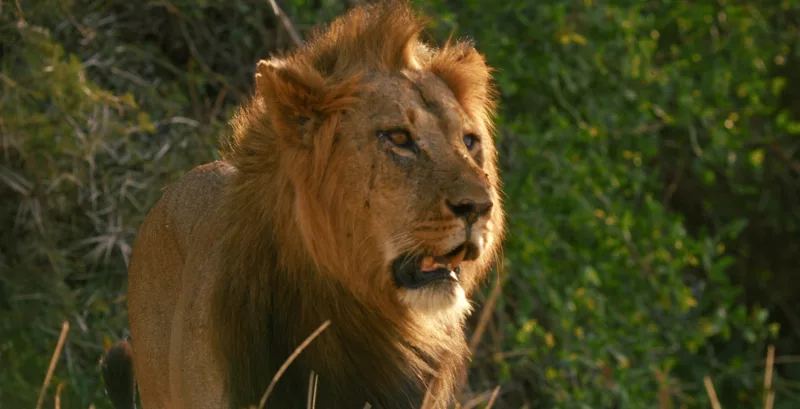
He has visited five national parks and hopes to explore more of the country. Diani and the Kenyan coastline have left a particularly strong impression on him.
“You are God-blessed that you have such a natural wonder,” he said of the ocean and beaches.
PEOPLE-DRIVEN DIPLOMACY
Among the places he has visited, it is his encounters with ordinary people that appear to have left some of his most personal memories.
During a visit to Western Kenya, Tkachenko travelled through Vihiga, Siaya and Kisumu, meeting officials and residents. It was during this trip that he received the three chickens.
The gift stood out because of its simplicity and the thought behind it.
For the ambassador, its significance lay not in its monetary value but in the gesture itself.
It came from ordinary people in the region, offering a reminder that relationships between countries are also shaped by the people who live in them.
That understanding informs how he approaches his work as Russia’s representative in Kenya.
“Diplomacy is filled with documents, papers and agreements, which is all important, but people-to-people contacts are the most important thing in our relations,” he said.
It is a philosophy that places human connections alongside the formal work of diplomacy.
While agreements provide a framework for cooperation, personal encounters can help people understand one another beyond official positions and national boundaries.
Tkachenko wants Kenya and Russia to build on that foundation as they seek to expand their relationship beyond traditional political ties.
He sees opportunities for greater cooperation in trade, investment, technology, agriculture, energy, education and logistics.
Digitalisation is one area he believes could offer room for collaboration. This includes information technology, smart cities, governance and social services.
Agriculture is another potential area, particularly through Russian expertise in modern technologies that could improve production and help address crop diseases.
Energy also features in his assessment of the opportunities ahead, including Kenya’s nuclear ambitions and renewable power.
“Major Russian e-commerce platforms are also interested in the Kenyan market, potentially opening new routes for Kenyan goods into international markets,” Tkachenko said.
He believes such opportunities will require practical arrangements to translate interest into tangible cooperation.
Better sea and air logistics, for instance, could make trade between the two countries easier. He is also pushing for a joint intergovernmental commission on economic and technological cooperation.
The proposed commission would bring government and business representatives together and provide a clearer framework for long-term projects.
For Tkachenko, stronger economic ties should develop alongside the personal relationships that make cooperation possible.
EDUCATION, CULTURE AS BRIDGES
Education remains another important link between Kenya and Russia.
Russia currently provides 70 government-funded scholarships to Kenyan students each year, while more than 100 other Kenyans are studying there through different arrangements.
Tkachenko said Moscow plans to steadily increase the number of government-funded scholarships.
However, he recognises that sending students abroad is only one part of the process. Graduates must also be able to use their qualifications when they return home.
Recognition of qualifications can become a bureaucratic hurdle, and the embassy is working with Kenyan authorities to address the issue.
Beyond education and economic cooperation, Tkachenko regards cultural exchanges as an essential part of diplomacy.
“We have brought ballet and folk groups to Kenya, while Kenyan artists, athletes and fashion designers have increasingly participated in events in Russia,” the ambassador said.
“Kenyan runners have competed in Russian marathons, young artists have taken part in international cultural events and fashion house KikoRomeo showcased its work at Moscow Fashion Week.”
Such exchanges, he believes, create opportunities for people to encounter one another outside formal diplomatic settings.
Artists, athletes and cultural performers can introduce audiences to aspects of another country that official statements and policy discussions may not fully convey.
“We are diplomats, we are bureaucrats, but we also have a heart and soul,” he said.
That belief runs through his assessment of Kenya-Russia relations. He acknowledges that the two countries may not always share the same views on global issues, but he sees value in maintaining frank discussions and understanding each other.
He also believes the similarities between the two societies are sometimes underestimated.
Family, children, hospitality, honesty and openness are among the values he identifies as common to both Kenyans and Russians.
For him, recognising these shared experiences offers a basis for building relationships even where differences remain.
Despite his affection for Kenya and its people, Tkachenko’s diplomatic life leaves limited room for leisurely exploration.
He says there is rarely a typical working day. Most mornings begin at around 8am, with messages, information, documents and notes to review.
Meetings at the embassy follow, helping the team organise the day's work and plan for the week ahead.
His responsibilities include visits, discussions, bilateral documents and negotiations. Some negotiations can take months because proposals must pass through the bureaucracies of both countries.
“My lunch is ideally between 2pm and 3pm but is frequently sacrificed to meetings and briefings, then evening could be diplomatic receptions, which can make dinner just as unpredictable,” he said.
Kenyan coffee has become an important companion through the demanding schedule. He drinks several cups a day and credits it with helping him remain in good shape.
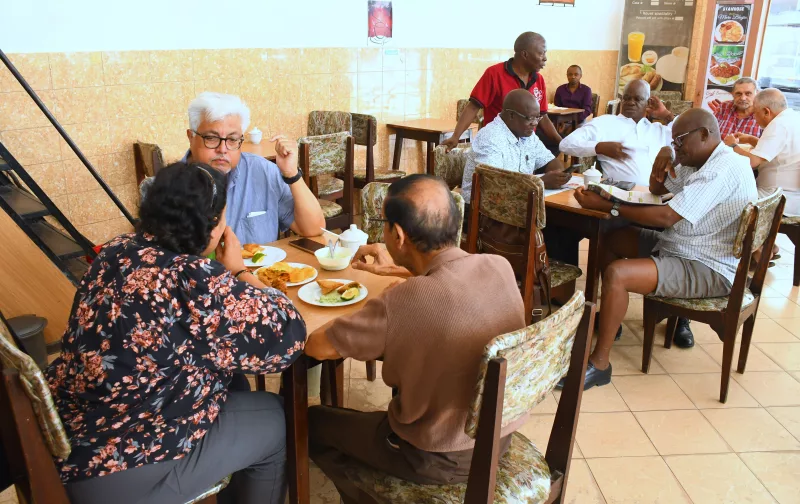
When work allows, he travels around the country and meets friends. These encounters offer him opportunities to learn about Kenyan traditions and ask how people perceive Russians.
He describes the exercise as a kind of mirror impression, allowing him to understand how Russians are viewed through Kenyan eyes.
His curiosity about Kenya also extends to collecting artefacts, coins and stamps.
His collection of Kenyan coins is almost complete, reaching back to earlier periods of the country's history. The collection reflects an interest in Africa that began long before his current posting.
Tkachenko said he has spent almost 40 years of his diplomatic career working on the continent, and his home is filled with African artefacts.
His attachment to Kenya is, therefore, part of a longer professional and personal engagement with Africa.
DISCOVERING RUSSIA
For Kenyans considering a visit to Russia, Tkachenko's advice is straightforward: travel and experience the country for themselves.
“I recommend Moscow and St Petersburg as starting points, with St Petersburg offering museums, palaces and the Hermitage, which houses some of the world’s best-known masterpieces,” he said.
He is, however, keen to point out that Russia extends far beyond its two famous cities.
Stretching about 6,000km from west to east, the country encompasses numerous languages, cultures and religious traditions.
He encourages young Kenyans to approach the country with an open mind.
“Do not to form your entire view of Russia from media reports but travel, meet Russians and experience the country yourselves. You will see for yourself that it breaks down the wrong patterns,” he said.
His advice echoes his own experience in Kenya. Through travel, friendships, food and cultural encounters, he has come to know a country that cannot be fully understood through official meetings or written accounts alone.
The same principle, he believes, can help Kenyans and Russians develop a deeper understanding of each other.
When he eventually leaves Nairobi, Tkachenko hopes his contribution will extend beyond the documents signed and projects negotiated during his tenure.
“I want to leave behind a general atmosphere of mutual sympathy between Russians and Kenyans, alongside a firm legal foundation for future cooperation in trade, investment, technology and other emerging areas,” he said.
It is an ambition that combines the formal and personal sides of diplomacy.
On one hand, he wants to help establish a stronger legal and institutional foundation for trade, investment, technology and other areas of cooperation.
On the other, he hopes to leave behind warmer relations between the people of the two countries.
His experiences in Kenya have given that second ambition a personal dimension.
He has renewed his relationship with Kiswahili, developed an appreciation for both white and brown ugali, grown fascinated by Kenyan music and explored some of the country's landscapes.
He has also built a collection of Kenyan coins and other artefacts that reflects his long-standing interest in Africa.
There are still more national parks to visit, more friends to meet, more Kiswahili to practise and more Kenyan traditions to discover.
Then there are the three chickens.