

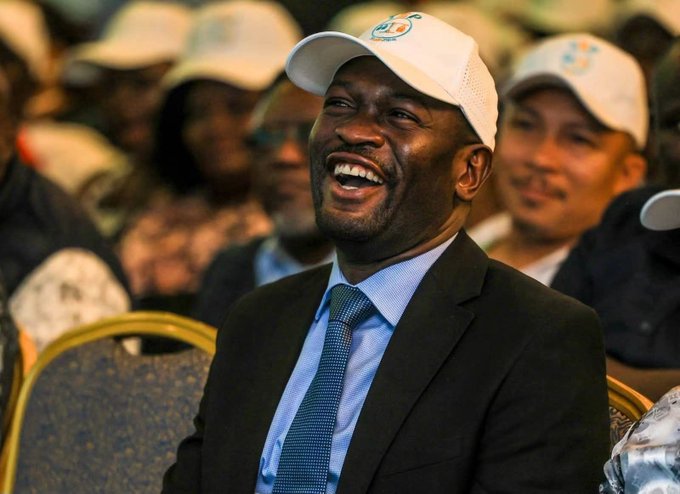
Nairobi Senator Edwin Sifuna’s rise is now a political fact. What remains unsettled is what that rise can deliver in 2027.
The senator’s delicate dance is to nurture the enthusiasm surrounding Linda Mwananchi without allowing either his supporters or political manipulators to confuse popularity with presidential readiness.
The senator last Sunday unveiled the Equitable Party as his political vehicle for the presidency.
When, exactly, did Sifuna become a “thing”? There was no single moment. His appointment as ODM secretary general in 2018 gave him national visibility, but visibility as a party spokesman is different from commanding a following in your own right.
His election as Nairobi senator in 2022 provided another platform. During 2023 and 2024, his Senate interventions and television appearances increasingly attracted attention beyond ODM. He became a recognisable, articulate critic of government whose appeal was beginning to attach to the man rather than merely his office.
The Gen Z protests of 2024 changed the audience. Young Kenyans were demanding accountability outside familiar ethnic and party arrangements. Sifuna’s resistance to ODM’s accommodation with Ruto resonated with citizens who believed the opposition was abandoning its responsibility to hold government accountable.
By February, the attempt to remove him as ODM secretary general and the Linda Mwananchi rallies made something else visible: a personal political following. The earlier period built his audience; this confrontation helped turn that audience into a movement.
That distinction matters because Sifuna did not arrive with a presidential machine painstakingly assembled over decades. His rise reflects his own communication skills and courage, but also public frustration and an opening left by established opposition politics. Those circumstances explain his momentum without proving its electoral destination.
Put another way, were former Prime Minister Raila Odinga still alive, Sifuna’s rise would look very different. He would not command this level of national prominence, and his name would not be appearing alongside the word “president” in serious political conversations.
His most enthusiastic supporters nevertheless regard his momentum as sufficient evidence that he should face Ruto. Their excitement is understandable, but their conclusion runs ahead of the evidence.
A politician can dominate national conversation without commanding a national coalition. Digital mobilisation matters, but presidential elections also require county organisers, money, more money and even more money, voter registration, turnout operations, polling agents and the ability to stay ahead of or outright beat state machinery.
There’s only one time this ever happened, and that was in 2002, though an argument can be made that someone beat state machinery to ascend to the high office in 2022.
In every previous moment when someone came close to the presidency but fell short, that person possessed far more political weaponry than anyone in Sifuna’s position can assemble in the short time left before the election — especially when, right next door, there is at least one figure with a fully stocked arsenal ready to deploy.
On the other hand, there is the inevitable manufactured momentum one cannot but see its manifestation in the public domain. Information from my own political sources leads me to believe some published polls are manipulated by sponsors, including state interests, to promote preferred narratives.
I am not suggesting every poll is fraudulent, but I am suggesting taking every one of them with a grain of salt.
I’ll of course not go even near a Guinness record holder of things like this to say all polling is fake unless my candidate is shown winning.
The danger is that genuine enthusiasm can be amplified into a misleading impression of inevitable victory. Flattery may encourage a rising leader to pursue a separate candidacy that, if launched, would only ensure the incumbent's victory come 2027.
A good reference point is 1992, when Moi smiled back into State House with only about 36 per cent while his opponents were left in tears.
Sifuna should therefore keep building Linda Mwananchi, convert attention into durable organisation and negotiate a fair coalition arrangement. He should neither be bullied into silence nor flattered into a candidacy whose principal beneficiary would be Ruto.
Yes, this Linda Mwananchi is a thing to reckon, but Sifuna must dance in it delicately.
The dance is delicate because the stakes extend beyond his ambitions. His momentum could help defeat Ruto. Mishandled, it could help return him to State House.





