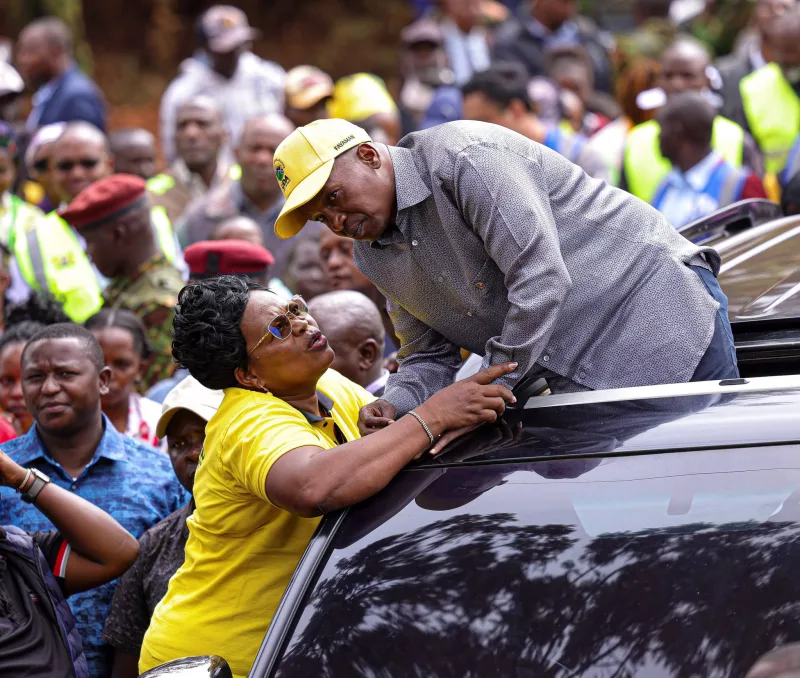
Former Deputy President Rigathi Gachagua’s prolonged absence in the United States has opened a fresh political contest within Mt Kenya.
Rival leaders are trying to shape the region’s political direction as officials of his Democracy for the Citizens Party seek to maintain enthusiasm and momentum at home.
Gachagua is in the US on a 50-day tour that began on August 26. He is expected to return around November 14 when a major welcome and procession through Nairobi is planned.
While he remains active among Kenyans in the diaspora, his absence has left a vacuum, intensifying the contest for influence in Mt Kenya and tested DCP’s ability to stand on its own and increase its strength without his crowd-pulling presence and famous mobilisation skills.
Political analysts say the answer remains complicated, as DCP officials find it difficult to retain relevance, visibility and popularity without Gachagua’s presence on the ground.
While the party continues to hold meetings and political engagements, its public mobilisation appears less intense as rival politicians move to shape the Mt Kenya political narrative.
Political analyst and serving MCA Kung’u Smart told the Star Gachagua has been central to establishing DCP as a significant political force in Mt Kenya and his absence represents a setback for the party.
The former DP’s prolonged absence has opened space other leaders have sought to occupy. Kiharu MP Ndindi Nyoro, leader of People's Party of Kenya (PPK), has emerged as a prominent figure in the Mountain’s shifting terrain. He broke from President William Ruto and left UDA in August, posing a threat to Gachagua as a potential rival centre of power. He is young, lacks Gachagua’s abrasive quality but like Gachagua can count on Mt Kenya votes for one of their own.
“DCP risks making the same mistake as ODM by building too much mobilisation around one individual,” Kung’u said. “Gachagua has been the engine of DCP’s grassroots momentum, and his absence has created a vacuum that leaders such as Ndindi Nyoro are moving to occupy,” Kung’u said.
Nyoro has toured Mt Kenya and other regions, positioning his own party within the wider opposition movement and calling for democratic competition ahead of eventual opposition unity. His increasing political activities have positioned PPK as an alternative to DCP.
He is a trained economist and former chairman of the National Assembly’s Budget and Appropriations Committee. He is strongly anti-Ruto, criticising him for unfulfilled promises and calling for sweeping national transformation.
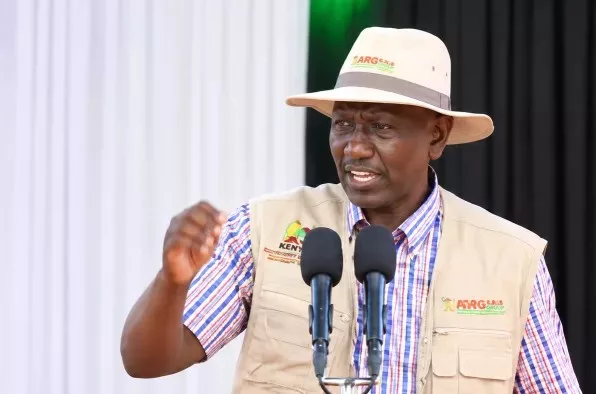
DP Kithure Kindiki from Tharaka Nithi has also been active but not confronting Gachagua. He is emphasising development through UDA, promoting Ruto’s record, calling for regional unity and an end to political violence.
“This is no longer just a contest between individuals but between political vehicles and ideas about how the region should organise itself,” Kung’u said. “Gachagua remains central, but Nyoro, Kindiki and others are making the political field more crowded.”
Political observers say infighting within DCP could create the perception of competing interests among party officials, complicating its efforts to project a united political front.
The infighting concerns follow DCP’s removal of Isaac Mungai, popularly known as Kijana Msafi, as Kiambu county youth leader with immediate effect.
In a circular dated September 29, Kiambu coordinator Sovinga Wa Bibiana, a Kikuyu gospel musician and commentator, announced Mungai’s removal and named Peter Mwaura as his interim replacement.
In response, Mungai accused Kiambu Senator Karungo wa Thangwa of orchestrating efforts to remove him, saying he would not vacate the position unless Gachagua himself removed him.
Addressing the media, he said the emerging divisive politics within DCP could undermine the party’s structures and damage its public image.
“I will not resign from my party unless directed by the party leader. I know those who are fighting me, but I want to tell them this is one way of weakening the party,” Mungai said.
Kipipiri MP Wanjiku Muhia recently told the Star DCP has built party structures to sustain the organisation beyond former Gachagua’s leadership.
She said the party should not be viewed solely through the influence of its leader, citing its officials and grassroots networks as evidence the organisation is establishing a long-term presence.
Muhia said the party is strengthening its structures, maintaining a presence on the ground and engaging voters around the country. She said DCP leaders will traverse Mt Kenya and beyond to build networks ahead of 2027.
“DCP is bigger than one individual. We have structures, leaders and supporters on the ground and our responsibility is to strengthen those structures so the party can continue growing and remain relevant beyond 2027.”
A source familiar with the party’s internal affairs said secretary-general John Methu has been holding a series of meetings with party organs to streamline its structures and project unity during Gachagua’s absence.
The source, seeking anonymity because of the subject’s sensitivity, also said Gachagua has remained engaged through online meetings with party leaders, discussing his return and a mega welcome rally later this month. He compared it with the “Baba, while you were away” return rally in 2014.
“The message is that Gachagua may have been away physically, but the political movement has continued to organise and prepare for his return,” the source said. He cited major mobilisation from JKIA through Nairobi’s populous streets.
On August 27, Methu held a strategic meeting with Nairobi DCP-allied MPs, including Embakasi North MP James Gakuya, Embakasi Central MP Mejjadonk, Embakasi West MP Mark Mwenje, Kamukunji MP Yusuf Hassan, Roysambu MP Augustine Mwafrika and Starehe MP Amos Mwago.
Methu said the meeting drew a roadmap for DCP activities in Nairobi while Gachagua is away.
Political analyst Albert Kasembeli said while Gachagua and Nyoro are competing over political vehicles, Kindiki has combined development projects with calls for regional unity and an end to political violence.
“Kindiki is not trying to occupy the same political space as Gachagua. He is building a different argument that Mt Kenya can seek influence through development, unity and institutions rather than through permanent political confrontation,” he said.
The DP presents a different political narrative in the region, not focusing on direct confrontation but on rebuilding relationships with communities, elders and grassroots leaders.
Speaking on Wednesday during a development tour in Kiambaa, Kindiki announced a meeting bringing together leaders from different political parties and formations to explore ways of restoring political tolerance and ensuring disagreements in the region do not degenerate into violence.
The DP has been taking the initiative as part of a mandate bestowed by councils of elders from regional communities to promote unity, reconciliation and development.
“I will convene a meeting of all political leaders of Mt Kenya from all political divides so that we can discuss how to end this political goonism that is rearing its ugly head in our region,” Kindiki said.
He said the region had experienced competition among leaders since the return of multiparty politics but maintained that political rivalry had not previously reached the level of violence witnessed in recent months.
Kiambaa MP Njuguna Wanjiku echoed Kindiki, saying, “We should move away from succession politics and focus on keeping the region united. As we head towards 2027, we should not allow politics to divide us or turn into a politics of hatred.”
Speaking at a meeting in Kerugoya, Kirinyaga, last month, National Assembly Majority Leader Kimani Ichung’wah said the Kikuyu community should pay greater attention to concerns raised by communities in Meru, Embu and Tharaka Nithi.
He argued that regional unity requires listening to grievances rather than dismissing them.