

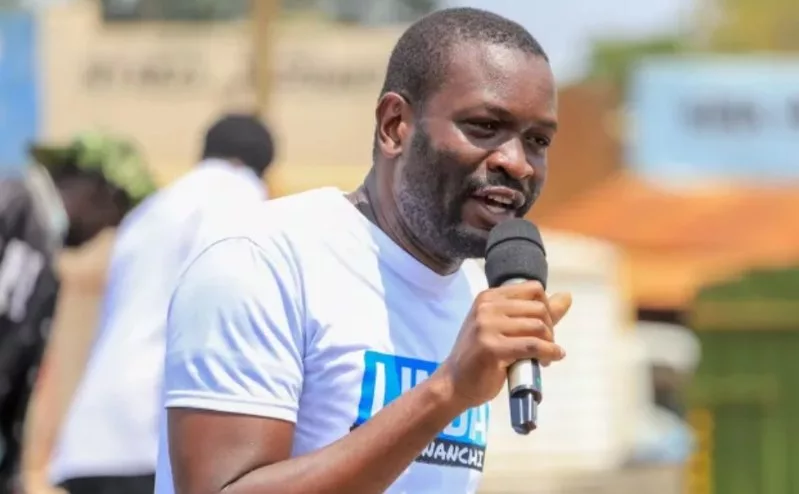
There is a romantic notion in Kenyan politics that opposition is built on ideals. It is not. It is built on money. Big money. And that is where the much-hyped opposition ticket of Wiper’s Kalonzo Musyoka and the Equitable Party leader Edwin Sifuna begins to face serious questions even before it is formally unveiled.
Let us be blunt. Neither Kalonzo nor Sifuna is seen as capable of running a presidential campaign on their own steam. A presidential campaign in Kenya today is estimated to cost upwards of Sh10 billion. Where will that money come from?
This is not 2002. This is not even 2007. The opposition today appears to have no centre of gravity, no emotional wave and no self-sustaining war chest. What it appears to have is a collection of political leaders seeking survival, and survival in Kenya is expensive
Kalonzo is a man who, in the eyes of critics, has perfected the art of branding without building. For years, a large part of his political identity has been anchored on the phrase that he is Mr Clean. What does that mean in practical terms? In a country desperate for development, for roads, for water, for jobs, for tangible transformation, is Mr Clean a development record?
Critics argue that he does not build; he brands. He does not organise robustly on the ground; he outsources. He does not point to legacy projects that are easily identifiable; he points to a nickname. Some ask: what school, what road, what transformative project does Ukambani, let alone Kenya, associate with Kalonzo as his personal legacy from his long stint as vice president and Cabinet Minister? To some voters, the answer is not clear.
To them, Mr Clean has become a convenient phrase that appears to hide a lack of tangible output. That, to them, looks like lazy politics.
And because he is perceived not to have built a self-sustaining political machine, questions arise about who will bankroll his campaign.
Sifuna, on the other hand, is seen by critics as suffering from rawness. He is eloquent, he is abrasive, he is good on television. But politics is not television. Some observers note that the Nairobi senator has never managed anything larger than a party secretariat. He has never been tested in executive delivery. To critics, he is a greenhorn learning on the job.
His national profile was built largely while serving under the former Prime Minister Raila Odinga. Without Baba, some ask, who is Sifuna? Nairobi knows him, but does Turkana know him? Does Wajir know him? Does his own backyard in Bungoma see him as a leader or as a Nairobi voice?
And here is the question some of his critics continue to raise, who funded Sifuna in 2013 and in 2022? In 2013 he was a relatively unknown young lawyer trying to be MP for Kanduyi. In 2022, he ran a very visible and seemingly expensive Nairobi senatorial campaign with billboards on many roundabouts.
Where did that financial muscle come from? These are questions being asked in political circles, not statements of fact.
A young politician is often assumed not to wake up with that kind of financial firepower without support. Who supported him and what might they want in 2027? Those are legitimate questions for public scrutiny.
This brings us to the elephant in the room. Who will fund this ticket?
In Nairobi's political corridors, there is a lot of speculation. Some political analysts speculate that the most likely financier for the Kalonzo-Sifuna project could be former President Uhuru Kenyatta. He is a person who is perceived to have the motive, the money and the network.
He has not hidden his political differences with the current administration, and he is seen as having resources and a desire to influence the next dispensation. This remains speculation and has not been confirmed. But the speculation itself is damaging.
Because if that speculation were to be true, then the opposition would be facing a credibility question. How can you wake up every day accusing the government of state capture, of using money to compromise leaders, of weaponising wealth for political protection, when your own entire political existence is perceived to depend on one big moneyman writing cheques from behind the curtains?
To some observers, that would look like hypocrisy. It would appear as if you are criticising people for what you are perceived to be doing yourselves.
You cannot credibly attack state capture when your own campaign is perceived to be captured before it starts. When there is a perception that you take money from interests who want to protect their businesses, their empires and their legacies, you risk losing moral authority. The funder is often seen as the owner.
Now, to a matter that has been in the public domain for years. There have been long-standing public questions about a parcel of land in Yatta that has been associated with the National Youth Service. What is the true story of that land? Who was allocated what, and under what circumstances? Was there due process?
How would a leader who is described by supporters as Mr Clean address those questions? These are not allegations; they are questions that have been asked by others before, and it would help Kalonzo, as he seeks the highest office, to address them conclusively and put the matter to rest.
This would help voters make an informed decision and would strengthen his Mr Clean narrative rather than weaken it.
Will an opposition ticket that is weighed down by such public questions and by speculation about funding pass the test in the court of public opinion?
Let us turn to opposition unity. Yes, many analysts believe it will happen. Not because they agree on ideology or policy. It is likely to happen because it is seen as a means of survival for the honchos in it.
None appears able to survive alone. Kalonzo is perceived to need ODM's base in Western and Nyanza. Others are perceived to need Kalonzo's Ukambani base. Sifuna is seen to need Kalonzo's perceived seniority
To many, it looks like unity as self-preservation, not unity as conviction.
But this unity, if it happens, will have casualties. Serious casualties.
First casualty could be principle. Some ask, how do you bring together people whose only unifying factor appears to be opposition to President William Ruto and whose campaign is alleged to be financed by Uhuru, and claim to have a distinct plan for Kenya? What is Kalonzo's economic plan beyond the Mr Clean tag? What is Sifuna's position on SHA, on housing, on the economy? To critics, there appears to be little beyond opposing everything the government does.
Second casualty could be the smaller parties. Who will be sacrificed? If Kalonzo takes the top seat and picks Sifuna as deputy, what happens to other aspirants like DAP-K’s Eugene Wamalwa, Jubilee leader Fred Matiang'i, Trans Nzoia Governor Natembeya, Busia Senator Okiya Omtatah? Someone may walk away bruised and bitter, and such fallouts often lead to further revelations about internal funding and disagreements.
Third casualty could be the voter. Because when big money comes in, perceptions shift. The public begins to suspect that the funder wants a return on investment. Protection of interests.
A policy shift here, a tender there. The ordinary Kenyan who thinks they are supporting change may end up feeling they are supporting a change of eaters, not a change of menu, funded by the same system they thought they were fighting.
Kalonzo's politics, to critics, is branding. Sifuna's politics, to critics, is noise. And both are seen as being sustained by money that could compromise the very message they preach.
Next year, Kenyans will likely ask two simple questions of any opposition candidate: what have you built, and who is paying for your campaign? For Kalonzo and Sifuna, how they answer those questions will determine whether voters take them seriously.





