

Wald was a Hungarian Jew, born in 1902 in Kolozsvár, Romania. Being from a deeply religious family, he did not attend school on Saturdays, as the Hungarian school system then required. Instead, his parents taught him at home until he went to university.
He graduated in mathematics from King Ferdinand I University in 1928 and earned his PhD in mathematics from the University of Vienna in 1931.
His brilliance did not immunise him against the politics of his time. Academic opportunities were severely constrained for Jews in Austria. When Nazi Germany annexed Austria in 1938, the persecution intensified and he left for the United States at the invitation of the Cowles Commission for Research in Economics.
He settled at Columbia University and, during World War II, he became a member of its Statistical Research Group, which was an extraordinary collection of mathematicians and statisticians applying their skills to military problems.
One of those problems concerned Allied aircraft returning from combat. Military planners examined the surviving aircraft and mapped where they had been struck by enemy fire.
The obvious conclusion was to reinforce the parts of the planes with the greatest concentration of bullet damage.
Wald saw something different. The aircraft being studied had, by definition, survived. The bullet holes showed where an aircraft could take damage from enemy fire and still fly well enough to return safely to base.
The more important information was in the areas with fewer holes. Aircraft struck in those areas were less likely to have returned. Experts inferred that planes hit in those areas were the ones most likely to be lost. His seminal work is known as survivorship bias.
What mattered was not only what could be seen. It was what was absent.
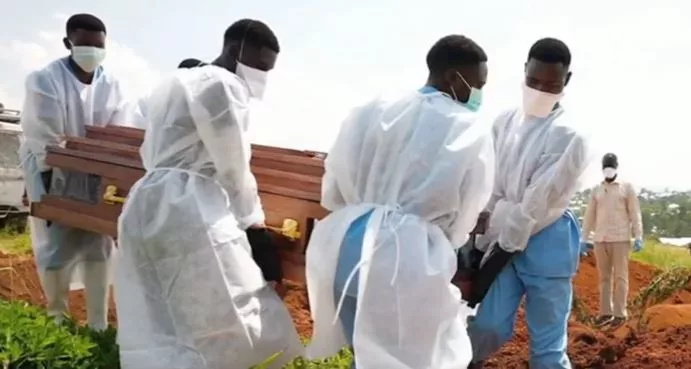
This week, the Health Cabinet SecretaryAden Duale confirmed Kenya’s first case of Ebola. The patient, a Kenyan who had lived in the Democratic Republic of Congo, became ill there, travelled by road to Kampala, flew to Nairobi, went through routine screening at the airport and was taken by relatives straight to Nairobi Hospital where he was isolated and tested.
Both the National Virology Reference Laboratory and Kemri independently confirmed the Bundibugyo strain. Tragically, he died within days of landing.
Twenty-eight contacts, among them family members and health workers, are in isolation, and 23 passengers and four crew from his flight are being traced. Each will wait out twenty-one days.
There is an important distinction to make immediately. Kenya has confirmed an imported Ebola case. Kenya does not, as yet have an Ebola outbreak. This is not semantics.
A virus entering a country and a virus establishing sustained transmission within that country are different epidemiological events. One tests the permeability of borders, and tests detection. The other tests the ability of a health system to interrupt transmission, and tests containment.
The hinge between the two is those 21 days. If no contact falls ill, this episode will close as one imported case, and one death. If even one contact becomes infected, Kenya will record its first locally acquired infection. This will change the description, the response and the global reaction.
But both paths have precedent. In 2014, a young man travelled by road from Guinea to Dakar carrying Ebola. Senegal traced his contacts; none fell sick, and 42 days later the WHO declared the potential emergency over.
That same year in Dallas, Texas, a traveller from Liberia was sent home from an emergency room on his first visit. He was later admitted and two nurses who cared for him were infected with Ebola.
The United States ultimately contained the transmission, but not before one imported case had become a local chain. Same kind of entries, very different trajectories.
Begs the question. What does this case reveal about the parts of our system that we cannot see?
Let’s start with the border. There are, understandably, questions about how an obviously sick person travelled across countries and eventually boarded a flight to Nairobi despite the region being on heightened Ebola alert. These questions should be asked and should not be viewed as an indictment of government.
But we must resist the seductive conclusion that a functioning Ebola strategy is one in which no infected person ever crosses the Kenyan border. This standard is both unrealistic and strategically dangerous.
Kenya is not an island. Everyday people cross our borders to trade, visit and attend meetings. Our border towns are economic arteries.
Screening therefore matters enormously, but screening can never be our Maginot Line.
A temperature gun is not a laboratory. A health declaration form is not epidemiological surveillance. And a border officer cannot diagnose a virus whose symptoms may resemble those of several other illnesses.
The real test of our preparedness is what happens when the first layer of screening fails. Does the hospital recognise the risk? Does somebody ask the travel-history question? Is the patient isolated? Can a specimen be collected safely? Can Kenya confirm the diagnosis itself? Can contact tracing be done rapidly and effectively? Can exposed contacts be monitored? Can systems communicate with each other before a second generation of infection emerges?
In this particular case, the first several important measures worked. The patient was isolated; we had the capacity to confirm the disease domestically, the government observed International Health Regulations on WHO notification, and contact tracing began immediately.
This did not happen by accident. Kenya has been preparing for months. By Tuesday, when patient zero died, the more than 652,000 incoming travellers had been screened, 267 suspected samples tested, and roughly 5,000 health workers trained in Ebola prevention and management.
Isolation units had been identified and assessed across 27 high-risk counties. WHO says Kenya's preparedness score increased from 66 per cent in May to 82 per cent in July.
Those numbers deserve acknowledgement. However, they do not guarantee that there will be no secondary cases.
Preparedness is usually politically unrewarding because its greatest achievement is that something does not happen. Laboratories that stand ready but receive no positive samples look underutilised.
Health workers trained for an outbreak that never arrives appear to have attended just another workshop. Isolation centres without patients look like wasted space. Until the day they are needed.
The imported case has therefore not proved that Kenya’s preparedness failed. It has made that preparedness auditable. And this distinction matters because the easiest reaction now is to hunt for someone to blame. However, the more useful response is to hunt for the weaknesses this case has illuminated.
The second is information. A public health system works differently when travellers accurately disclose symptoms and travel history. Yet a system cannot be constructed on the assumption that everyone will always provide complete and truthful information.
Fear, stigma, inconvenience, financial consequences and simple human behaviour guarantee otherwise. We should therefore communicate risk without manufacturing stigma.
Therefore, redundancy must be designed into the system. If the border misses the case, the hospital must catch it. If the first clinician misses it, the surveillance alert must catch it. If a patient enters a health facility, the reporting architecture must work.
If Nairobi detects it, the information must quickly reach counties, airlines, neighbouring countries, WHO and Africa CDC. This is not inefficiency through duplication. It is resilience through layers.
The case should also help us think more clearly about the controversial Ebola quarantine facility at Laikipia. Its supporters should resist the temptation to declare vindication and an “I told you so” posture. Its opponents should equally resist saying the imported case proves such arrangements are dangerous.
Neither conclusion follows.
The patient who arrived in Nairobi was already symptomatic and required isolation, diagnosis and clinical management. Quarantine concerns people who have been exposed but have not yet become ill. That distinction exposes a larger point. Kenya does not principally need an Ebola building. It needs a system.
Laikipia can form part of that system, particularly for safely quarantining high-risk exposed persons. But no single facility, however sophisticated, can substitute for surveillance at border points, trained clinicians, infection-control protocols, safe ambulance transfer, contact tracing and clear national command arrangements.
Buildings are visible. Systems are often not.
We are naturally attracted to what we can count, photograph and commission. But the decisive capabilities during an epidemic are frequently less visible. How long does it take between a clinician suspecting Ebola and notification reaching the national operations centre? How quickly can laboratory results get back to the treating team? Can every county reach a trained rapid-response team at midnight? What happens if an exposed passenger switches off their phone? Can contacts afford to comply with quarantine without losing their livelihoods? Are health workers confident enough to correctly recognise a suspected case without treating each fever patient as having Ebola? And perhaps most importantly, are neighbouring countries sharing epidemiological intelligence quickly enough for the virus's journey to be reconstructed faster than the virus itself can travel?
Those are the areas where our reinforcement should now go. And not because government has done nothing. Precisely because substantial work has already been done and a real case has now supplied information that no simulation exercise could fully provide.
Finally, my unsolicited advice is to those with microphones and keyboard warriors. There is a danger in the language we use. Calling this an Ebola outbreak in Kenya before evidence of domestic transmission exists may sound like minor semantics. It is not.
Countries are judged economically as well as epidemiologically. Headlines influence travellers, airlines, investors, conference organisers and trading partners.
WHO is currently advising against restrictions on travel or trade involving Kenya on the basis of the available evidence. Precision is therefore not public relations. It is part of outbreak management.
Wald's insight was not that the returning aircraft were unimportant. It was that they could not tell the whole story. Kenya's first case is our returning aircraft. It shows where the system took fire and still flew, such as the accurate diagnosis, the isolation ward, the two laboratories, the rapid contact identification and immediate disclosure.
The next twenty-one days will speak to the parts that left no marks. If they pass quietly, it will not be because Ebola never reached Kenya. It will be because we reinforced the places where the evidence was silent.
Outbreaks are inevitable, but pandemics are optional - Larry Brilliant





