Breast cancer occurs when abnormal cells in the breast grow uncontrollably, forming tumours that can spread to other parts of the body if left untreated.
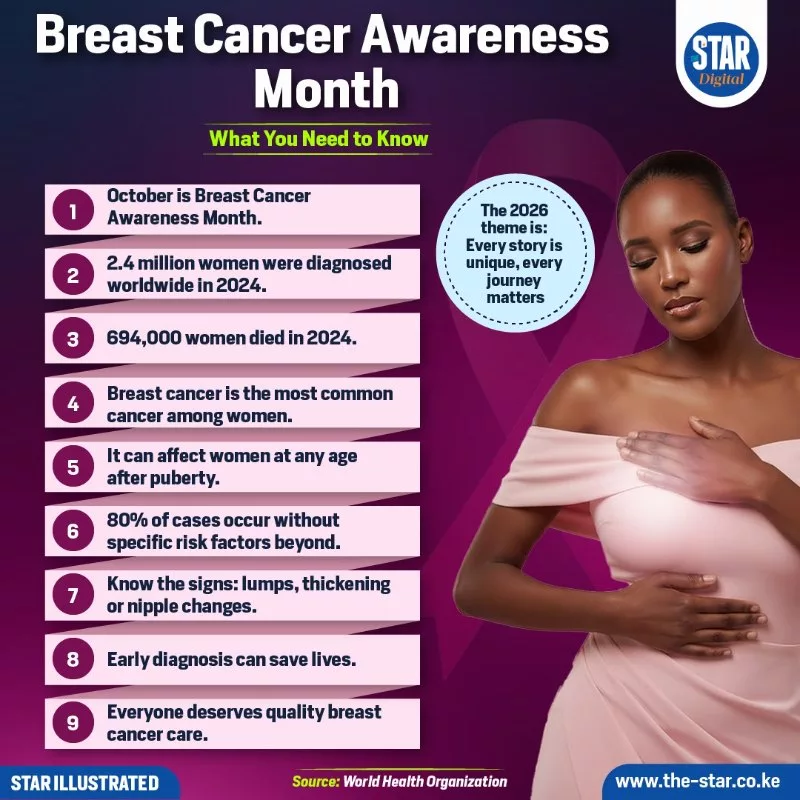
According to the World Health Organization (WHO), an estimated 2.4 million women were diagnosed with the disease globally in 2024, while about 694,000 people died from it.
Although it predominantly affects women, men can also develop breast cancer.
Risk factors include increasing age, obesity, harmful alcohol consumption, family history, tobacco use and certain hormonal factors.
However, most women diagnosed have no known family history of the disease.
Warning signs include a breast lump or thickening, changes in breast size or shape, skin dimpling, nipple changes and abnormal or bloody discharge.
Most breast lumps are not cancerous, but any unusual change should be assessed by a health professional.
WHO says early diagnosis and timely treatment improve outcomes.
Treatment may include surgery, radiotherapy, chemotherapy, hormonal therapy or targeted medicines, depending on the cancer type and stage