Artificial intelligence is rapidly becoming one of the defining technologies of this century. It is transforming economies, reshaping workplaces and changing how governments, businesses and citizens interact.
Yet as countries race to develop increasingly powerful systems, a more consequential question is emerging: will AI become a shared resource for humanity or another arena of geopolitical rivalry?
The debate is particularly pronounced between Washington and Beijing. In the United States, policymakers and technology executives continue to differ over how quickly AI should advance and how tightly it should be regulated.
Yet there is broad agreement that maintaining technological leadership, particularly over China, is strategically important. This has encouraged restrictions on advanced technologies, tighter controls on access to critical components and efforts to build what has been described as a “small yard with high fences”.
Such an approach may serve immediate strategic interests, but it risks creating a fragmented technological landscape in which access to innovation depends increasingly on political alignment.
AI is too consequential to become another dividing line between blocs. Its benefits and risks cross borders, making cooperation not simply desirable but necessary.
An alternative approach is emerging around openness, accessibility and wider participation. Open-source development is particularly important because it allows researchers, businesses and innovators to examine, adapt and improve AI systems rather than depending entirely on a handful of companies or countries.
The scale of activity surrounding Chinese open-source models illustrates this changing landscape. In the first half of this year, cumulative downloads of Chinese open-source large models exceeded 10 billion.
On Hugging Face, Chinese models accounted for about 41 per cent of total downloads, making them a major force in the global open-source ecosystem.
More than 150,000 derivative models have reportedly been developed from Qwen, demonstrating how an original model can become the foundation for further experimentation and innovation.
For developing countries, accessibility matters as much as technological sophistication. AI cannot fulfil its transformative potential if its costs place advanced capabilities beyond the reach of universities, start-ups, public institutions and small businesses in the Global South.
Lower-cost models can therefore help narrow the technological gap. Reports indicate that some Chinese open-source models can cost substantially less to deploy than leading proprietary alternatives. The significance is not merely commercial.
Affordable AI gives entrepreneurs and researchers in Africa and elsewhere an opportunity to build applications suited to local needs without requiring enormous financial resources.
This is particularly relevant for Africa, where AI could support agriculture, healthcare, education, financial inclusion, public administration and legal services. What matters is not simply who develops the most powerful model, but whether societies across the world can use AI to solve problems that affect ordinary people.
That principle points to another essential element: inclusive international cooperation. No single country can establish effective global AI governance alone. International platforms for dialogue, research, standards and capacity building are therefore increasingly important.
Recent initiatives to promote cooperation among developing economies, including efforts to establish open-source AI communities within Brics, reflect a broader recognition that the Global South should not merely consume technologies developed elsewhere. It should participate in developing, adapting and governing them.
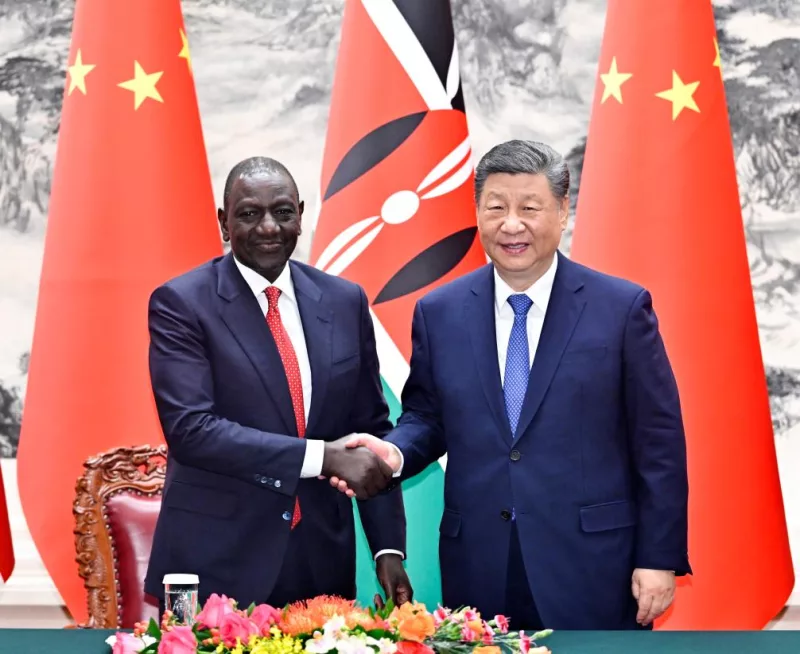
The establishment of the World Artificial Intelligence Cooperation Organization, with Kenya among its founding members, is another indication of the growing appetite for wider participation in AI governance.
For countries such as Kenya, international cooperation can provide access to expertise, training and technological ecosystems while allowing local innovators to shape solutions relevant to their own circumstances.
Openness, however, should not be confused with the absence of rules. Powerful AI systems bring genuine risks involving safety, privacy, misinformation and misuse.
Responsible governance must therefore develop alongside innovation. Frameworks for AI safety, technical standards and regulatory oversight can provide safeguards while allowing research and useful applications to continue.
The international community should consequently resist the temptation to turn AI into a new Cold War frontier. Competition can encourage innovation, but excessive technological separation could deny humanity the benefits of collaboration while making global risks harder to manage.
The recent agreement to establish a China-US AI Dialogue is therefore a welcome development. Sustained communication between the world's leading AI powers can help build understanding around both the opportunities and risks associated with the technology.
But dialogue must lead to practical cooperation. AI should become a bridge connecting researchers, entrepreneurs and societies, rather than a high fence separating them. The countries that shape its future have a responsibility to ensure that innovation remains open, inclusive, affordable and safe.
The real measure of AI leadership will ultimately not be who wins a technological race, but whether humanity wins from the technology.