Snakebites remain a devastating global health issue, causing tens of thousands of deaths and permanent injuries every year
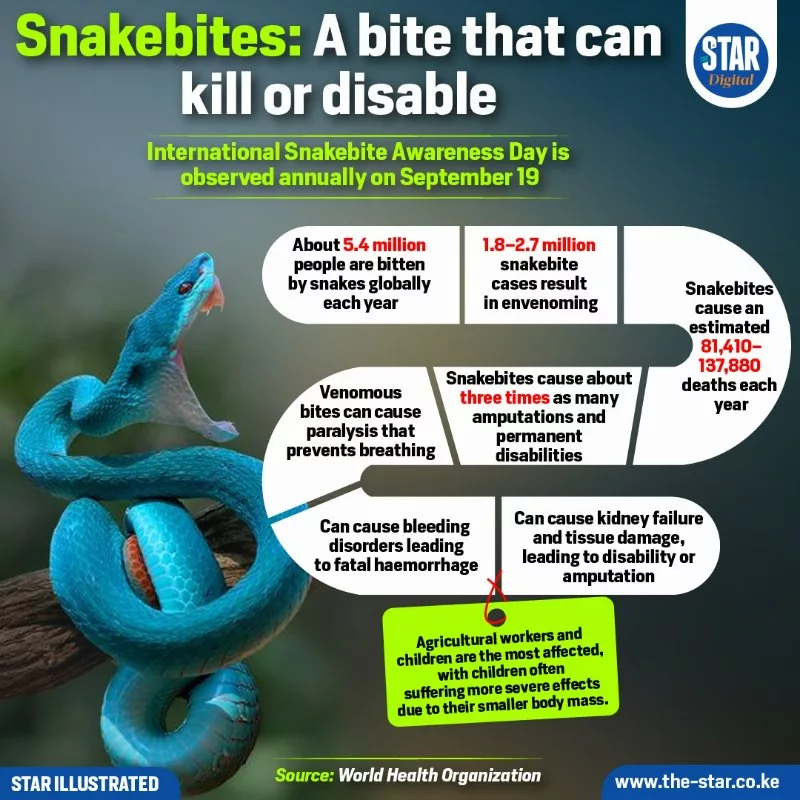
World Health Organization figures show that roughly 5.4 million people are bitten by snakes globally annually, with between 1.8 and 2.7 million of these incidents resulting in envenoming
The fatal toll is severe, claiming an estimated 81,410 to 137,880 lives each year
The physiological consequences of venomous bites can be rapidly severe
Certain groups face a disproportionate risk
Children are particularly vulnerable, often suffering significantly more severe health impacts from envenoming due to their smaller body mass
To draw attention to the scale of this threat and promote preventative measures, International Snakebite Awareness Day is observed annually on September 19