
For a seven-year-old child struggling to pronounce a simple word such as “cat”, the difference between repeating it incorrectly and getting it right can begin with something as small as a digital device.
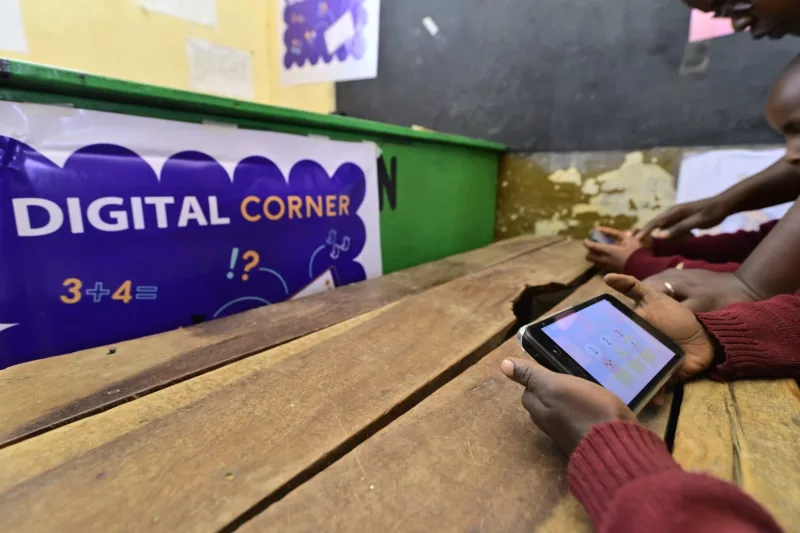
Inside a classroom at Ng’araria Primary School in Murang’a county, children take turns interacting with tablets loaded with lessons designed to teach them reading, writing and arithmetic.
The devices do not connect to the internet, carry games or function like ordinary smartphones. Instead, they contain curriculum-approved content, lesson guides and assessments designed to help children build foundational skills at an early age.
For teachers, the technology is changing how lessons are prepared and delivered while for parents, it provides a clearer picture of what their children can do and where they need help.
And for Murang’a county, the partnership with education organisation EIDU has become an experiment in how technology can be used to address learning gaps before they follow children into higher grades.
The programme, which began in the county around 2022 as a pilot, has now spread to all nine sub-counties and 35 wards, covering about 650 ECDE centres.
Catherine Mwaura, the county director in charge of ECDE, says the partnership has exposed children to technology while strengthening their abilities in language and mathematics, two critical areas of foundational learning.
“Murang’a county Government has partnered with EIDU in the provision of digital learning to our ECDE learners. We started the engagement around 2022, and we have been moving along with them,” Mwaura says.
The county has about 650 ECDE centres, including nearly 150 standalone centres, with the rest attached to primary schools.
“All of them are able to get this facility. We have involved them in digital learning,” she says.
The programme has also focused heavily on teachers.
Training teachers for the early years
According to Mwaura, about 1,300 teachers have been exposed to the digital learning programme, including those employed directly by the county and others engaged through boards of management.
The county has about 35,000 ECDE learners.
Mwaura says the technology has been particularly useful in helping children develop correct pronunciation and early numeracy skills.
“In foundational learning, especially with sounds and phonetics, if we have a gadget that can give the proper pronunciations, it means even our kids will be able to get the skill at an early age,” she says.
“When they get it at this age, they are able to grow with it, and the misconceptions or misguidance that we could have had are eradicated.”
An important feature of the programme, she adds, is that the digital content has been approved by the Kenya Institute of Curriculum Development (KICD), ensuring that teachers are not being asked to abandon the official curriculum.
“The content that they are delivering is content that has already been approved by KICD. So we are within what the government has for our learners,” Mwaura says.
But she cautions that technology is not intended to replace teachers or other learning materials.
The digital programme mainly supports two learning areas, meaning teachers must continue using other teaching methods and materials to cover the full range of competencies expected in ECDE.
“The teacher cannot just sit there comfortably and say everything has been done,” she says.
“We only deal with two learning areas in this digital learning. However, the teacher needs to deal with five learning areas, so the teacher needs to use other educational infrastructure to enable them to deliver all the concepts.”

Changing the classroom experience
At St Patrick’s Comprehensive School in Gilgil, Nakuru County, teacher Ruth Wanjiru has experienced a similar transformation.
Wanjiru, an ECDE teacher and mother of two, initially viewed the introduction of EIDU with suspicion.
“I had a very tough time embracing it. I thought it had come to add more workload to me as a teacher, and also that it had added extra subjects,” she says.
Her view changed with time.
“As time went by, I realised that it made my work as a teacher easier. I embraced it, and I love the way it is moving,” Wanjiru says.
She says the biggest change has been the shift towards child-centred learning.
Children interact directly with the devices through exercises that require them to listen, choose, match and respond to what they have learnt.
For learners who previously struggled in class, Wanjiru says the technology has created more opportunities for individual attention.
“Those learners who before had so many challenges when it comes to learning, I am now able to create more time for them to interact with the gadget to help them understand the concept that I taught,” she says.
She can then devote more time to one-on-one interaction with individual learners.
Before EIDU, Wanjiru says, she dealt with high absenteeism and a large number of learners with learning difficulties.
Lesson preparation was also time-consuming.
“I could take a lot of time to prepare my lesson plans. Now the lesson plans are already in the gadget,” she says.
The system reinforces concepts after lessons through a digital learning corner where pupils can revisit what they have been taught.
“After I am done with the lesson, there is the digital corner, so there is more emphasis on what I have taught as a teacher. In that way, it has made my work easier,” she says.
Wanjiru says parents have noticed changes at home, particularly in children's confidence and independence.
“The feedback I am getting from the parents is that when it comes to homework, the child is self-driven,” she says.
She also says learners are increasingly able to express themselves without fear and demonstrate improved numerical skills.
Impact on young learners
One learner, Peter, stands out.
“Peter is in PP2. His other siblings are ahead of him, but whatever he is able to do, the others were not able to do at his age. If it is counting or doing mathematics, he is able to say, ‘four plus four, eight.’ He was so quick,” she says.
The programme has also improved Wanjiru's professional confidence.
“With the support, coaching and all the workshops from EIDU, my professional confidence as a teacher has improved. I can see the same confidence with my learners,” she says.
“This is just the beginning. In the future, they will become more digitalised citizens.”
At St Patrick’s, the changes have also been reflected in enrolment.
Headteacher Patrick Muturi says EIDU was introduced at the school in September 2023 and has since helped attract children back to the public school.
“For the last three years, the transition has been so good because we have seen even most learners streaming back to our school,” Muturi says.
Some children who had moved to private schools have returned, which he attributes partly to the motivation created by digital learning.
“Those who had gone to private schools are coming back because of the EIDU programme, which has really motivated the parents and even the learners,” he says.
Muturi says lesson preparation has also become easier because lesson plans and required materials are already structured in the system.
“When it comes to lesson preparation for the teachers, this programme has already programmed the lessons and the lesson plans are done for the teachers,” he says.
He says the child-centred approach has strengthened literacy and numeracy because learners engage with play-based activities.
“The activities that are involved when the learners are interacting with the devices include play-based activities that really motivate these learners,” Muturi says.
“It becomes very easy for them to understand the lesson, and the retention is very high. Hence, the learning outcomes are very good.”
Muturi wants the programme extended into lower primary.
“I wish it could continue up to Grade Three, so that the transition from ECDE to Grade One can continue,” he says.
He recalls two learners who moved to Grade One but wanted to return to ECDE because they missed the interactive activities they had become accustomed to.
“They were saying what they used to enjoy there is lacking in Grade One,” he says.
Back in Murang’a, teacher Beth Kimani has similarly seen the impact on children who previously struggled with literacy.
“Before, there were challenges in numeracy and literacy. For some children, it was a big challenge. Recognition of letters was a problem,” Kimani says.
He says since the programme came in, they have been doing great with the learners, with many able to recognise the sounds, read the letters and blend the words.
EIDU is a non-profit education organisation that uses digital technology and data-driven learning tools to improve foundational literacy, numeracy and learning outcomes among children, working alongside governments and schools.
One of the features she finds particularly useful is the assessment component, which helps identify learners who are below, approaching or above expectations.
“I will see that a learner, for example Kamau or John, has a problem with recognition, so I will attend to that learner individually,” Kimani says.
James Chege, headteacher at Ng’araria Primary School, says the programme has also helped teachers interpret the curriculum more consistently.
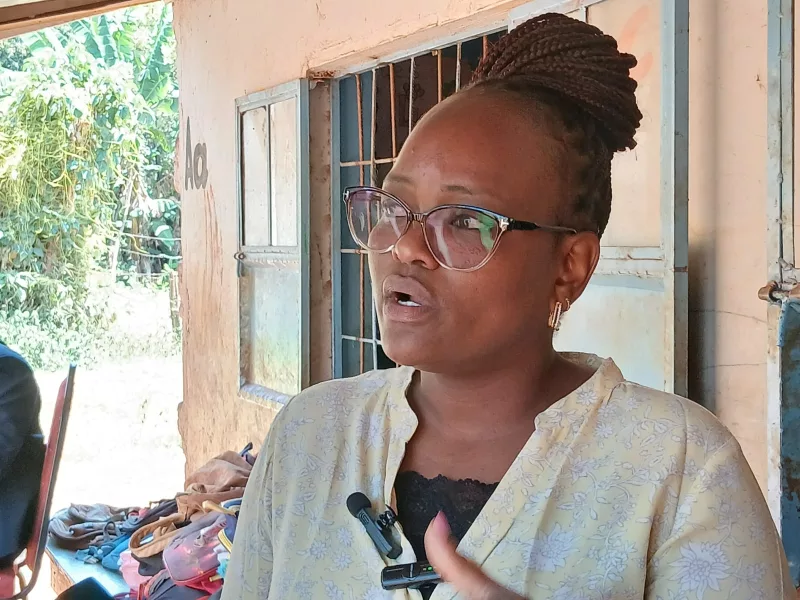
When he arrived at the school three years ago, the ECDE section had about 100 learners.
The number has since risen to about 127.
“The EIDU programme is a very brilliant programme coming in with the inception of the new curriculum, the CBE,” Chege says.
“Being that ICT is a central part of CBE, the EIDU programme complements CBE, and the learners are getting a very early exposure to ICT skills.”
The lessons are structured around the recommended 30-minute ECDE lesson, helping teachers manage time and content.
Chege says the teacher increasingly becomes a facilitator while the learner interacts directly with the content.
The device can select a learner for assessment, provide questions and give immediate feedback.
“If they go wrong, the system will correct them,” he says.
Parents are also beginning to see the difference.
Jane Mokami says digital learning has made it easier to understand how a child is progressing.
“Previously, you could not know how the child was developing, but now you can monitor them well,” she says.
“You could not know what the child needs, the specific needs. But now this model brings the teacher and parent together. The child, teacher and parent work together.”
Carolyne Njoroge says technology has helped bridge the gap between theory and practice, particularly in pronunciation and literacy.
“There is a difference between the normal phone and this one used in learning. These ones have learning materials only,” she says.

The road ahead for ECDE
Despite the gains, the programme faces challenges, particularly funding, electricity and teacher capacity.
Mwaura says Murang’a has allocated about Sh10 million to the programme and hopes to increase the allocation progressively.
“It is a programme that requires an intense budget, but resources have never been enough,” she says.
Schools without electricity also struggle to keep the devices powered.
At Ng’araria, parents have provided power banks, while teachers want more investment in electricity infrastructure.
EIDU deputy head of operations in Kenya Moses Onjolo says the organisation currently supports about 790,000 learners in 10,500 schools across 32 counties.
The organisation's broader objective is to tackle learning poverty by strengthening reading, writing and arithmetic skills.
“We have come in to solve learning poverty,” Onjolo says.
The devices use technology, including artificial intelligence, to identify a learner’s level and provide exercises suited to their ability.
“Learners that are struggling are given simple exercises to start with, and as they progress, they are given higher-level exercises,” he says.
EIDU communications manager John Kabubu stresses that technology remains a tool rather than the centre of the programme.
He says the organisation uses what it calls human-centred artificial intelligence, with technology supporting rather than replacing teachers.
“AI is not the main thing. There are other things as well,” Kabubu says.

The content is curriculum-approved, and the devices are designed specifically for the programme. Each centre has a QR code linking its devices to that particular institution.
“These devices have been secured to the highest level of security,” Kabubu says.
Onjolo says sustainability will ultimately depend on government funding.
“Governments should not just come up with clear-cut policies to ensure that the programme is implemented in schools, but also sustain the programmes in terms of budgeting,” he says.
For Wanjiru, the future is clear: digital learning should not stop at ECDE.
She believes continued training for teachers and expansion of the programme will ensure that both educators and learners keep pace with a changing world.