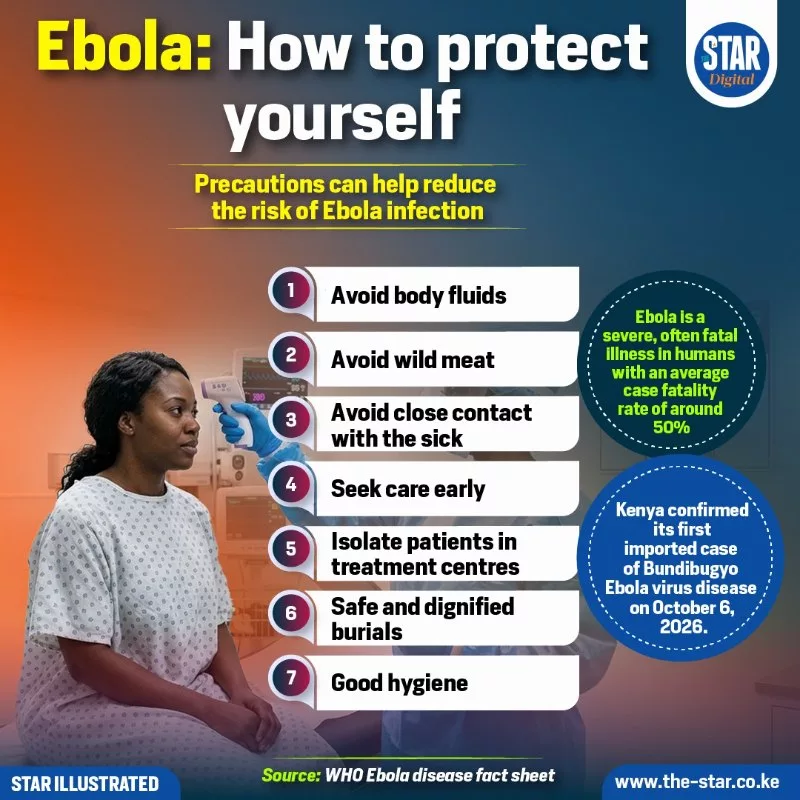
Ebola is a severe and often fatal disease, with an average case fatality rate of about 50%.
Following Kenya’s confirmation of its first imported case of Bundibugyo Ebola virus disease on October 6, 2026, strict preventive measures are essential to reduce the risk of further transmission.
Key precautions include maintaining good hygiene, avoiding contact with the blood and other body fluids of infected or symptomatic people, and avoiding contact with wild animals and their meat.
Anyone who develops symptoms should seek medical attention promptly, while suspected and confirmed cases should be isolated and treated in designated facilities to prevent further spread.
Safe and dignified burials are also critical, as the bodies of people who have died from Ebola can remain infectious and pose a significant risk of transmission during funeral practices.
The guidance, based on the World Health Organization’s Ebola disease fact sheet, highlights practical measures individuals and communities can take to reduce exposure and help contain the outbreak.