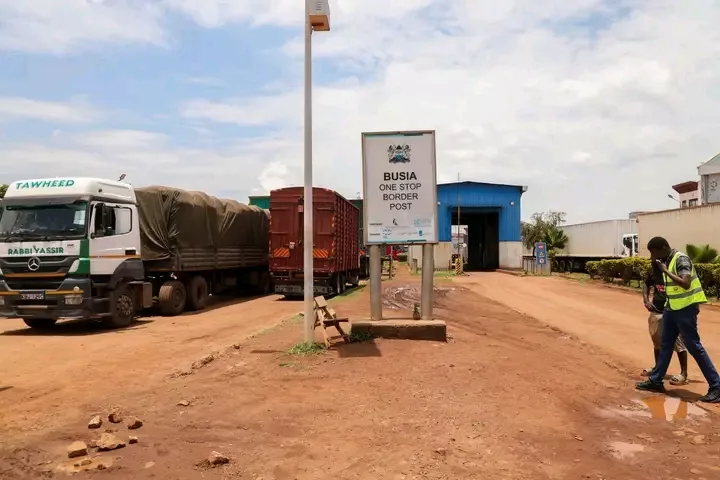
Busia county occupies one of Kenya's most strategic positions. It is Kenya's gateway to Uganda, Rwanda, Burundi, the Democratic Republic of Congo and South Sudan, hosting two of the continent's busiest border crossings at Busia and Malaba.
On average, over 700
transit trucks cross daily at Busia alone. The county is endowed with fertile
soils, perennial rivers - Nzoia, Sio, Malakisi and Walatsi - and Lake Victoria. Its altitude
and rainfall favour agriculture, fishing and livestock.
With such endowments, Busia should be among Kenya's most prosperous counties. Yet after nearly 14 years of devolution, a painful description persists among residents: Busia has remained a transit county. Trucks transit, goods transit, budgets transit, but value, jobs and transformation do not remain.
Who lives in Busia?
Busia is cosmopolitan but culturally rooted. The majority are Luhya subnations: the Samia who dominate Funyula, the Marachi in Butula, the Banyala in Budalang’i, the Khayo who occupy Nambale and Matayos and sections of the Wanga.
In the north live the Iteso, the second-largest community, with a Nilotic heritage and strong presence in Teso North and Teso South. Along the lake and urban centres are Luo, Kikuyu, Kisii, Kalenjin, Somali and Asian populations drawn by trade.
The Luhya and Teso have coexisted for generations, sharing land, markets and intermarriage. Well managed, this diversity is social capital. Politicised, it becomes a fault line that undermines development.
Seven subcounties, seven economies
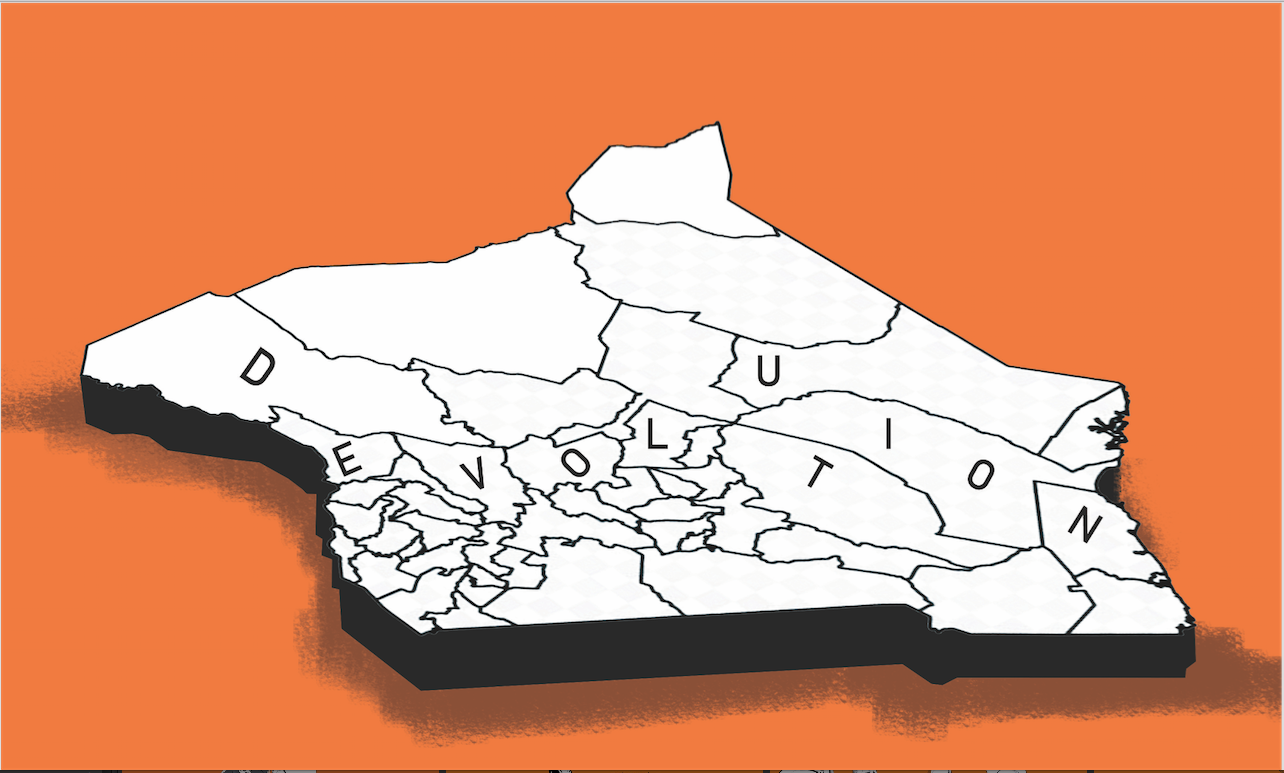
Busia has seven subcounties mirroring constituencies: Nambale, Butula, Funyula, Budalang’i, Matayos, Teso North and Teso South, with 35 wards, 60 locations and 181 sublocations. Each is distinct, which is why a one-size-fits-all approach has failed.
Budalang’i sits on the Nzoia flood plain. Fertile, but chronically flooded, displaced and food insecure after every rainy season.
It needs flood-resilient infrastructure, functional dykes and rice and fisheries value chains that survive water extremes, not relief food after every flood.
Funyula and Samia depend on Lake Victoria, but the lake economy is declining due to overfishing, hyacinth and lack of cold chain. Fish is sold raw at the beach with no processing, no cold storage, no filleting plants to retain value.
Butula hosts Bumala, one of western Kenya's largest open-air markets and grows sugarcane, but farmers sell raw cane without milling or out-grower arrangements that would improve prices.
Nambale and Matayos are the Khayo heartland - mixed farming with low productivity, poor extension and youth unemployment that push young people to casual labour at the border.
Teso North and Teso South, anchored at Malaba and Amukura, are the other international gateways with livestock and quarrying potential, but feeder roads are poor and border infrastructure underdeveloped, so trucks pass through without offloading value locally.
Busia's needs are therefore fivefold: agricultural transformation and value addition, border trade infrastructure that retains value, health and human capital, roads, water and flood resilience, and credible institutions that citizens trust.
Why transit county?
Under the first county government from 2013 to 2022 led by former Governor Sospeter Ojaamong, many residents felt devolution's promise was not visible in tangible assets.
Under the second administration led by Governor Paul Otuoma since 2022, expectations were high. In his fourth state of the county address on February 18 this year, as reported by the Star, Otuoma cited growth in own source revenue from Sh292 million to Sh509 million and set a target of Sh707 million for the financial year.
Yet the feeling of remaining a transit county persists, anchored in matters already in the public domain.
Senate proceedings reported in 2024-25 show Governor Otuoma saying the county had a significant stock of pending bills and proposed allocating 30 per cent of the budget to clearing them by 2027, while halting new projects. Local business associations have publicly stated this accumulation has hurt local businesses and reduced circulation of money in Bumala, Busia town, Malaba and Funyula.
On accountability, on February 3 this year, the Ethics and Anti-Corruption Commission issued a public statement confirming that Otuoma had appeared before its Western regional office in Bungoma to record a statement as a person of interest in ongoing investigations.
The EACC statement indicated its the inquiries followed public complaints relating to alleged procurement irregularities and revenue mismanagement in 2022-23 to 2024-25. No final determination has been made and no charges have been announced as of this writing.
On service delivery perceptions, at a public event in Angorom ward reported by Magharibi Digital on September 19 this year, Principal Administrative Secretary Arthur Osiya cited backwardness.
He said that nearly 14 years into devolution, Busia still lacked a purpose-built official office for the Governor and that healthcare remained inadequate.
He further stated, as a political observation, that Busia was perceived to be ranked low across multiple indicators.
That was presented as his assessment of public sentiment, not a verified national index, but it resonates because citizens do not see transformation commensurate with cumulative allocations exceeding Sh60 billion since 2013 according to published exchequer releases.
Two other matters are before formal processes. In March this year, Citizen Digital, the Star and Radio 47 reported that a resident had filed a petition at Milimani High Court, seeking damages over an alleged incident at Bukri market in Funyula. A boda boda rider alleged he was kicked in the groin and humiliated by the governor.
The allegations are contested and pending determination. In June, media reported the National Cohesion and Integration Commission had summoned the governor over alleged hate speech at Bulanda junction. That process is ongoing.
Cumulatively, Busia is seen as a county where money transits through the budget just as trucks transit through Malaba, without anchoring into assets.
County needs apex leaders
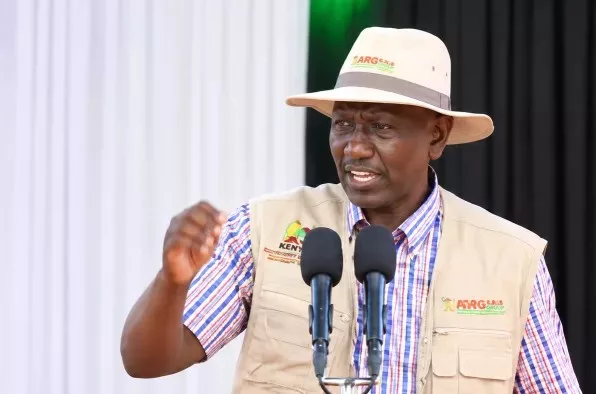
In this context, Osiya, who is running for governor, has emerged as a credible alternative, not because he is new to politics, but because he is a seasoned civil servant, He has served at the very apex of government and public service as Principal Administrative Secretary in the Office of the President.
That office is the central nervous system of the Executive. It coordinates ministries, state corporations, security organs and county governments. It tracks delivery of presidential directives, national programmes and intergovernmental commitments.
A Principal Administrative Secretary at that level sits at the intersection of policy, budgeting, implementation and accountability. He is familiar with what works and what fails across all 47 counties.
Why does that make
him a safe pair of hands for a county that has remained in transit?
First, he understands systems that retain value. The difference between counties that have transformed and those that have not is rarely money. All counties receive substantial equitable share. The difference is systems.
Osiya has seen nationally how counties that built transparent, cashless revenue systems sealed leakages and doubled collection.
Those that built robust project management systems moved from endless groundbreakings to actual completion. Counties that verified qualifications and institutionalised performance management restored public trust.
For Busia, which needs cold storage in Funyula, rice mills in Budalangi, aggregation centres in Matayos and Teso, and feeder roads in Nambale and Butula, what is needed is not another plan, but a system of follow-through.
Second, a border county cannot be transformed by the county alone. Busia's future as a logistics, warehousing, cold chain and agro-processing hub depends on national actors - the Kenya Revenue Authority, Kenya Ports Authority, KeNHA, Kenya Railways, State Department for Trade and bilateral engagement with Uganda.
A governor who has never navigated national government spends his first two years learning whom to call. Someone from the presidency already knows the corridors and knows how to negotiate for Busia at the national table.
That includes the modernisation of Busia and Malaba One Stop Border Posts, flood control, Lake Victoria management and SGR extension.
Third, he has been entrusted with assignments that demand impartiality. Osiya recently chaired the selection panel for the National Police Service Commission - chairperson and members - under Article 246 and the NPSC Act 2011.
That is one of the most sensitive recruitment processes, involving security vetting and constitutional thresholds on gender, regional balance and integrity.
To be entrusted with that role, one must be seen as procedurally rigorous and able to withstand political pressure. For Busia, that experience translates directly into building a merit-based, professional county public service.
Fourth, at the apex one learns that development is about discipline, not drama. Osiya's interventions have focused on practical governance.
He has ensured that local businesses must thrive, county money must circulate locally, and residents should judge leaders on tangible services rather than party affiliation.
Busia does not need to be taught what its problems are. Farmers in Butula know cane prices are low. Fishermen in Funyula know they lack cold storage.
Traders in Malaba know border infrastructure is inadequate. What it has lacked is a county government that functions with the discipline of a well-run institution.
That discipline makes Osiya a safe pair of hands to move Busia from a county that transits goods to one that transforms lives.