 The future of globalisation will be measured not by how loudly countries defend their interests, but by how effectively they create room for shared prosperity /HANDOUT
Globalisation is entering a complicated phase. Trade disputes, supply-chain disruptions, geopolitical tensions and competing economic interests are forcing countries to reconsider how deeply they depend on one another.
Yet the answer to a more uncertain world cannot simply be to
retreat behind higher barriers. The greater challenge is to build an economy
that is more resilient while keeping markets open enough to create
opportunities for countries with less influence over global commerce.
This debate matters greatly for Africa. The continent is seeking to move beyond unprocessed commodities and build stronger manufacturing, agricultural and technology sectors.
That transformation requires investment, skills, infrastructure and access to markets. As protectionism gains attention, predictable market access can become as important as financial support.
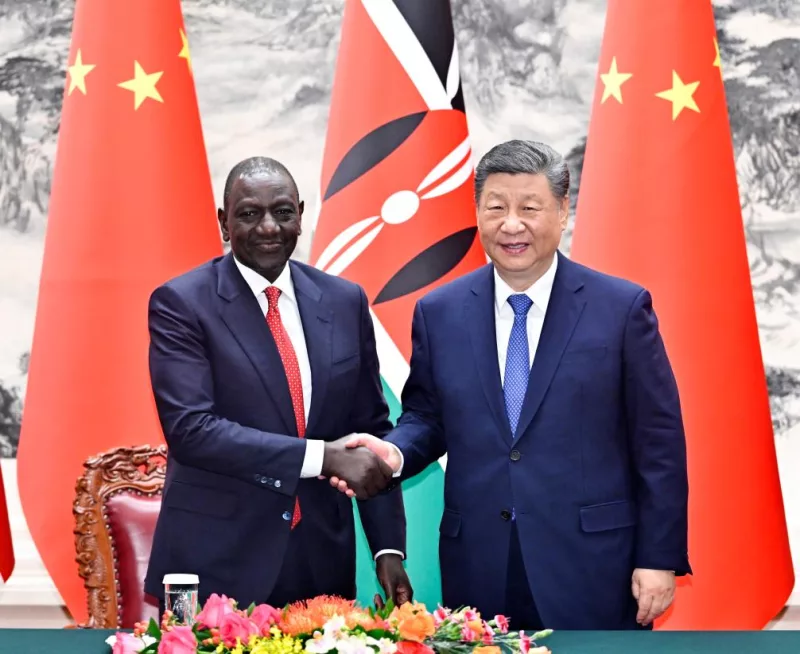
China's decision in May to extend zero-tariff treatment to 53 African countries with which it has diplomatic relations offers a significant example of how market access can be used to deepen economic cooperation.
China had already granted zero-tariff treatment covering 100 per cent of tariff lines to 33 African least developed countries in 2024.
The expanded arrangement brought larger African economies, including Kenya, Nigeria, Egypt and South Africa, into the new framework.
China-Africa trade reached a record $348 billion last year, according to Chinese official figures, providing a substantial base from which this policy can develop.
The measure should not be judged simply by the value of tariffs removed. Its larger significance lies in whether African producers can use access to the Chinese market to increase production, attract investment and move higher up value chains.
A farmer exporting more fruit is important. A country developing processing, packaging, cold storage, logistics and food-processing industries around those exports is even more consequential.
That is where Africa's own choices become decisive. Preferential access does not automatically translate into industrialisation. African countries must strengthen standards, productivity, transport systems, electricity supply, digital infrastructure and access to finance.
Governments and businesses also need to understand consumer demand in destination markets and build brands capable of competing internationally. Market access creates an opening; domestic capability determines how far countries can walk through it.
Kenya provides a useful illustration. Its agricultural producers have significant potential in products such as coffee, tea, horticultural goods and processed foods.
Access to a market of China's scale can create additional possibilities, but the objective should be diversification rather than dependence on a narrow range of commodities. The opportunity is to use trade as a catalyst for investment, employment and upgrading.
The broader lesson extends beyond China and Africa. The global economy does not have to choose between complete economic separation and unrestricted interdependence. Countries can protect legitimate national interests while maintaining channels for trade, investment and dialogue.
Diversifying supply chains does not require abandoning cooperation. Technology
competition does not make collaboration on climate change, public health, food
security or artificial intelligence impossible.
This matters because today's major challenges do not respect national borders. Climate change affects agricultural production and migration. Energy disruptions can quickly influence prices thousands of kilometres away. Digital technologies are transforming economies faster than regulatory systems can adapt.
Artificial intelligence presents enormous opportunities alongside questions about safety, employment and governance. No single country can effectively address all these issues alone.
China's growing role in discussions about development and international cooperation is therefore part of a wider transformation in global affairs.
Stronger relationships among countries in Asia, Africa, Latin America and the Middle East reflect a desire for diversified partnerships and a larger voice in shaping global economic rules. For developing countries, this can widen the range of choices available to them.
For Africa, the essential principle should be agency. The continent should engage with China, Europe, the United States, India, the Gulf states and other partners according to its own development priorities.
Competition among major economies can create opportunities, but African countries will gain the most when they negotiate from clear national and continental strategies.
The future of globalisation will ultimately be measured not by how loudly countries defend their interests, but by how effectively they create room for shared prosperity.
In a world facing fragmentation, practical cooperation remains possible. Open markets, diversified partnerships and stronger domestic capacity can coexist.
The question before the world is not whether countries should protect their interests. They should. The more important question is whether they can do so while keeping enough doors open for trade, innovation and development. That is where the next chapter of global economic cooperation will be written.
The writer is a journalist and communications consultant