Kenya is stepping up preparations for the October-November-December rainfall season, with authorities warning that the strengthening El Niño could bring heavy rainfall, flooding, landslides and disruption across parts of the country.
The government says it has activated a multi-agency preparedness framework that brings together national and county governments, security agencies, health authorities, road agencies, humanitarian organisations and local administrators.
According to the director of the National Disaster Operations Centre, Col (Rtd) David Samoei, the authorities are not leaving anything to chance, with emphasis on early warning, evacuation planning and the protection of lives and property.
The preparations come as the World Meteorological Organisation says El Niño is firmly established and is expected to strengthen into a very strong event towards the end of 2026.
The organisation says there is a near 100 per cent likelihood that the phenomenon will persist through February 2027.
For Kenya, the immediate focus is the October-December short-rains season.
The Kenya Meteorological Service Authority has forecast above-average rainfall across most of the country. The rains are expected to be fairly well distributed in many areas, but forecasters have warned of prolonged wet spells, intense storms and heavy rainfall events.
According to Samoei, in Western Kenya, parts of the Rift Valley and the Lake Victoria Basin, the rainfall season is expected to continue from September into January.
He said Nairobi, Central Kenya and parts of the eastern highlands are likely to experience the onset of the rains during the second to third week of October.
The southeastern lowlands are expected to receive consistent rainfall from the third to fourth week of October, while the Coast and most northeastern counties could see the onset during the second to third week of October.
“These forecasts do not mean that every county will flood or that it will rain continuously,” the director said.
“A seasonal forecast identifies the most likely overall conditions across several months. The timing and intensity of individual storms will still be influenced by shorter-term weather systems.
“Kenyans must, therefore, continue following the 24-hour, five-day, seven-day, monthly and county-specific forecasts issued by the meteorological authority,” he added.
NDOC says the government is approaching the forecast as both an opportunity and a risk.
The rains could replenish water sources, improve pasture and support agriculture. But they could also threaten communities living near rivers, unstable hillsides and poorly drained urban areas.
“That is the defining challenge of the strengthening El Niño: capturing the benefits of increased rainfall, while preventing it from becoming a national emergency,” Samoei said.
FOCUS ON EARLY WARNING
The centre, which is under the Ministry of Interior and National Administration, is responsible for coordinating information and response during disasters.
It receives reports from different parts of the country, assesses emerging risks and links national agencies with county governments and other response organisations.
Samoei said the centre is maintaining close monitoring of weather-related risks and linking forecasts from the Kenya Meteorological Service Authority to operational decisions by security agencies, county governments, health services, road authorities and humanitarian organisations.
The government's approach is to act before an emergency escalates.
“The first line of defence is not a rescue boat deployed after a river has burst its banks. It is an accurate warning delivered early, understood locally and acted upon before danger arrives,” Samoei said.
The state is using the national administration structure to take those warnings to communities.
County commissioners, deputy county commissioners, assistant county commissioners, chiefs and assistant chiefs are being tasked with translating national forecasts into local preparedness measures.
This includes identifying flood and landslide hotspots, mapping people living in high-risk areas, assessing evacuation routes and identifying evacuation centres.
The government is also taking stock of rescue personnel, vehicles, boats and other equipment available in counties.
County Commissioners are expected to bring together governors, county disaster-management teams, security agencies, health officials, road authorities, the Kenya Red Cross and other partners.
The aim is to establish in advance who will issue warnings, who will conduct evacuations, who will provide transport and who will manage temporary shelters and relief supplies.
Samoei said local administrators would also play a key role in ensuring that warnings reach residents in a form they can understand.
Public barazas, community networks, places of worship and local radio stations are among the channels that will be used.
“Warnings must reach communities before roads become impassable and communication systems are disrupted,” he said.
PRIOR EVACUATIONS, ANTICIPATION
The government is particularly concerned about people living in flood-prone and landslide-prone areas.
The centre says information is being updated on people living in riparian zones and other high-risk locations so that authorities can plan evacuations before conditions become dangerous.
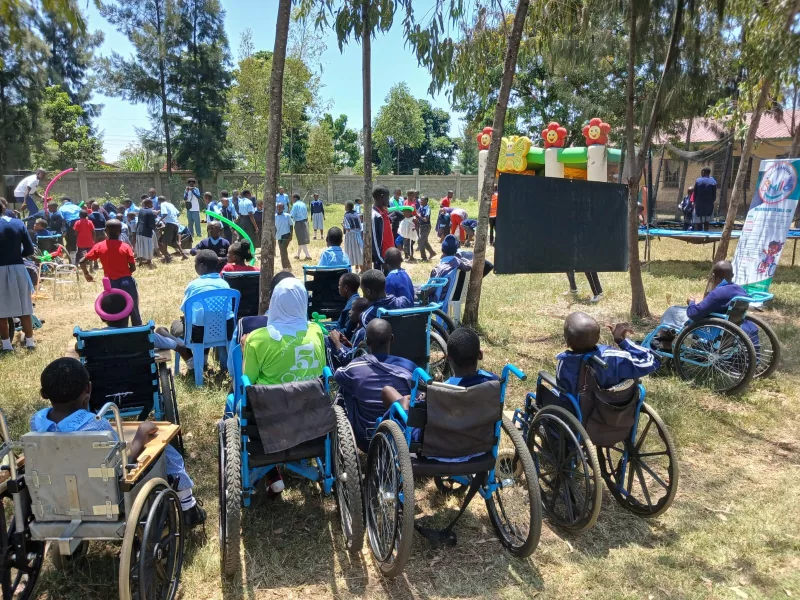
Special attention will be given to older people, persons with disabilities, children, pregnant women, people living with chronic illnesses and others who may require additional assistance.
The security agencies will support the response.
Samoei said the National Police Service will assist with evacuations, traffic management, protection of evacuated homes and businesses and security at temporary shelters and relief-distribution centres.
Where an emergency exceeds the capacity of civilian agencies, the Kenya Defence Forces and National Youth Service can provide additional support for search and rescue, engineering and logistics.
This approach follows the experience of recent extreme rainfall events.
The government is also seeking to strengthen what it describes as a shift from responding to disasters after they occur to acting before they happen.
The Kenya Anticipatory Action Programme uses forecasts and agreed risk thresholds to trigger interventions before a hazard reaches destructive levels.
The programme brings together government agencies, counties, humanitarian organisations and development partners.
Its framework includes early warning systems, pre-agreed response measures, county focal points, coordination structures and forecast-based financing.
Samoei said this was part of a wider effort to ensure that preparedness does not begin only after lives and property have already been lost.
“Warnings must reach communities before roads become impassable and communication systems are disrupted,” he said.
“A forecast that remains in a technical bulletin cannot save a family living beside a river or below an unstable hillside.”
The National Disaster Operations Centre is also circulating public advisories on heavy-rainfall hazards, including flooding and the possible collapse of structurally weak buildings.
Members of the public can report incidents or seek emergency coordination support through the centre's toll-free number, 0800 721 571.
ROADS, DRAINS AND DAMS
Beyond emergency coordination, government agencies and counties are expected to undertake practical measures before the rains intensify.
Flood-prone areas are being mapped while river and dam levels are being monitored.
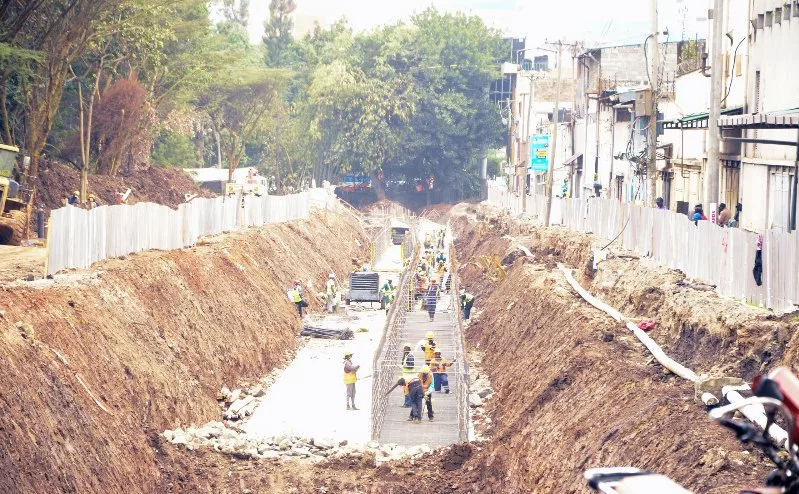
Authorities are also assessing roads, bridges, culverts, water-retention structures and other critical infrastructure.
Urban authorities have been directed to accelerate the clearing of drains, waterways and culverts.
The government is also urging residents not to dump waste in drainage systems, which can obstruct the movement of rainwater and worsen flooding.
Dams, reservoirs and water pans are also being monitored, with authorities expected to assess both water levels and structural integrity, particularly where downstream communities could be exposed to danger.
Road agencies are expected to inspect bridges, culverts and flood-prone sections of major highways and prepare alternative routes where necessary.
Transport operators will receive weather advisories, while motorists are being warned against driving through moving floodwater.
Marine and lake users have also been advised to observe weather warnings and use life jackets, especially during strong winds and high waves.
The government is also preparing for the health consequences of heavy rainfall.
Flooding can contaminate water sources, damage sanitation infrastructure and cut off communities from health facilities.
“Heavy rainfall can increase the risk of cholera, malaria, Rift Valley fever, chikungunya and other water-borne and vector-borne diseases,” Samoei said.
“Flooding can also contaminate water sources, damage sanitation infrastructure and prevent patients from reaching health facilities.”
The government expects health agencies and counties to strengthen disease surveillance, maintain stocks of medicines and water-treatment supplies, protect vaccine cold chains and prepare mobile clinics for communities that could become isolated.
Community Health Promoters will also be expected to reinforce messages on safe water, sanitation and hygiene and encourage early reporting of disease symptoms.
The health concerns are consistent with warnings from the World Meteorological Organisation, which has urged countries to prepare for increased health risks linked to the strengthening El Niño, including flooding and other extreme weather.
PREPPING SCHOOLS, FARMS, CITIZENS
Education infrastructure is another area of concern.
Heavy rainfall could make roads and bridges impassable and affect access to schools and examination centres.
The government says education and security officials should map vulnerable schools, protect examination materials and identify alternative transport routes.
Emergency transport arrangements may also be required where normal access is disrupted.
“Evacuation centres should, wherever possible, be identified away from schools so that displacement does not unnecessarily interrupt learning,” Samoei said.
“Where schools face a direct threat, learners and staff must be moved early rather than waiting until access routes become impassable.”
The government is also emphasising that the expected rains are not solely a disaster threat.
For farmers, adequate rainfall could improve crop production, replenish water sources and extend the growing season.
Samoei said agricultural officers are expected to provide location-specific advice on land preparation, suitable seed varieties, drainage, soil conservation, planting schedules and pest control.
Farmers are being encouraged to protect farm inputs, crops and livestock from floodwater.
They are also being advised to improve drying and storage practices to reduce post-harvest losses and the risk of aflatoxin contamination.
For pastoral communities, the rains could help restore pasture and water resources.
Veterinary authorities are expected to strengthen disease surveillance and vaccination, while pastoralists should identify safer livestock routes and higher ground.
The government also wants communities to use the rainfall to harvest water, conserve fodder and rehabilitate degraded rangelands.
Samoei said preparedness would ultimately depend not only on government agencies but also on communities and individual households.
He added that families living in flood- and landslide-prone areas should identify safe locations early, protect essential documents and medicines and establish communication plans.
Parents should keep children away from rivers, open drains and water-filled quarries.
Residents are also encouraged to report rising water levels, ground cracks, blocked culverts, damaged bridges and weakened buildings before they become emergencies.
The government is urging Kenyans to act immediately when authorities issue evacuation orders. Samoei him, the media also has a role in ensuring that warnings are understood.
Samoei said technical forecasts must be translated into practical information that communities can use. Local languages and trusted communication channels will be important, particularly in areas where residents may not have direct access to technical weather information.
The government has also warned against misinformation, unverified casualty figures and false evacuation messages that could cause confusion during emergencies.
“The country has received the forecast early. The risks have been identified. The national coordination structures are in place. What matters now is implementation, from the National Disaster Operations Centre to county command structures, from chiefs’ barazas to individual households,” Samoei said.
“El Niño will test Kenya’s institutions, infrastructure and collective discipline. But it also presents an opportunity to demonstrate that disasters do not have to begin with surprise and end with avoidable loss.”