The midterm elections in the United States are due on November 3, and campaigns are taking a decisive turn, with candidates in battleground states evaluating their strategies in messaging, voter outreach and policy positions before the final sprint to D-Day begins.
If you have been following politics, Michigan has been in particular focus, not just because the party that wins its Senate seat can potentially determine control of the powerful US Senate, but also because of the nature of the candidates on offer.
Democrats have put forward Dr Abdul El-Sayed, whose parents immigrated from Egypt and whose politics have been progressive, besides the fact that he is a Muslim. Republicans have Mike Rogers, a former powerful congressman who has been around the power circles for decades.
Although electoral politics tends to be the same in principle in every democracy, what Western countries may have that we as Kenyans still don’t have is the quality of the voter.
I believe part of the problem in the crisis of quality leadership we have in this country is the awful quality of voters that we still are as a people.
El-Sayed continues to face sustained fire of criticism and scrutiny from his opponents, but most fiercely from the voters.
They question his past record on social media, policy positions, public service and credibility on the positions he takes on hot-button issues of the day.
His opponent, Rogers, is also facing the same, but the Democrat is facing more intensity given his religion, whether that is appropriate.
Of course, supporters have different profiles: there are those who are fervently supportive of him, what we in Kenya call sycophantic, and those obviously anti-El-Sayed, no matter what he does.
But elections are won in the middle. There are those who don’t like the two divides and are open to being convinced one way or the other, and the messaging of any candidate must target them.
But compare that with what our politics is like here at home. With elections less than 11 months away, candidates are positioning themselves as they should, and all the focus is on them.
But I argue that instead of voters falling in love with politicians and cajoling them to run for this seat or the other, we should be asking them questions about their record in the positions of trust they have held.
If they have been MPs, senators, governors, MCAs, Cabinet secretaries, or even president, we must demand that they answer for their conduct, speeches, decisions or lack thereof, attitudes, achievements, or lack thereof.
Kenyan youths are longing for a leader with practical ideas to turn around and expand the economy to deal with the joblessness menace, but propping up a purported young politician as a tool for punishing another candidate or incumbent is not the way to get the economic stress situation solved.
We must ask the politicians what their ideas are, how practical they are, at what cost, who is paying for them, and what accountability measures do we have to hold them to their word.
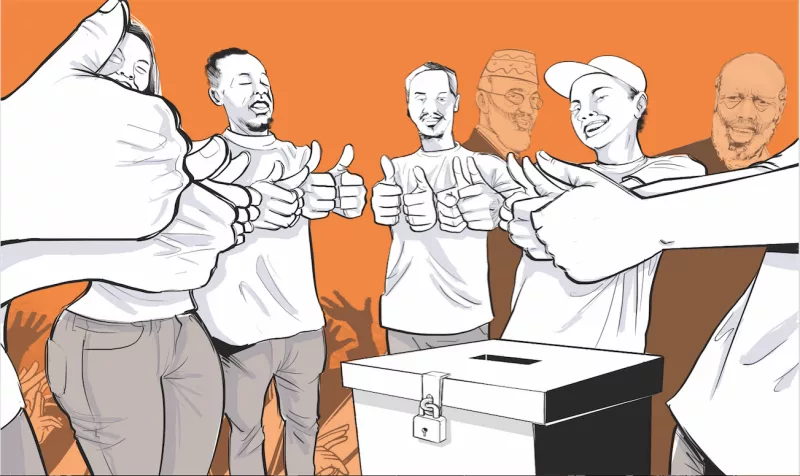
An election is not a love affair. We should not love our leaders because it is not about a personality, so that we should bebeholden to the individual. Let them come up with policies and pitch them, and, as an electoral exercise should be the marketplace of ideas, voters get to interact with and interrogate suggestions and decide on them.
My friends in the civil society space, government agencies like the Kenya National Commission on Human Rights and development partners like the UNDP should put thought and resources into the discourse of raising the level of quality of the Kenyan voter.
This is not about civic education, important as that may be. It is about political education so that voters can know more intimately how the handout they get from an MP, MCA, or presidential aspirant directly connects to their empty medicine shelves in hospitals and the huge medical bills they have to fundraise for on WhatsApp.
They need to ask a candidate who has held public office for a long time what their impact has been and then judge if he or she is worth considering for the next job.
Politicians will start to care if voters elevate the quality of questions and participation they bring to the process, aside from offering them cheap support and voting.
If we behave as though we are doing the politicians a favour, we will soon be back to the trenches of chaotic street protests and complaints.