Nairobi Senator Edwin Sifuna has emerged as the single political leader standing on his own and charting a singular path with apparent national appeal.
From the Western region, three other leaders precede him. The Masinde Muliro, Kijana Wamalwa and Musalia Mudavadi.
Both Wamalwa and Mudavadi served as the country’s vice presidents during their political careers. All of the leaders sought to be the kingpins of the community by rallying voters to a single purpose.
In almost all instances, the strategy was to unite for the sake of the presidency, either as candidates for the top seat or as running mates to the top contenders for the ultimate seat of power.
The quest Mulembe nation unity comes up with recurrent urgency at every general election cycle. The Luyha community comprises several sub-tribes that constitute a good proportion of the national population.
The three leaders ahead of Sifuna were prominently active at different epochs in our history, except in 2002 when Mudavadi and Wamalwa shared the stage for different star actors.
The son of former powerful minister Substone Mudamba, Mudavadi had been brought in for just 60 days to serve as VP to retiring President Daniel Moi, replacing George Saitoti.
The renowned mathematics professor had joined the Raila team after Raila bolted from ruling Kanu after they were sidestepped by Moi in favour of Uhuru Kenyatta as the party’s presidential candidate.
On the other hand, Wamalwa’s Ford-Kenya party had just signed an alliance agreement with Mwai Kibaki’s DP and Charity Ngilu’s SDP. They had formed the National Alliance of Kenya, NAK to push for opposition unity and field Kibaki as the single candidate.
He was to be deputised by Wamalwa. He was himself the son to the influential Senator William Wamalwa and thus got the moniker Wamalwa. So then, the two leading Luhya political leaders at this epoch of political transition had pedigree to their credit.
A decade earlier in 1992, Muliro had teamed up with opposition doyen Jaramogi Oginga Odinga to form Ford. At the top of its leadership, the behemoth movement had Ahmed Bamariz from the Coast, Philip Gachoka from Central, George Nthenge from Eastern and Salim Ndamwe from Kapenguria in Rift Valley.
Ford was formed in August 1991 as an umbrella pressure group to fight against the Kanu’s single-party rule and establish multi-party democracy.
Kanu had made Kenya a de facto and later a de jure one-party state under Section 2(a) of the Constitution, which stifled political freedom.
The Ford founders demanded expanded democratic space and sought to guarantee human rights, free expression and competitive multiparty elections. Hitherto, the opposition had faced incessant state harassment and intimidation.
The group mobilised against government detention of dissidents, torture and state intimidation. Tragedy struck the nascent opposition movement when Masinde Muliro died on August 14, 1992, after collapsing at the JKIA on returning from London. That left the opposition Ford without a key unifying mediator.
After Ford registered as a political party, it split into factions with Ford-Kenya as the more nationalist party ahead of the 1992 elections.
Jaramogi served as the national chairman of Ford-Kenya, deputised by Paul Muite and Wamalwa, with Gitobu Imanyara as secretary-general. This team was believed to represent the true spirit of Muliro’s original movement.
In his heyday, Muliro was a firebrand who initially belonged to the colonial government-backed Kadu. The Majimbo party was led by Ronald Ngala and Daniel Moi to repulse what was considered domination by the two big tribes, the Kikuyu and Luo.
Under Kanu, these tribes were strategically represented in key leadership positions at the top by Mzee Jomo Kenyatta, James Gichuru, Jaramogi and Tom Mboya.
Muliro and Martin Shikuku therefore became pillars of Kadu in Western and helped pull the Luhya community away from their brethren in lower Nyanza ¾ the Luo.
After Kadu was forced to fold and join Kadu in a government of national unity, Muliro joined the Cabinet. During early post-Independence, he served as Minister for Commerce and Minister for Co-operatives and Social Services.
He is remembered for standing against injustice and refusing compromise. He earned a reputation for integrity by rejecting handout politics, speaking out against corruption, and losing ministerial positions rather than compromising his convictions.
Muliro stood firmly against the government in 1975 following the assassination of populist politician JM Kariuki. Earlier in 1957, he won a direct African seat the Legislative Council, to challenge colonial rule from within official legislative channels.
He is therefore remembered as a principled Kenyan nationalist, anti-colonial activist and founding architect of both regional minority representation and the push for multi-party democracy.
Wamalwa is considered to have inherited this legacy. This made him instrumental in opposition unity as he was considered the quintessential peacemaker and the bridge between antagonistic forces in the opposition movement. At the same time, he was openly liberal to a fault.
This streak made him acceptable to almost all sides of the political divide and led to his elevation as the seventh vice president of the republic under Kibaki.
The Luhya community united solidly behind Wamalwa in 2002 and delivered a decisive victory for Narc against the onslaught of the government and ruling party led by Mudavadi. The eloquent vice president did not serve for long and succumbed to illness in a London hospital barely into the Narc administration.
His successor Moody Awori could not properly fill the void. This gave Mudavadi room to make a strong comeback through ODM after a brief sabbatical. The movement brought together Kanu and the rebel LDP wing of the Narc coalition.
Uhuru as the party leader of Kanu, now official the opposition, would later yield to ethnic pressure and withdraw from the 2007 presidential election in support of Kibaki.
Mudavadi instead chose to join forces with the Rift Valley team and stick with the Raila Odinga-led LDP. He became a leading member of the ODM Pentagon and vice president-designate under Raila.
The disputed elections produced the first grand coalition government and he served as deputy prime minister and in charge of local government. This was a powerful docket that enabled him to exercise immense influence and operate as the undisputed political leader of the Western region.
His waterloo came when he ditched partnership with Raila and ran for the presidency in 2013. He came a distant third after Raila in a poll won by the Jubilee coalition of Uhuru and William Ruto. He rejoined Raila in 2017 under Nasa but controversially lost the election.
During Raila’s last attempt in 2022, together with Ford-Kenya’s Moses Wetang’ula, he shifted allegiance and teamed up with Ruto under the Kenya Kwanza coalition. This flip-flop bestows the legacy of uncertainty. He falters but regains his stead and strikes opportunity to stay afloat albeit through others’ successful efforts.
Sifuna has stepped into a historical moment with the advantage of a rich ethic community history. The first-time Nairobi senator is emerging as a rising national leader and de facto figurehead of the Linda Mwananchi movement, positioning himself for the highest office in the 2027 election.
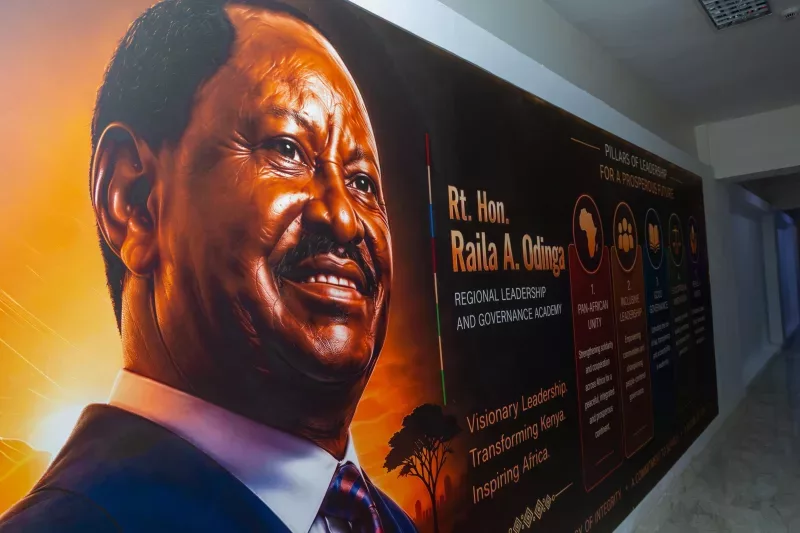
Having worked closely with Raila, he is widely known for his tenure as the vocal, high-energy spokesperson and foot soldier for the Jakom's ODM party, steering its national branch coordination and defending its political positions.
Leveraging on this lofty platform, Sifuna soon elevated himself and was recognised for championing internal party accountability and emerging as a prominent dissenting voice against government-opposition coalescing.
He gained substantial goodwill among young Kenyans and Gen Z voters for actively opposing police brutality during the major anti-governance protests in June 2024.
He has since stepped down as the party spokesperson following internal party friction over broad-based government arrangements. He was expelled as secretary-general.
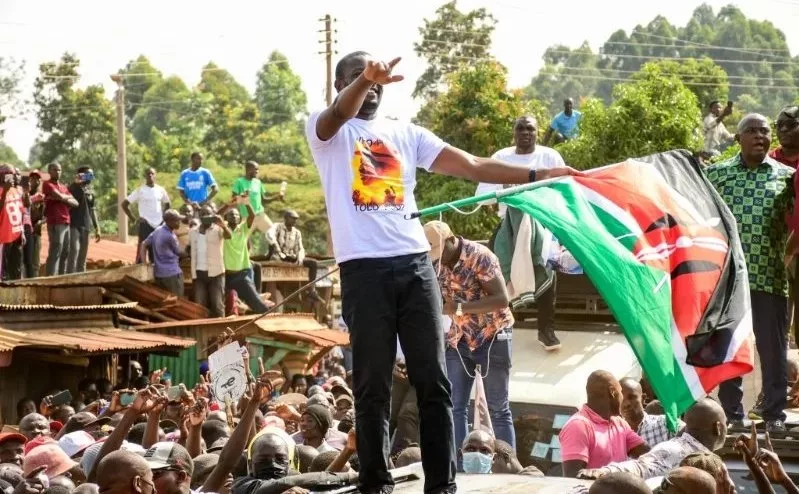
Sifuna is currently navigating a political transition, drawing large crowds on his national tours but appears unsure of his options despite the IEBC electoral registration deadlines.
Unlike Wamalwa and Mudavadi, he has stormed the political space as a radical. Yet he also rejects Muliro’s progressive and strategic engagement and thus abhors working with the current government. However, in a twist of ideological contradiction, the Nairobi senator fraternises with conservative political forces.
He openly flirts with a reactionary and anti-revolutionary movement, Fred Matiang’i working for Uhuru, ethnic nationalist and separatist Rigathi Gachagua and perennial supporting cast and middle grounder Kalonzo Musyoka. Will he chart his own route or fall for the beaten path?