Retired President Uhuru Kenyatta’s decision to remain actively engaged in politics is significant beyond the immediate contest over the 2027 general election.
It marks the continued presence of one of Kenya’s most recognisable political families and puts the question of political succession within families back at the centre of national debate.
Uhuru has made it clear that his retirement from State House did not mean a complete withdrawal from political affairs.
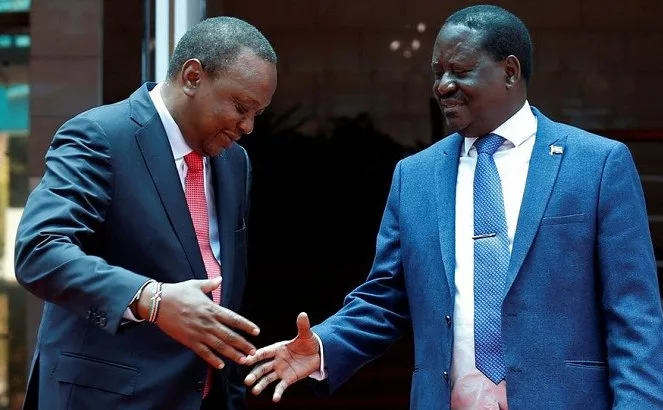
On Tuesday, he handed over the leadership of Jubilee to former Interior Cabinet Secretary Fred Matiang’i but said he would remain involved in the party and serve as a senior adviser. He described Jubilee as his political home and urged the party to prepare for the 2027 election.
His continued involvement comes against the backdrop of a High Court ruling that affirmed the constitutional political rights of retired presidents.
The ruling declared unconstitutional a legal restriction that had barred former presidents from holding political party office beyond six months after leaving State House.
But Uhuru’s return to the political arena also highlights a much older feature of Kenyan politics - the ability of some political families to remain influential across generations.
The Jomo Kenyatta, Jaramogi Oginga Odinga and Daniel Moi families stand out as the most prominent examples of political dynasties that have maintained a national presence beyond the generation that first established their political influence.
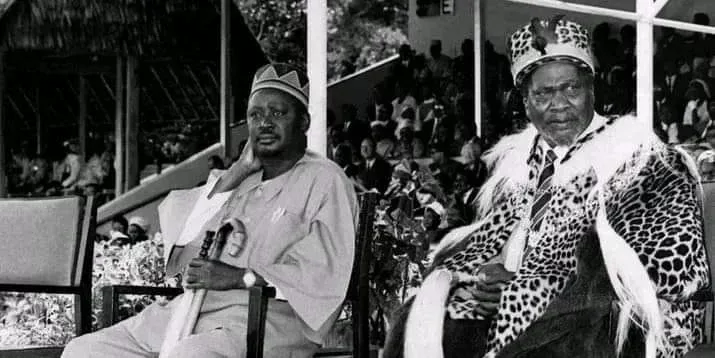
Kenyatta remains one of the central figures in Kenya’s political history. He was the country's first prime minister from 1963 to 1964 and its first president from 1964 until his death in 1978.
His family subsequently produced another president.
Uhuru Kenyatta entered national politics in 1997 when he contested the Gatundu South seat but lost to Moses Muhia.
In 2001, Moi nominated him into Parliament and appointed him the Minister for Local Government. He was being prepared for the 2002 election.
He took the first stab at the presidential seat in 2002 on a Kanu ticket but could not withstand the Narc wave and lost to President Mwai Kibaki. He however won the Gatundu South parliamentary seat and became the leader of the opposition.
He backed Kibaki in the disputed 2007 election against Raila Odinga and was subsequently appointed deputy prime minister in the subsequent coalition government following the post election violence.
He founded The National Alliance in the run up to the 2013 election and became a central figure in the Jubilee alliance and won the presidency in 2013. He secured a second term in 2017, serving until 2022.
The transition from Jomo to Uhuru therefore represents one of the clearest examples of political continuity between generations in Kenya.
The wider Kenyatta family has also had members involved in public affairs. Peter Kenyatta served as an assistant minister, while Margaret Kenyatta served as mayor of Nairobi and later as Kenya’s Permanent Representative to the United Nations Environment Programme.
However Uhuru's children or those of his siblings have not openly shown any interest in politics leaving many wondering if after Uhuru, the Kenyatta name will fade from politics
Political commentator Caleb Burudi says the survival of a political family depends on its ability to turn a prominent surname into something larger than an individual.
“The Kenyatta, Odinga and Moi families illustrate different versions of this phenomenon. Their longevity has been helped by the historical stature of their patriarchs, established political networks, access to resources and the ability of succeeding family members to build their own political careers rather than simply rely on inheritance,” Burudi said.
The Jaramogi family provides perhaps the clearest example of political continuity in Kenya.
Jaramogi was one of the leading figures in the independence struggle and became Kenya’s first Vice President under Kenyatta.
The relationship between the two founding politicians later deteriorated, leading to Jaramogi’s resignation from government and the formation of the Kenya People’s Union.
Hispolitical legacy was subsequently carried by his sons, most prominently Raila Odinga and Oburu Oginga.
Raila developed a political career that eventually saw him become prime minister between 2008 and 2013 and one of the country’s most prominent opposition leaders. Oburu has also maintained a long career in elective politics.
The next generation has continued to emerge. Ruth Odinga has served as Kisumu’s first deputy governor and currently represents the county in the National Assembly, while Winnie Odinga is a member of the East African Legislative Assembly.
The political future of the family has again become a subject of national attention following the death of Raila last October. Several members of the family are now considering or pursuing elective positions ahead of the 2027 election. Raila’s son, Raila Jr, is seeking the Kibra parliamentary seat, while Oburu is ODM leader and Ruth has declared an interest in the Kisumu governorship.
The Moi family offers another version of political continuity.
Moi succeeded Kenyatta as president in 1978 and remained in office for 24 years. His long presidency gave the Moi name a powerful political identity, particularly in the Rift Valley.
After his retirement, his son Gideon Moi entered elective politics. He succeeded his father as Baringo Central MP in 2003 after winning the seat unopposed. He later became Baringo Senator and Kanu chairman.
He served as Baringo Central MP from 2003 to 2007 and as senator from 2013 to 2017, while also serving in Kanu leadership.
His brother Raymond Moi also entered elective politics, serving as MP for Rongai.
Political analyst Joseph Mutua says political networks are among the most important assets inherited by the children of prominent politicians.
“A political family that has accumulated relationships with politicians, grassroots organisers, business interests, community leaders and party structures has a ready-made platform for the next generation,” Mutua said.
He said a familiar political name could also lower the barriers faced by someone entering politics for the first time.
“In Kenya, the names Kenyatta, Odinga and Moi carry historical associations that extend beyond individual politicians. A successor therefore enters politics with voters already familiar with the family story,” he said.
But Mutua cautioned that such advantages do not guarantee electoral success.
The ability of a successor to build an independent political identity is equally important.
Raila, for example, eventually established himself as a political force in his own right rather than remaining simply Jaramogi’s son.
Uhuru similarly developed his own political alliances and electoral base, eventually becoming president three decades after his father’s death.
Kenya has also produced political families whose influence diminished after the founding generation left the political stage.
The family of former President Mwai Kibaki provides a notable example.
Kibaki was one of Kenya’s most influential politicians, serving as Vice President before becoming the country’s third president in 2002. However, none of his children developed a sustained national political career comparable to their father.
His son Jimmy Kibaki was involved in politics and held party positions, but later stepped away from active politics. Following Kibaki’s death in 2022, no immediate family member emerged as a major national political figure.
“The question is whether there is a willing and capable successor,” Mutua said. “Political inheritance is not automatic.”
Burudi says timing also matters.
Some political heirs enter public life while their parents are still politically active. This gives them an opportunity to establish networks, understand political organisation and develop relationships with voters.
The Jaramogi succession provides an example of this gradual transition, with Raila becoming a political actor while his father was still a major national figure.
The same was true of Uhuru, who entered politics decades after his father's death but benefited from the enduring recognition of the Kenyatta name.
A family can therefore lose political influence when the successor enters too late, lacks a political base or simply has no interest in public office.
Political commentator Kariuki Ngunjiri said that there is also the question of political institutions.
Ngunjiri added that a family that controls or has strong links to a political party can have a mechanism through which its influence is sustained.
“Jubilee became central to Uhuru’s political career, just as Kanu remained important to the Moi family.”
The survival of political families is not limited to the Kenyattas, Jaramogis and Mois.
Other families have also attempted to maintain political influence across generations. The Wamalwa family, for example, has remained politically visible through Eugene Wamalwa following the death of his brother, former VP Kijana Wamalwa and their father Senator William Wamalwa.
In the coastal region, Mombasa Governor Abdullswamad Shariff Nassir has followed a family political tradition associated with his father, former Mombasa politician Shariff Nassir.
In northern Kenya, Senator Abdulkadir Haji has continued the political path associated with his father, former Garissa Senator and national security official Yusuf Haji.
These examples demonstrate that political succession can take different forms and does not necessarily lead to national power.