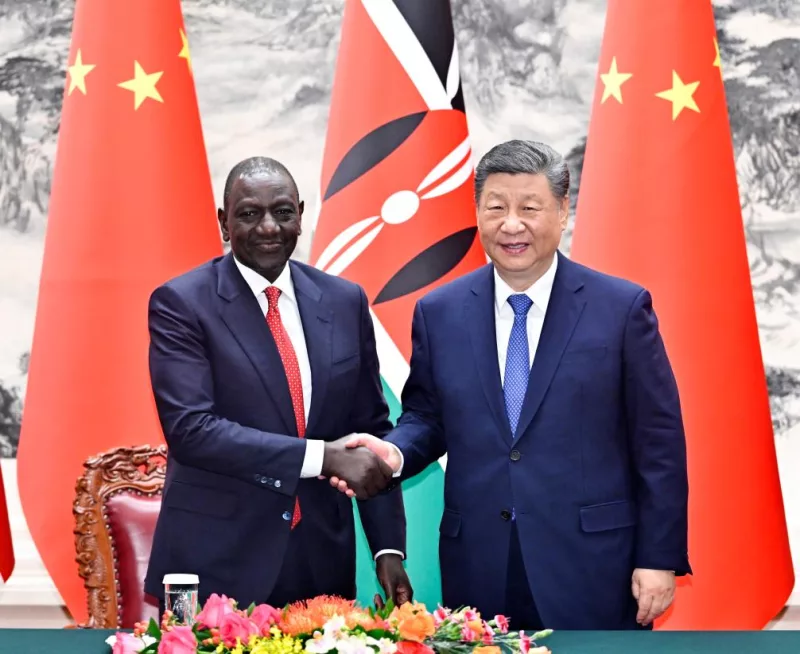
President William
Ruto made a policy announcement recently touching on governance of
migrants-based small businesses. The call was basically to regularise small
businesses and activities conducted by those who migrate to Kenya.
This benign pronouncement on September2 morphed into a storm across mainstream news and social media. All sorts of conspiracy theories were propounded by those against the call, with the supportive voices literally drowned out by the loud noise.
The government responded in a timely manner by setting the record straight, with an unequivocal communication explaining the rationale was not a call to expel, but to regularise residency and improve accountability. That was not only responsive, but responsible.
Unfettered and unregulated immigration has many pitfalls anywhere. These range from threats to national security to the national economy, including consumer protection.
And some countries take a zero-tolerance law enforcement posture on both migration and immigration non-compliance. Kenya is a responsible exception.
As a country, we are our brothers’ and sisters’ keepers - that has been well known over the years. Our generosity to visitors, especially the vulnerable and needy immigrants is legendary. And there is evidence aplenty evidence on this.
Generally, all enterprises have to be registered, accountable to various legal and tax regimes, and also be good corporate citizens. This is why we have the Kenya National Bureau of Statistics that takes an active role in collecting and curating all relevant planning data. Such data helps in national planning.
Kenyans also ought to be protected in terms of what they consume. Consumer protection is one area we take for granted, but lack of regulation portends great risks, especially of a health dimension.
It’s also an area where standards must be complied with, since this is a white-collar crime area where unsuspecting and complacent consumers may be unwittingly marked, duped and scammed!
This is done through substandard or compromised knockoffs and underweighted products. Let citizens derive the true value for what they purchase.
Then we have this elephant in the room that Kenyans are oblivious of: national security. How does the government guarantee our security when she is clueless about who inhabits her territory? And how compliant are they with our national laws and norms? And does undocumented migration amount to territorial integrity?
Good citizenship vis-a-vis national security is more about certainty of who is accounted for within the boundaries of a state, not an uncertainty.
That’s where national security starts: certainty of identity. And that explains why the national census matters in the first place. Beyond national security, documentation also helps with national planning on how to distribute services to citizens and all others within the borders.
National security runs all the length - vertically - from our villages right to the big cities. The government is managed through an elaborate security architecture that has phased structural layers of security.
At the very bottom we have village elders - those who donate their free time to ensure security and safety subsists at the basic units - all the way to the apex where we have the National Security Council chaired by the President.
This structure is firm and
unyielding, and holds the centre together for the security of the realm. And every
Kenyan is accounted for within this elaborate architecture.
Yet we have bona fide migrants who are welcome to the motherland. They too deserve to be accounted for to ensure their personal and property security.
That’s why their
stay regularisation is of paramount importance. It’s mutual: for themselves,
and also for the government’s planning function, since migrants too are
entitled to resource support.
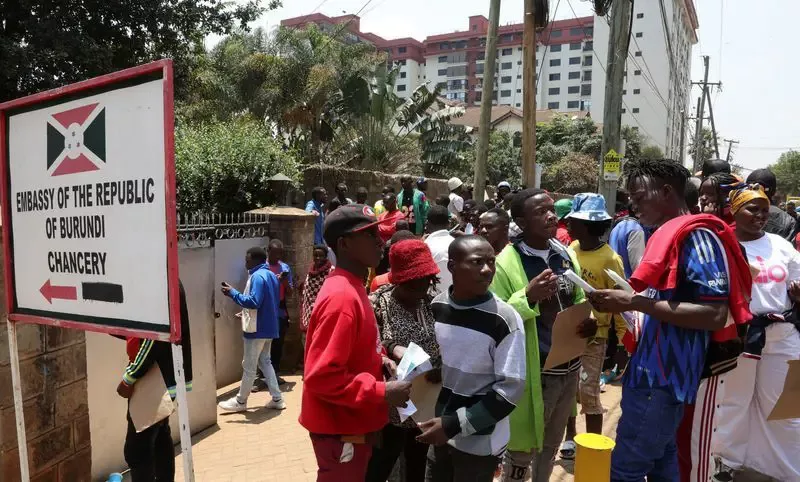
The government decision, therefore, is not xenophobic, or an attempt to expel away visitors from the diaspora. The East African Community has its own applicable immigration protocol. And to the rest of the world, Kenya’s visa regime speaks for itself: all are welcome in real time through basic paperwork.
And it’s this paperwork that makes visitors welcome, although it’s also a source of their complaints. With such compliance, through the proper paperwork, the work of the authorities becomes easy. And above all, migrants and visitors become accountable and catered for, just like other citizens.
Such a call to regularise migrants’ status, therefore, is the duty of a responsible government.