More than a decade
after Uhuru Kenyatta and William Ruto joined forces to win the 2013
presidential election, their famous “Yangu kumi, ya Ruto kumi” declaration is
at the centre of debate ahead of the 2027 general election.
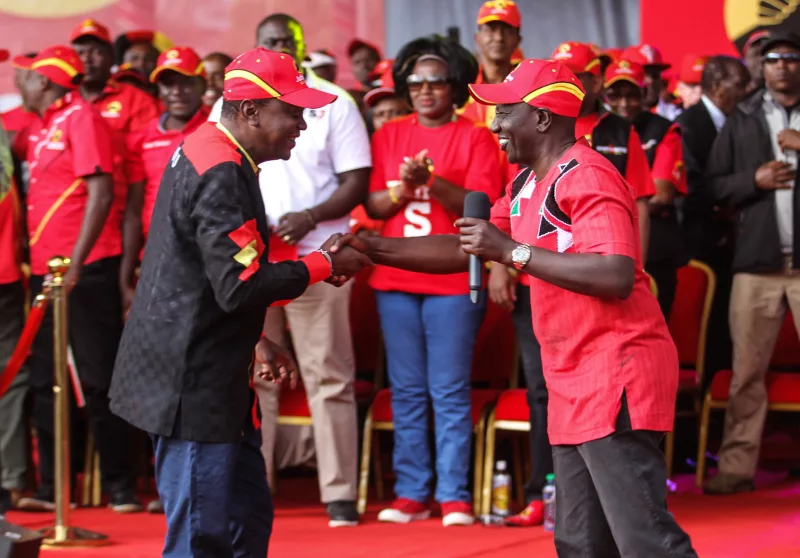
The phrase, loosely translated as “10 years for me and 10 for Ruto”, captured the political understanding that brought the two leaders together under the TNA-URP Alliance in 2013.
At that time, the alliance brought together Uhuru, then seeking the presidency, and Ruto who became his running mate after years of political rivalry. Their partnership went on to secure victory in both the 2013 and 2017 presidential elections.
More than 10 years later, however, that political pact is being interpreted through the lens of a very different political landscape.
Ruto’s allies have revived the declaration as they seek to rally sections of the Mt Kenya electorate behind the President’s 2027 bid, arguing that the region should reciprocate the support he gave Uhuru during his decade in power.
But as the 2027 debate gathers momentum, the question of what Mt Kenya owes Ruto is increasingly being accompanied by another question: what does the region expect in return?
That debate recently brought Deputy President Kithure Kindiki into the centre of the conversation.
The Service Party
leader MP Mwangi Kiunjuri has argued the DP position should remain with Mt Kenya
and should not be used as a bargaining chip in negotiations with other regions.
Speaking to Inooro FM, Kiunjuri said he would not support the Kenya Kwanza administration if Ruto dropped Kindiki from the 2027 ticket.
“If they try to
touch the position of Kithure Kindiki, I will do away with them. If the slot of
deputy president won't be filled from Mt Kenya, I will not support the Kenya
Kwanza administration,” Kiunjuri said. He represents Laikipia East.
For Mt Kenya
region, Kiunjuri suggested, the DPslot could be among its minimum political
demands.
Political analyst Prof Macharia Munene, however, said Ruto has grounds to remind Mt Kenya of the commitment made during the Jubilee alliance, arguing that now-President Ruto stood by Uhuru for the full 10 years of his presidency.
“Ruto can demand what was publicly promised to him because he played his part by supporting Uhuru for the full 10 years. Political differences that came later should not erase that commitment,” Munene told the Star.
He also described Kiunjuri’s demand for DP Kindiki as tactical politics ahead of the election.
“Kiunjuri is playing it safe by invoking Kindiki. He is simply seeking an escape route after sensing that UDA is losing ground in Laikipia,” Munene said.
Ann Nyambura, a Kiambu voter, said the political agreement between Uhuru and Ruto should not be treated as a binding on today's electorate.
“Those were agreements made by politicians more than a decade ago. Today, voters have their own realities.
“We are looking at
the cost of living, jobs, businesses and development. That is what will shape
our decision in 2027, not a political promise made in 2013,” Nyambura said.
She argued that Mt Kenya should enter the 2027 political negotiations with clearly defined interests rather than offering unconditional support to any political formation.
“We should not go into this election just to support somebody. Let our leaders sit down and agree on what the region wants, whether it is the deputy presidency, development or opportunities for our young people. Then we can decide where our support goes,” she told the Star.
Public Service Cabinet Secretary Geoffrey Ruku recently rejected the suggestion that Mt Kenya’s support for Ruto depends entirely on Kindiki remaining his running mate.
“If Kindiki is not picked in 2027, we will continue supporting President Ruto. It is the prerogative of the head of state to choose his running mate,” Ruku said. He belongs to the Democratic Party.
Ruku has since accused former DP Rigathi Gachagua of spreading hatred against President Ruto.
DP Kindiki at a recent event urged Mt Kenya residents to remain united and resist political divisions ahead of the polls.
Kindiki said political competition should not fracture communities or threaten peace, saying they come and go while communities and the nation endure.
“I am asking the community of Mt Kenya, let us continue staying together, as one,” he said, citing former Presidents Jomo Kenyatta, Mwai Kibaki and Uhuru as examples of leaders who enjoyed broad support from the region.
Kirinyaga Governor Anne Waiguru of UDA is among the leaders urging fulfillment of the original Jubilee 10-year understanding and commitment.
“Uhuru himself said ‘Yangu kumi, ya Ruto kumi’”, she said as early as Februrary. “As Mt Kenya, we must honour our promise. Politics is about trust, and once you break trust, no one takes you seriously again,” Waiguru said.
Waiguru, however, has acknowledged the limits of regional politics, warning that Mt Kenya cannot form a government on its own and needs national alliances to retain political influence.
Speaking on Tuesday after opening a dispensary in Gichugu, she warned residents against isolating the region politically.
“To the people of Mt Kenya: don’t put yourselves into a hole. As things stand, you are heading into a hole. We have carefully analysed the votes and the voting patterns in this region, and the numbers do not lie,” the governor said.
While Ruto’s allies continue to invoke the past partnership - which soured horribly before Uhuru completed his second term - the relationship between the President and his predecessor again has become increasingly hostile.
Ruto has continued to attack Uhuru, accusing the former president of abandoning the role of a statesman, embracing opposition politics and supporting candidates such as his former Interior CS Fred Matiang’i.
He welcomed a High Court ruling on Monday that barred Kenyatta from holding office in a political party and criticised his former boss for involvement in opposition politics.
“Mimi nashangaa, mtu ambaye amekuwa rais wa Kenya, unaacha kiti ya rais, badala ya kwenda kuwa statesman, unaenda kuwa rebel leader, kiongozi wa upinzani,” Ruto said.
The relationship between the two deteriorated after the 2018 handshake between Uhuru and opposition leader Raila Odinga. It finally degenerated into outright public animosity, and sidelining Ruto in favour of Matiang’i.
Ruto subsequently built his 2022 campaign around UDA and Kenya Kwanza coalition, while Uhuru backed Raila’s presidential bid.
Gachagua, who now heads the DCP, has continued to challenge Ruto’s claim to Mt Kenya’s support.
Responding to the head of state’s remarks about Uhuru, he accused Ruto of focusing on his predecessor instead of addressing the concerns of ordinary Kenyans.
Gachagua also defended Uhuru’s previous criticism of Ruto, saying events after the 2022 election made him realise that he had underestimated the former President’s warnings about his number two.
“President Uhuru did not sufficiently convince me and a majority of Kenyans that you [Ruto] were incapable of leading the country, that you were viciously corrupt, and that you would completely ruin our country in less than three years,” he said.
“Today, you have proven to me and the whole country that President Uhuru was right.”
Kipipiri MP Wanjiku Muhia, a close ally of Gachagua, recently told the Star that Ruto should not expect Mt Kenya’s support in 2027, arguing the region would have a different political conversation.
“There is nothing like a political debt owed to Ruto and the people of Mt Kenya will not support him in 2027,” she said. “We will have a different debate on how we will unite our community and support a single candidate.”