By this time in 2027, presidential election results shall have been declared by the IEBC. While the official campaign period covers three months before the August election, political formations and plausible candidates have hit the ground running and are already wooing voters.
The opposition is yet to develop their key campaign agenda and select a candidate to challenge President William Ruto.
While the opposition movement continues to battle the existential
threat of disintegration, the President has been consolidating his support
among the voters in the former provinces of Rift Valley, Western and Nyanza.
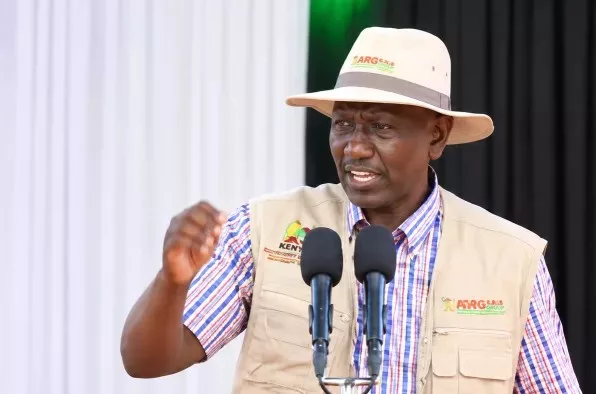
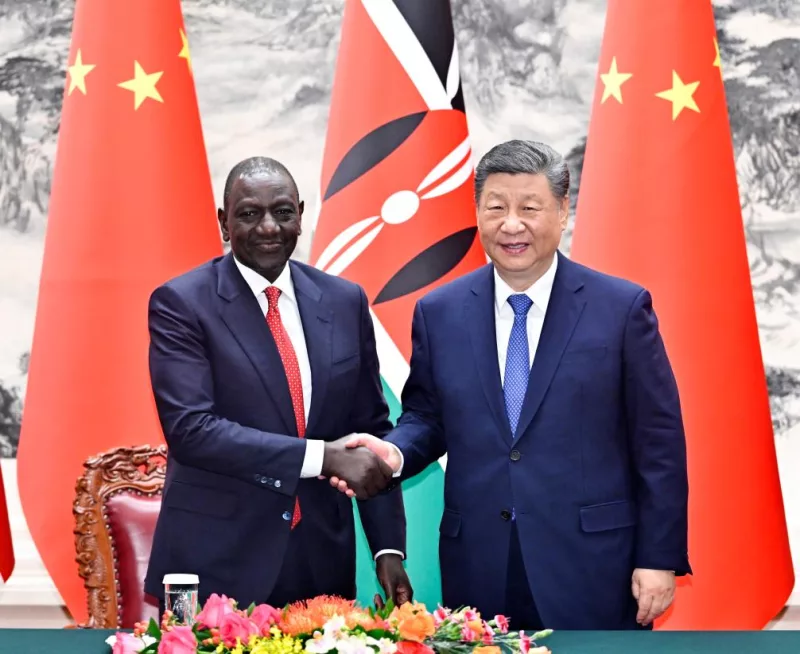
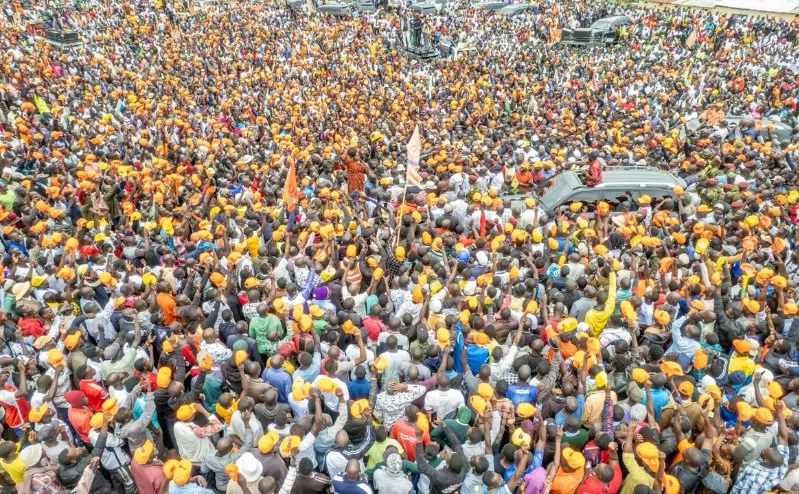
The head of state has chosen to undertake a self-assessment review of his performance by engaging in town halls and public rallies. The receptions he received in Bomet, Homa Bay, Kajiado, Kericho, Kisumu, Migori and Siaya counties have demonstrated organic acceptance of his reelection bid.
In the thousands, residents of these regions thronged the rally venues and openly declared their preference for ‘Tutam’, Ruto’s two-term slogan. Rift Valley region tops the list with 5,349,889 registered voters, while Northeastern has the lowest number, 882,677.
The figures for new registered voters released by the IEBC in April show that Ruto appears to enjoy a comfortable head start. The regions that have declared unwavering support for him have a combined majority vote tally of 15.7 million. Here’s a breakdown of the numbers in 2026, compared with the figures from 2022.
Rift Valley has 5,349,889, Central 4,453,108, Nyanza and Nairobi 3,120,732 and 2,415,310 respectively, Western 2,217,948, Coast 1,963,144, Lower Eastern 1,699,724 and Northastern 882,677. The regions that currently lean towards the President are Rift Valley, Nyanza, Western, Nairobi, Coast and Northeastern. The total vote basket is 15.7 million.
During the last few weeks, Ruto has visited these regions to consolidate and protect his political turf. Except for Nyanza and Coast, all the other regions listed above gave him considerable support in the 2022 presidential elections.
However, he won the general election with a slim
majority estimated of just more than 200,000 votes more than Raila Odinga, his closest challenger.
Soon after the election that was contested but affirmed by the Supreme Court, the Ruto-Raila duo entered into an agreement to undertake governance reforms. The bipartisan process was entrenched in the parliamentary calendar leading to the formation of the National Dialogue Committee.
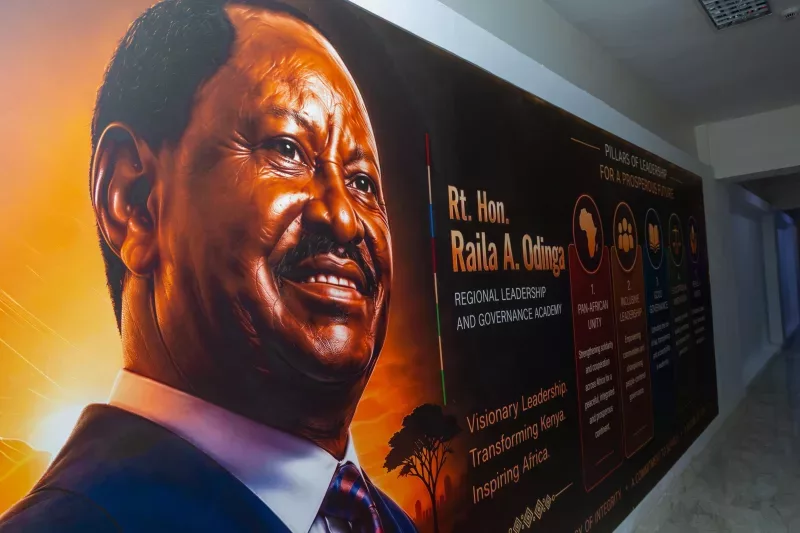
The resulting close working relationship between Ruto and Raila gave the President easy access to hitherto hostile ODM territories. As fate would have it, Raila passed on late last year when their comradery had almost reached a crescendo.
Ruto had incorporated key members of ODM into his inner core administration. These ODM officials were assigned strategic portfolios in the Cabinet. Concomitantly, Deputy President Rigathi Gachagua was also fired through a parliamentary impeachment process.
The violent protests by the Gen Z movement had exposed Gachagua as a saboteur. His earlier public pronouncements of shareholding government had been intended to alienate the government from opposition strongholds.
In Gachagua’s backyard of Central, he had rubbed local leaders the wrong way by demanding absolute loyalty to himself and only through him could they access Ruto.
His impeachment, therefore, was smooth as it became a joint effort of both the ruling party UDA and opposition ODM.
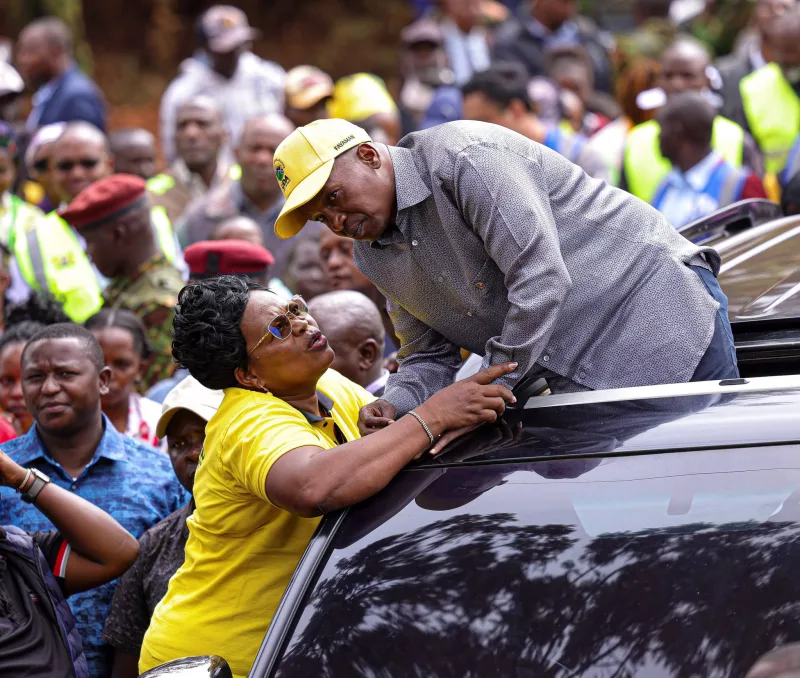
However, the former DP deftly turned his tribulations into martyrdom and he quickly moved to turn his tribesmen against Ruto and the government.
When
the President and his team sensed danger and began to respond to the growing
political bile, the hostility had gathered momentum and assumed a life of its
own. The win by UDA in Embu’s Mbeere North
by-election in November last year could not help turn the tide.
President Ruto has since focused on wooing former Raila political bases.
His visits to these regions have delivered development projects, including mega
infrastructure works, and he has promised to build even more.
The head of state unveiled an extensive development portfolio valued at Sh600 billion to Sh700 billion across Nyanza region. He highlighted investments of more than Sh173.8 billion earmarked for the Luo Nyanza counties (Homa Bay, Kisumu, Migori and Siaya).
The estimated value of roads is Sh600 billion to Sh700 billion. Other allocations: Homa Bay Sh60.9 billion, Kisumu Sh49.5 billion, Migori Sh33.4 billion (with total Migori investments highlighted at Sh45 billion) and Siaya Sh30 billion.
These investments are in addition to projects already been launched and are either completed or underway. The projects have gone a long way in luring the rural Luo community into the government’s fold.
The region has suffered sustained institutional marginalisation since the falling out between Jaramogi Oginga Odinga and President Jomo Kenyatta.
Residents have thus been genuinely excited to witness mega infrastructure projects in their vicinity, no longer news items promised in television and radio broadcasts. It is largely due to this self-alignment with government, and specifically Ruto, that fence-sitting MPs were given hostile receptions when they rose to address residents.
MP Millie Odhiambo (ODM, Suba North) has had a rough time since her open falling out with Homa Bay Governor Gladys Wanga, also of ODM, and played out openly at a Kisumu rally.
Rarieda MP Otiende Amollo of ODM had to change tack, declaring support for Ruto’s reelection when the President visited his constituency. This helped him avoid the anticipated public spat with constituents who welcomed government development projects.
These events served to cement the place of the Wanga-Oburu Oginga-led ODM as the legitimate wing in Nyanza. The Governor James Orengo-Senator Edwin Sifuna-led Linda Mwananchi wing has no traction in the region.
The continued disintegration of the opposition movement has been a blessing in disguise for the President in his quest for the second term. Ruto has watched the internal wrangles within the fragmented opposition team with glee.
Gachagua has always insisted on, and has done everything in his powers to maintain a tight grip on his Mt Kenya backyard. He has openly rejected calls to join or support the Azimio la Umoja coalition of which Wiper’s Kalonzo Musyoka assumed leadership.
The parties under Azimio still cling to the hopeless claim of representing the Raila spirit. They present themselves as the true patriots and opposition leaders.
This position has been the most difficult nut to crack within the opposition ranks. Musyoka together with DAP-Kleader Eugene Wamalwa and former InteriorCS Fred Matiang’i consider themselves senior, thus deserving to be the presidential flagbearer.
On the other hand, Gachagua considers himself the front runner on account of his control over the largest vote basket from Central.
Then the youthful leadership of the ODM splinter group under Sifuna and Babu Owino, with Orengo in the tow, also demanding front seat. This is because they are the founders of the Linda Mwananchi movement.
What has driven the last nail in coffin of the opposition movement was the weekend falling out between Nairobi Senator Sifuna and Embakasi East MP Babu.
The competition between the two has been simmering but was largely kept wraps for convenience. They are both Nairobi elected leaders to Parliament under ODM and mirror each other in terms energy. They are, however, different sides of the same coin.
If they cannot complement each other, then they can only destroy themselves. It is clear they have parted ways and will continue to move separately and farther from each other. The earlier predictions of opposition disunity have come to pass.
The call for a united front was always seen as mirage, if for nothing but history. That is why they have been unable to develop and articulate a coherent response agenda to the President’s development programmes. There will be more than one opposition candidate against Ruto in 2027.