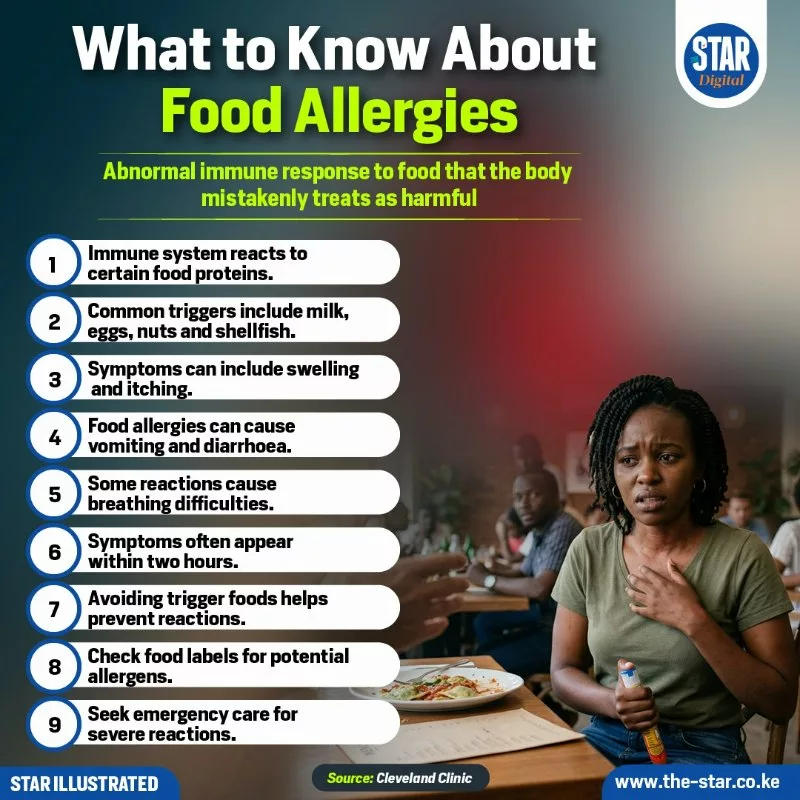
Food allergies occur when the body's immune system mistakenly treats certain food items as harmful threats.
During an allergic reaction, the immune system responds to proteins in specific foods. Common dietary triggers that often provoke these reactions include milk, eggs, nuts, and shellfish.
When an individual experiences a food allergy, the body manifests various physical symptoms. These signs can include swelling and itching, as well as gastrointestinal distress such as vomiting and diarrhoea.
In addition to skin and digestive reactions, some allergic responses can lead to breathing difficulties. Medical indicators and symptoms typically appear within two hours of consuming the trigger food.
Managing food allergies and preventing unwanted reactions relies primarily on avoiding known trigger foods entirely.
Individuals can protect themselves by checking food labels carefully for potential allergens before consumption.
For individuals experiencing severe reactions, seeking immediate emergency care is essential to managing the condition safely.