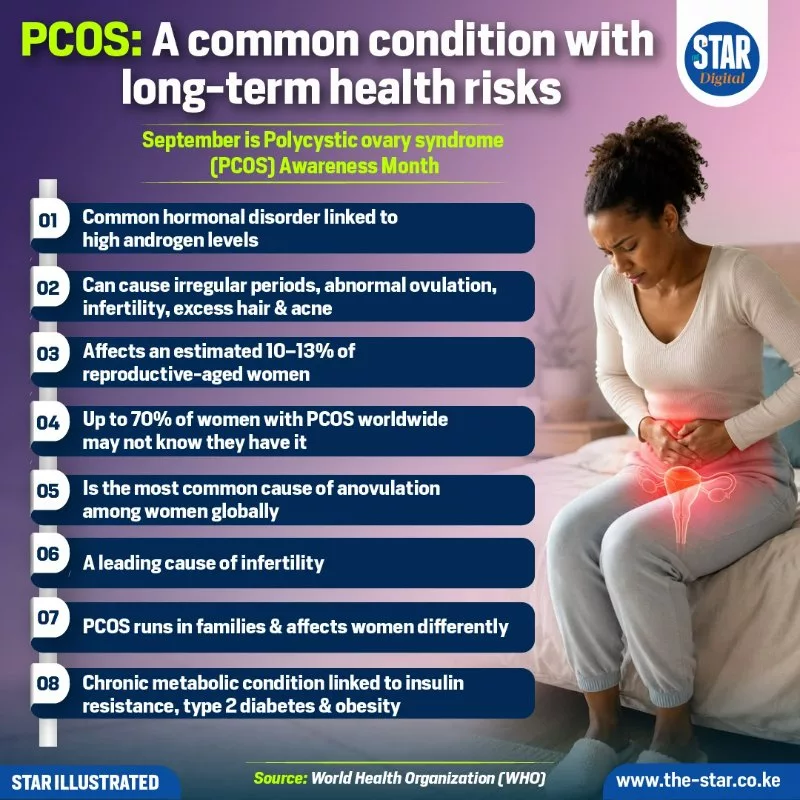
September marks Polycystic Ovary Syndrome (PCOS) Awareness Month, bringing attention to a common hormonal disorder tied to elevated androgen levels
The World Health Organization (WHO) estimates that PCOS impacts 10% to 13% of reproductive-aged women globally, yet as many as 70% of affected women worldwide remain unaware that they have the condition
PCOS can trigger a variety of symptoms, including irregular periods, abnormal ovulation, excess hair, and acne
Beyond these surface signs, it stands as the most common cause of anovulation among women globally and represents a leading cause of female infertility
The disorder runs in families and affects each woman differently
It carries serious long-term health risks, as it is closely linked to insulin resistance, type 2 diabetes, and obesity