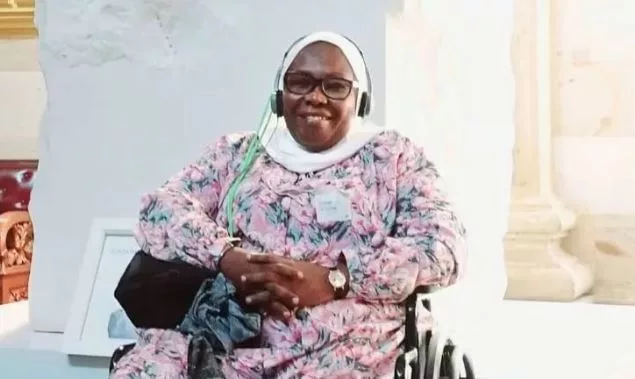
 Hamisa Zaja./HANDOUT
In many Kenyan communities, family planning remains a deeply contentious topic, often prohibited by religious doctrines, bound by cultural taboos, and heavily stigmatised.
For some women, even using the phrase "family planning" feels too dangerous, leading them to adopt the softer term "family spacing".
But for Hamisa Zaja, a gender activist and founder of the Coast Association for Persons with Disabilities, choosing contraception wasn't a casual preference or a lifestyle choice. It was a matter of life and death.
Living with a physical disability that requires her to wear a heavy leg calliper, she experienced severe complications during her first pregnancy, which ultimately required a caesarean section.
Just three months after giving birth to her son, while still nursing her surgical wound and managing the strain on her body, Hamisa discovered she was pregnant again.
"My mother-in-law claimed I was using excessive salt just to prevent myself from conceiving," she said.
Her doctor was unequivocal: continuing the one-month-old pregnancy presented a fatal health risk. Both the physical toll of her disability, where the baby's position in the womb interfered with her calliper, and the unhealed C-section scar made carrying to term unsafe.
With the firm support of her husband, Hamisa made the painful decision to follow her doctor’s advice and terminate the pregnancy.
To safeguard her health and allow her infant son time to grow, Hamisa’s physician recommended Depo-Provera, a progestin-based hormonal injection administered every three months.
Despite intense pressure from her mother and in-laws, who accused her of using superstitious methods to avoid pregnancy, she stayed on the contraceptive for 10 years.
"My religion teaches that a child should breastfeed for two full years before you conceive again," Hamisa explains, pushing back against rigid traditional interpretations.
"Planning is key—not just for the mother's survival, but for the well-being of the child."
After a decade, a missed injection led to an unintended pregnancy that tragically ended in a miscarriage.
Later, however, Hamisa conceived naturally and safely delivered her second child, at which point she discontinued the injections.
Reflecting on side effects like weight gain, Hamisa remains resolute: managing side effects was a small price to pay for protecting her life.
Dr Davis Kibii, a consultant gynaecologist, emphasises that postpartum family planning is essential for a woman's physical and psychological recovery.
He says it allows tissues and uterine scars to heal, restores nutrient stores, ensures uninterrupted breastfeeding for optimal cognitive and physical growth, prevents unmanageable family sizes and enables mothers to pursue education or careers.
Kibii said while optimal spacing between births is 24 to 59 months, natural methods like lactational amenorrhoea (continuous breastfeeding every three hours to inhibit ovulation) are not universally reliable.
"Almost every woman can access contraception—provided it is tailored to her unique medical profile," he said.
Addressing common fears regarding underlying conditions, Kibii clarifies that women living with diabetes, obesity or HIV are not excluded from family planning.
While their options are narrower, trained healthcare professionals can prescribe non-hormonal or low-impact alternatives to minimise adverse effects.
Contraception is not solely a woman’s burden.
Dr Peter Mungai, a consultant urologist, highlights the critical role men play in family planning, particularly through vasectomy, a safe, permanent procedure for couples who have completed their desired family size.
"Hormonal contraceptives alter a woman's body chemistry," Mungai explains.
"Vasectomy carries virtually no long-term side effects for men, yet persistent myths keep uptake low. A man should actively support his partner rather than threaten divorce or resort to emotional blackmail."
In addition to vasectomies, male oral contraceptives designed to temporarily lower sperm production exist, though they remain uncommon in Kenya.
The debate surrounding contraception extends to Kenya’s youth. With adolescent pregnancy rates standing at 18 per cent, many young girls seek contraception secretly, while some parents proactively take their daughters to clinics.
Critics argue this promotes immorality, but public health experts advocate for clear legal frameworks.
With national contraceptive usage at 57 per cent, health advocates emphasise that community education is essential to dispel pervasive myths—such as the false belief that intrauterine devices (coils) cause injury during intimacy.
As the global community observes World Contraception Day on September 26th, stories like Hamisa’s serve as a powerful reminder: family planning is not a violation of faith, but a vital healthcare right that safeguards the lives of mothers and children across Kenya.
Instant analysis
Hamisa Zaja’s ordeal illustrates how reproductive healthcare in Kenya remains a critical battleground between life-saving medical necessity and entrenched socio-religious taboos. Overcoming deep-seated stigma, inadequate postpartum spacing risks and low male involvement requires public health policies that reframe contraception from a moral debate into an essential maternal rights issue.