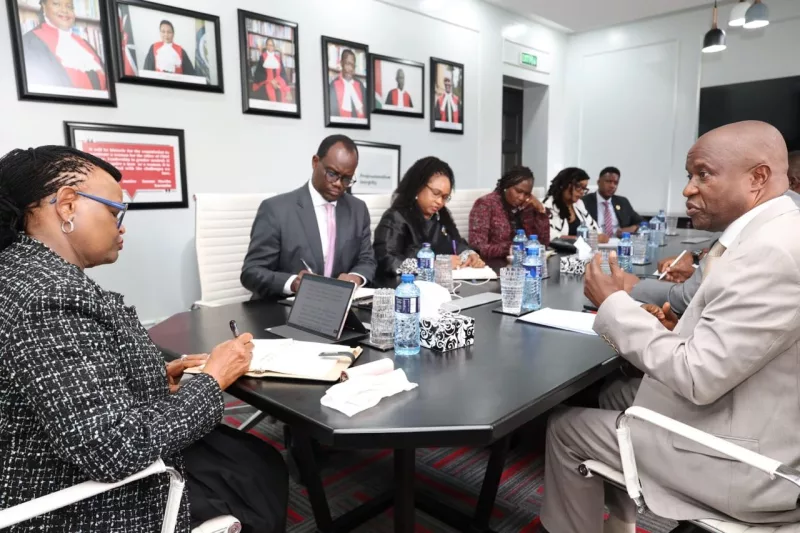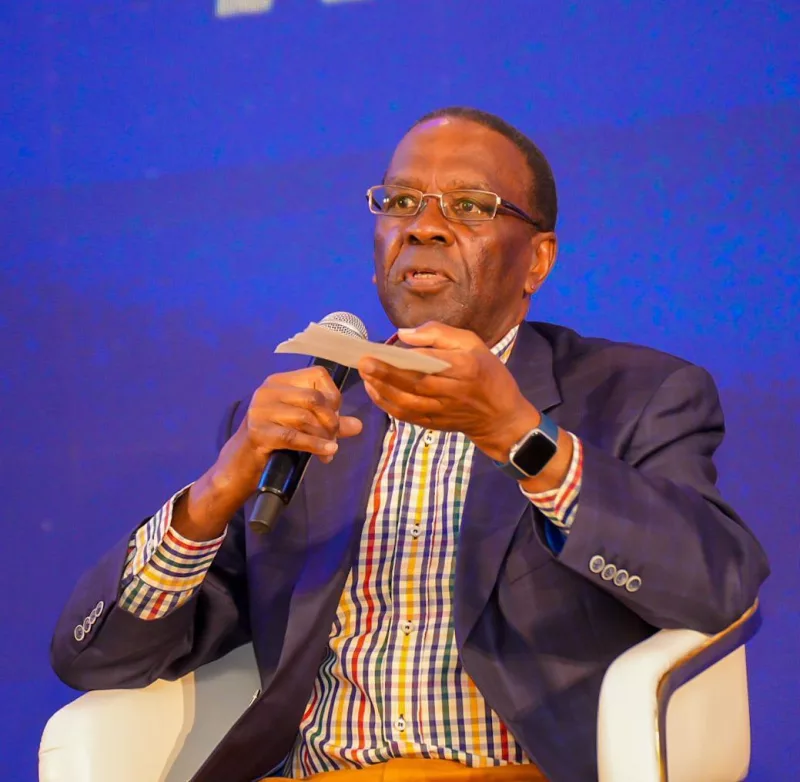
The Global Trust Summit opened in Nairobi on Wednesday with speakers calling for stronger implementation of constitutional rights, greater accountability by public institutions and more meaningful public participation.
Former Chief Justice Willy Mutunga said and a representative of Katiba Institute, said Kenya’s Constitution could not fulfil its promise if institutions and those in power were unwilling to implement its provisions.
“Our Constitution is very progressive. But as long as those who are in power find it inconvenient, they are not willing to breathe life into it, and that includes institutions themselves,” he said.
The remarks focused attention on the gap between constitutional guarantees and citizens’ experiences, particularly in participation, transparency and accountability.
Dr Andrews of International IDEA, representing Gram Matenga, said rebuilding public trust required changes beyond communication.
“It is not just about messaging; it’s also about change of process, change of people and change of direction,” he said.
Transparency International Kenya Executive Director Sheila Masinde said greater openness could reduce the need for citizens to seek information through the courts.
“We don’t have to go to court if access to information is given more proactively,” she said.
Masinde also said public participation should not be viewed as a nuisance by leaders, saying citizens expect elected officials to deliver on their mandates.
“When I vote for you, I trust that you will deliver in the mandate you are seeking,” she said.
Mzalendo Trust Executive Director Caroline Gaita said public participation without a mechanism for responding to citizens risked becoming a symbolic exercise.
“Participation without a feedback loop is not engagement; it’s attendance,” she said.
Government Spokesperson Charles Owino said democracy should serve the public good and that democratic power ultimately rests with citizens.
Independent Policing Oversight Authority chairperson Duncan Ojwang’ called for public participation that is universal rather than dominated by the loudest voices.
Kenya National Commission on Human Rights chairperson Clarise Ogangah said citizens continue to exercise their power through public participation even after electing leaders.
The summit also examined how institutions can rebuild public confidence, with several speakers emphasising that trust depends on actions and the resolution of citizens’ concerns.
Murang’a Governor Irungu Kang’ata said institutions should demonstrate credibility through their actions rather than statements of intent.
“In terms of trust, you gain it by demonstrating, not by illustrating,” he said.
Independent Electoral and Boundaries Commission chairperson Erastus Edung Ethekon said distrust could sometimes create an opportunity for positive institutional change.
“Sometimes when there’s distrust, that’s when we actually achieve positive change or transformation,” he said.
Auditor-General Nancy Gathungu said trust is built through credible and useful information as well as action along the accountability chain.
Chief of Staff and Head of the Public Service Felix Koskei said institutions should meet the standards they expect others to follow.
“A regulator that demands compliance from others must be an example of compliance,” he said.
The summit also considered the relationship between trust, resource allocation and representation.
It also examined how democratic participation, institutional accountability and resource allocation can shape public trust and the relationship between citizens, governments, businesses and international institutions.