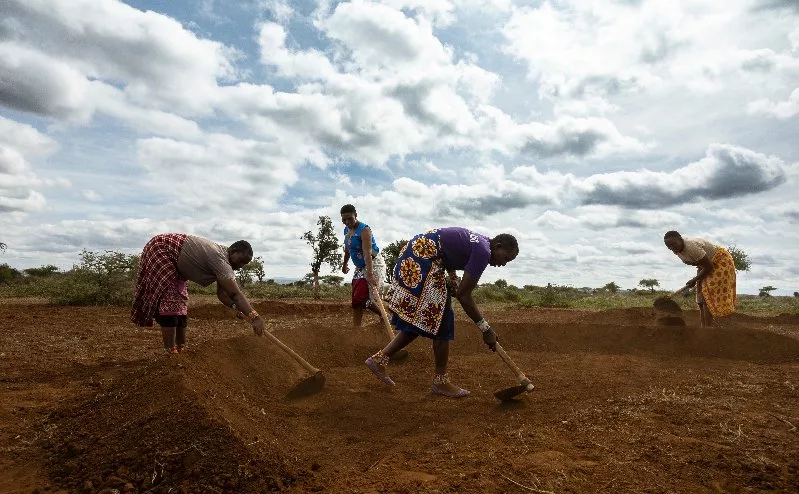
Experts have championed the removal of obstacles that hinder women from taking an active role in restoring degraded landscapes.
Women are faced with a myriad of challenges as they participate in restoration efforts.
The challenges include laws and customs that block women from owning, purchasing, or inheriting land, lack of collateral, restricted access to agricultural inputs and technologies, time poverty and unpaid care, exclusion from decision-making, and literacy gaps, among others.
Speaking during a webinar, Women Restoring the Land: Roots, Rights and Leadership, experts said women are playing a central role in restoring and caring for land, from farmers and community leaders to practitioners and change makers.
They said behind every hectare that needs rehabilitation lie everyday human realities: immediate livelihoods, long waiting periods, and deep-rooted inequalities.
Global Advocacy Director for the Stand For Her Land initiative, Esther Muiru, said that while progressive land laws exist globally, customary norms often hinder implementation, leaving less than 20 per cent of African land in women's hands.
“Land is both a human right and also a development issue. A human right in the sense that when women don't have the land in their hands, then you are already discriminating against them from their heritage. They no longer have their heritage, and they feel very insecure, and they cannot even locate where they come from,” she said.
The dialogue brought together voices from the field to explore how women are shaping restoration in practice, while looking at the barriers they navigate and the lessons their experiences can offer.
Experts noted that restoring land takes years; however, the women who do much of that labour often have the least room to wait.
The experts said land restoration cannot be separated from women’s rights, livelihoods and leadership.
They also laid out the realities of women leading ecosystem recovery and the systemic shifts required to sustain their work.
Muiru said women don't have land and they cannot control and make decisions over the resource; they cannot even make decisions over other things.
She said women who do not own land cannot access loans from banks as titles are used as collateral.
“They want a legal document, and if you do not have land then you cannot go and access additional resources.”
Muiru said sustainably managing land needs long-term activities which cannot be achieved if there is no secure land tenure.
“If you don't have secure land tenure and you don't know whether your husband or the family of your husband will throw you out, you will not have any motivation and many women don't have the motivation to invest in long-term investments that are really necessary for us to deal with climate change,” she said.
Muiru said when women do not have secure land tenure, they cannot bequeath the land to their generation.
She said if one is relying on such land as a principal item for their economic growth, they are putting a generation in a cycle of poverty.
Muiru said this happens especially with women and girls who are discriminated by the patriarchal systems that are there, hence messing up the efforts to break the cycle of poverty.
She championed the use of community-driven data for public land mapping and called for a Women’s Land Rights Protocol to ensure private investors remain transparent and accountable to local communities.
Founder of Sustainable Farming Solutions Dr Tonthoza Uganja said restoration often stalls not from a lack of care, but due to transition costs and timing for rural farmers who must feed their families today.
Uganja advocated for "downward reporting," emphasising that climate finance and carbon credits must directly pay the actual community custodians caring for the trees, rather than primarily compensating external consultants.
She said women are disadvantaged as they do not own land.
“Rural women farmers who do not usually own land, even if they do not have that registration in place, it is very difficult for them to get that collateral to show that collateral that can enable them to get that facility.”
The dialogue highlighted a critical gap: women are asked to make long-term investments in land restoration, yet often lack secure land tenure and immediate financial support.
Experts said to achieve lasting restoration, climate finance, land governance and agricultural ministries must work in tandem with local communities to ensure the women doing the work reap the benefits.