 Health
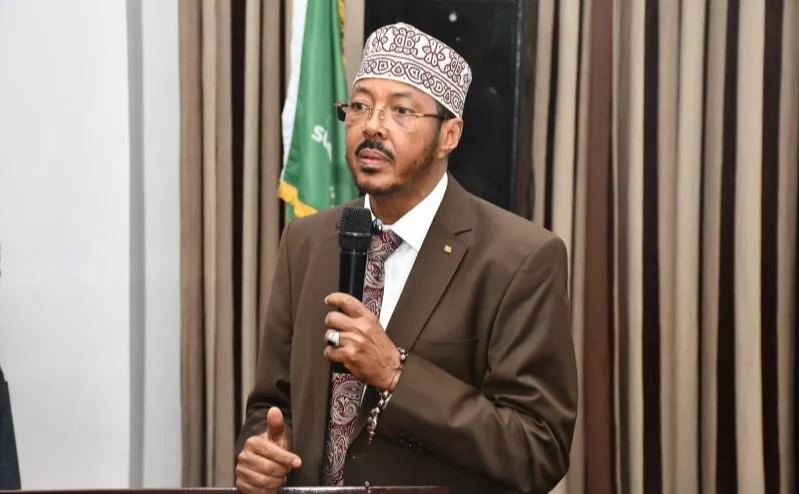
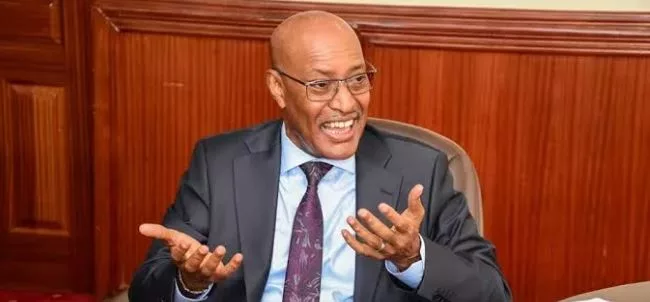
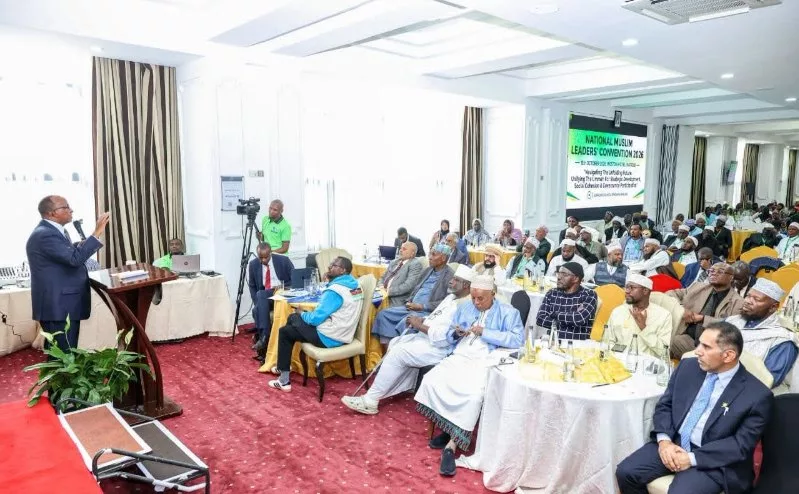
Cabinet Secretary Aden Duale addressing Muslim faithful at the meeting. /STEPHEN
ASTARIKO
Health Cabinet Secretary Aden Duale has endorsed President William Ruto’s “Usawa ni Sawa” slogan.
Duale said the slogan signals a push to address historical inequalities in development, public appointments and access to government services.
Speaking at the National Muslim Leaders’ Convention at Weston Hotel in Nairobi, Duale said the slogan reflected a commitment to bringing historically marginalised communities, including Muslims and residents of Northern Kenya, closer to the centre of national decision-making.
“The other day, I heard the President use a very good slogan during a public rally, and I went to bed a very happy man. The slogan was ‘Usawa ni Sawa’,” Duale said.
The Health CS argued that the slogan represented more than political messaging, saying it underscored the need for a fairer distribution of national resources and development opportunities.
He contrasted it with the administration’s earlier “Kazi ni Kazi” messaging, saying the new phrase placed greater emphasis on fairness, inclusion and equal opportunities for communities that have long complained of being left behind.
Duale said decades of policy decisions had contributed to uneven development, leaving some regions with better infrastructure and services than others.
“We all know that development in this country was skewed, with roads, energy and other essential infrastructure concentrated in one part of the country,” he said.
He cited the planned construction of the Isiolo-Mandera road as an example of efforts to extend infrastructure to historically underserved areas.
Duale recalled that Ruto faced criticism when he announced the project, with opponents questioning the investment against the backdrop of Sessional Paper No. 10 of 1965, a policy document that has been criticised for contributing to regional development disparities.
“When President William Ruto announced that his administration would construct the road from Isiolo to Mandera, you remember how he was mocked,” Duale said.
The CS also pointed to developments in Western Kenya, citing the revival of factories and progress towards sugar self-sufficiency as evidence of efforts to expand economic opportunities across the country.
“Today, factories in Western Kenya are running. Kenya is also on the verge of becoming self-sufficient in sugar production, and soon we will be exporting sugar,” he said.
Duale further defended the government's efforts to remove additional vetting requirements that he said had subjected residents of Northern Kenya and members of the Muslim community to unequal treatment when seeking government documents.
He cited Ruto’s visit to Wajir, during which the President announced the removal of the additional vetting process, describing the move as a step towards ensuring equal treatment for all Kenyans.
The CS also highlighted the restoration of a passport office in Garissa, saying it had improved access to essential services for residents of the North Eastern region.
“Last year, I want to state here that I did not receive a single complaint from a Muslim faithful who wanted to travel to Mecca for pilgrimage but could not do so because of a lack of a passport,” Duale said.
He argued that the measures had eased challenges previously faced by Muslim pilgrims preparing to travel to Saudi Arabia for the annual Hajj pilgrimage.
Duale maintained that efforts to dismantle longstanding barriers had attracted opposition from some quarters but insisted that equal treatment of citizens should remain a fundamental principle of governance.
“It is President Ruto’s efforts to restore our dignity that are making him unpopular with some people,” he said.
The Health CS said the administration should be judged by its commitment to ensuring that public appointments, resource allocation and national policies reflect Kenya’s diversity.
“President Ruto is making a deliberate structural commitment to creating an equitable Kenya where public appointments, resource allocation and national policies reflect the true diversity of our nation,” Duale said.
He called for sustained efforts to ensure historically marginalised communities move from the periphery of national development to positions where they can influence decisions affecting their lives.
Duale added that equitable representation and access to public services were essential to strengthening the relationship between underserved communities and the State.
The convention, organised by the Supreme Council of Kenya Muslims (SUPKEM), brought together Muslim leaders, religious scholars, senior government officials, institutional heads and business leaders to discuss the community’s interests and its participation in national development, public policy and governance.
Duale also praised Kenya’s constitutional framework for recognising and protecting the rights of Muslims, saying it provided a foundation for religious freedom and participation in public life.
“Kenya is a great country for the Muslim community. We are the only country in Africa and in the world where our rights are enshrined in the Constitution,” he said.
His endorsement of “Usawa ni Sawa” places equitable development, access to public services and representation at the centre of the government’s message to communities that have historically raised concerns about marginalisation.
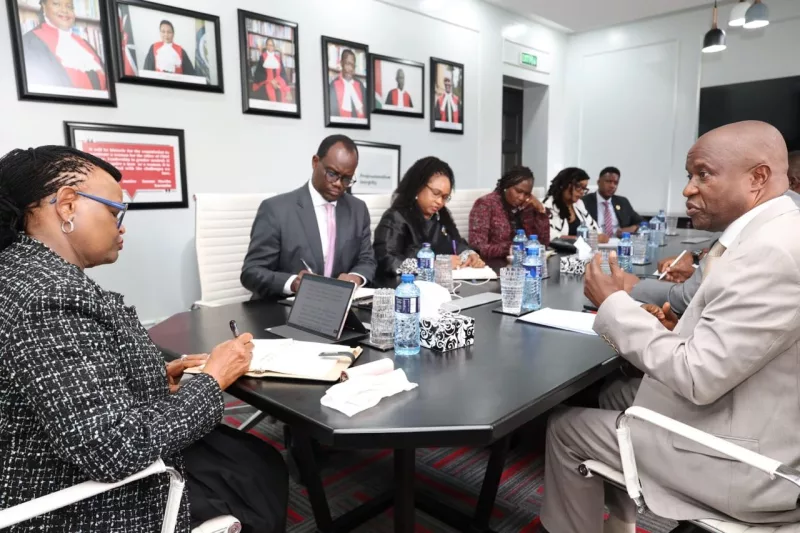
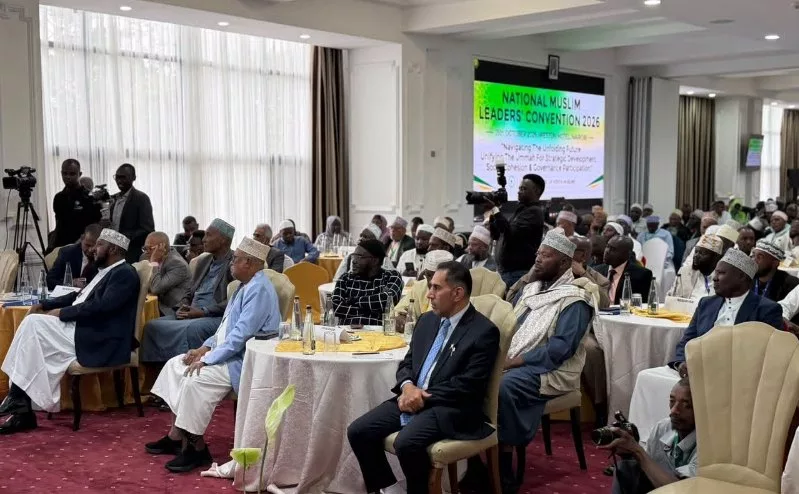 Muslim
faithful at the meeting. /STEPHEN ASTARIKO
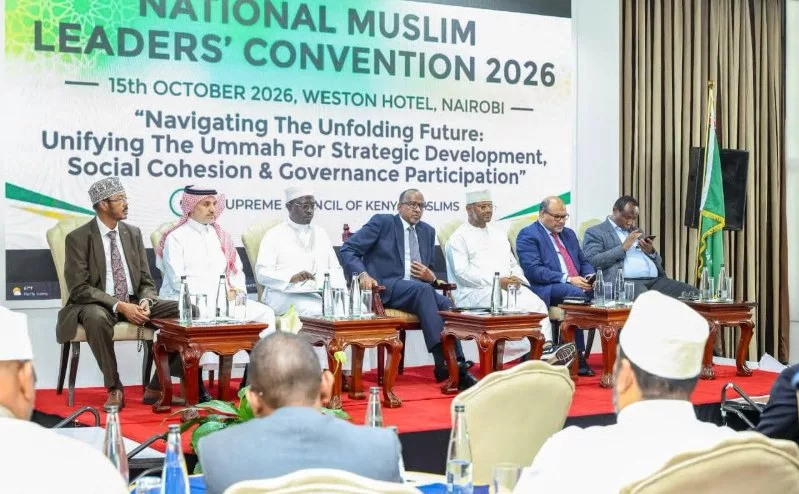
Muslim leaders at the meeting./STEPHEN ASTARIKO