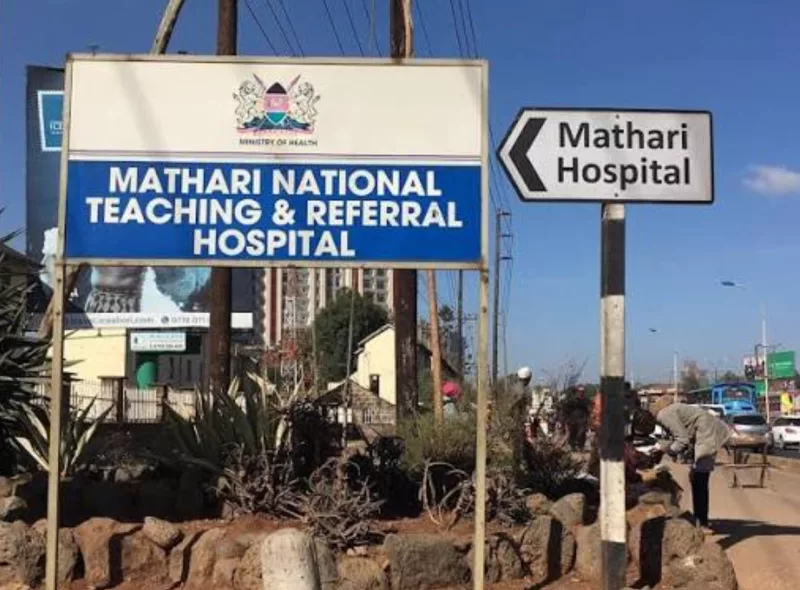
Several patients with mental health conditions appear to have been abandoned at Mathari National Teaching and Referral Hospital (MNTRH).
The hospital is facing challenges in providing continued care and planning for the patients, whose families have not come forward.
The hospital has appealed to their families to collect them.
“It has, however, come to the hospital’s attention that there are patients who have remained under its care for extended periods, without their relatives, guardians, next of kin or other persons responsible for their care having been identified or located,” MNTRH acting CEO Dr Lawrence Nderi said.
“The continued absence of persons responsible for or connected to these patients presents challenges to their social support, continuity of care and eventual reintegration into the community, while also placing additional demands on the hospital’s capacity and resources to provide for their continued care and welfare,” Nderi said.
The hospital did not disclose how long the patients had stayed there or the circumstances under which they were admitted.
It also did not establish whether their families had deliberately abandoned them or were unable to trace or care for them.
The hospital said anyone seeking to identify the patients must provide proof of identity and evidence of their relationship or other legitimate connection to them.
“The parents, guardians, spouses, children, relatives, next of kin and any other persons who may have a legitimate connection to the persons depicted herein are hereby requested to contact or visit the hospital for purposes of identifying the patients and facilitating their reunification with their families or persons responsible for their care upon providing appropriate proof of identity and relationship or other legitimate connection,” the CEO said in a statement.
The hospital published photographs and details of the patients to help members of the public identify them.
The appeal comes amid growing calls for Kenya and other countries to reduce prolonged stays in psychiatric hospitals and help people with mental health conditions receive treatment and support within their communities.
On World Mental Health Day, marked on October 10, the World Health Organization (WHO) urged countries to move away from keeping people in hospitals for long periods and instead provide care closer to where they live.
The WHO says people should not have to lose their freedom, dignity or place in society to receive mental health support.
Its guidance recommends helping people who have spent six months or longer in psychiatric hospitals return to community life, with access to health services, housing and social support.
Mental health conditions remain poorly understood in some communities, where they may be attributed to curses or witchcraft. Such beliefs can contribute to stigma and delay treatment.
Mathari provides specialised psychiatric services, forensic psychiatry, child and adolescent mental health services, and care for patients referred by other health facilities.
The hospital said it remained committed to providing specialised mental health services while protecting the dignity, privacy, welfare and rights of patients under its care.
In February 2025, former Mathari chief executive Julius Ogato told Parliament that some patients admitted through court orders had remained confined for more than 20 years, even after recovering.
Their release was complicated by legal requirements for further court directions and support.
A 2022 study assessing Mathari against international human rights standards raised concerns about inadequate staffing, poor buildings, neglect and abuse.
It also found that the hospital lacked plans to help patients return to their communities and live independently.
The WHO says progress towards community-based mental health care remains slow worldwide.
Its Mental Health Atlas found that only nine per cent of countries that reported data had fully shifted to community-based care.
Mathari’s notice did not set a deadline for relatives to come forward or announce any changes to its services.
It urged anyone with information that could help identify the patients to contact the hospital.