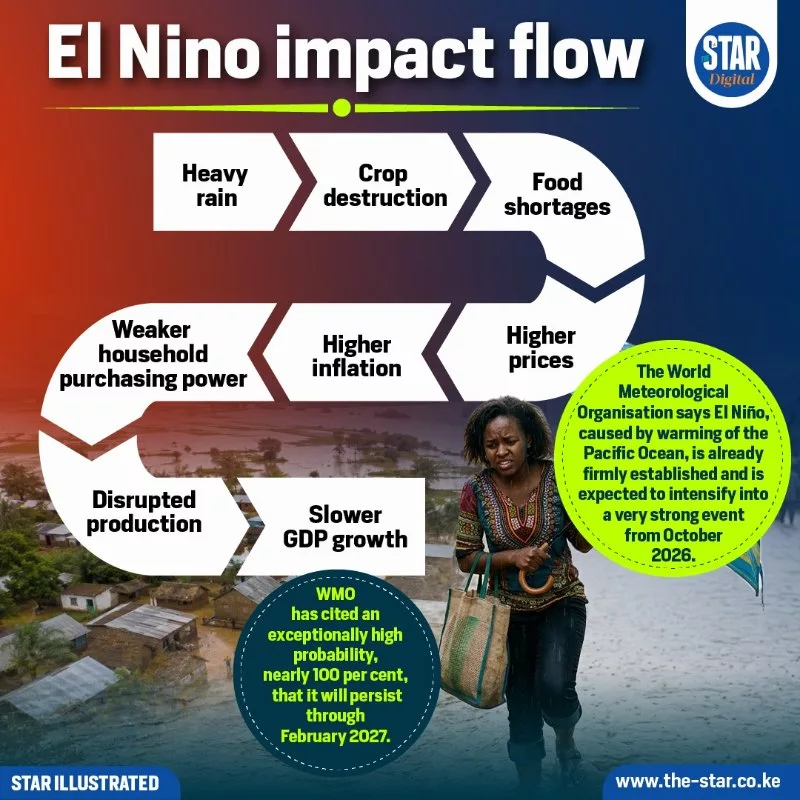
The “El Niño impact flow” illustrates how extreme weather disruptions can trigger a chain of economic consequences.
Heavy rains can cause widespread crop damage, reducing food supplies and driving up food prices.
Rising food costs, in turn, fuel inflation and erode household purchasing power as families are forced to spend more on essential goods.
At the same time, damage to infrastructure and other climate-related disruptions can affect production across multiple sectors.
Reduced agricultural output, weaker industrial activity and constrained consumer spending can combine to slow overall economic growth.
These pressures come against the backdrop of an El Niño event that the World Meteorological Organisation (WMO) says is expected to intensify into a very strong episode from October 2026.
The WMO has put the likelihood of El Niño conditions persisting through February 2027 at nearly 100 per cent.