

A different Kenya is emerging, one that’s tired of theatre, one where voters ask hard questions and follow up on roads, schools, prices, incomes, dignity - and vote for results.
For many years we have told ourselves a convenient lie in Kenya, that our politicians are fundamentally different from one another. We have believed that one is a reformer and the other is a destroyer, one is for the common mwananchi and the other is for the dynasties, one is a saint and the other is a sinner.
We carry these beliefs with passion, we defend them on social media, we argue about them in market places and in matatus - and we vote on the basis of these lies.
But if we are truly honest with ourselves, away from the noise of rallies and the heat of campaigns, the truth is far more sobering. The political class in Kenya behaves largely the same way.
They may speak different languages in opposition and in government, but once in office they face the same temptations and they respond in largely the same way.
They all learn to love tenders, to love appointments for their own people, to love big, opaque projects where money can hide and to love the poor mainly when there is a camera and a campaign.
The slogans change every five years, the coalitions collapse and reform, the party colours change, the songs change, but the underlying logic of Kenyan politics has remained remarkably constant for decades.
Power is sought, power is negotiated among elites, power is shared and the ordinary citizen is told to wait for the next election.
This sameness is not an accident. It is the product of a political system that rewards loyalty over delivery and identity over ideas.
When a politician knows that you will vote for him simply because he comes from your tribe or because he is in the coalition you support, he has no incentive to build you a road, to ensure your fertiliser arrives on time, to make your dispensary work, or to create a dignified market for your mother to sell in.
He knows your vote is already guaranteed by something else that has nothing to do with performance. And so performance becomes optional.
That is why the same road can stall for 10 years under two different presidents. That is why the same market can be promised by every aspirant and built by none. That is why our young people are promised jobs in every manifesto and yet remain jobless after every election. It is not that Kenyans lack ideas or lack resources. It is that our politics has not been forced to produce results.
And yet, there is a different Kenya that is slowly emerging, a Kenya that is tired of this theatre. You will hear a remarkably similar conversation whether you sit in a market in Kakamega, a miraa shop in Maua a fishing landing site in Kilifi, a tea buying centre in Kericho or a boda boda stage in Kiambu.
People are less interested in who insulted whom at a rally. They are more interested in where the water will come from, whether the school will have teachers, whether the health facility will have drugs, whether the road will be passable when it rains.
This Kenya does not want to be told about political debts and political betrayals. It wants to know about prices, about incomes, about dignity. The mama mboga who wakes up at four in the morning to buy tomatoes in Marikiti knows what inflation means better than any economist because she feels it in her basket.
The boda rider who spends 12 hours on the road knows what the price of fuel means because it determines whether his children will eat supper. The farmer in Trans Nzoia knows what climate change means because his harvest is no longer what it used to be.
The young graduate in Bungoma who has tarmacked for three years knows what unemployment means because he lives it every day.
Their wisdom is the
real economic data of this country. And for a long time, that wisdom has been
kept at the margins of our politics.
This is why we must make a conscious decision as a country to stop choosing politicians and start choosing development.
Choosing development means we fundamentally change the questions we ask. We stop asking which tribe does he come from and start asking what has he built before.
We stop asking which coalition is he in and start asking what does he understand about the economy that feeds my family. We stop asking how well he speaks on a podium and start asking how well he listens in a village baraza. We stop clapping for rhetoric and start clapping for results.
Choosing development means we must learn that accountability is not disrespect. When a leader tells us he or she will create jobs, we have a right to ask where those young people are, what businesses they are running and how they are doing.
When he tells us he is building houses, we have a right to visit Lurambi or Milimani or Mumias and talk to the beneficiaries.
When he tells us he is building markets, we have a right to go to Lunza or Musoli or Sinoko and ask the traders whether their lives have changed. That is not opposing government. That is being a responsible citizen.
Choosing development also means we must understand that tribes do not build roads. Parties do not create wealth. Slogans do not put food on the table.
Only deliberate, focused development does. A tyre does not know the tribe of the driver, but it knows a good road. A crop does not know the colour of a party, but it knows fertiliser and water. A child does not know coalition agreements, but she knows a decent house and a good school.
If we continue to elect on the basis of tribe and personality, we will continue to get the same result under different names. The politics will remain lucrative for the few and punishing for the many. But if we choose to elect on the basis of development, we force a new alignment. Politicians will quickly realise that only delivery keeps them in office.
The history of every nation that has escaped poverty is not a history of perfect politicians. There has never been such a thing. It is a history of citizens who became too demanding to be lied to.
Citizens who said we are no longer interested in your wars, we are interested in our roads, our schools, our farms, our jobs. And when citizens become that demanding, politicians, whatever their original intentions, have no choice but to deliver.
It is in that context that we must look at what is beginning to happen in Kenya today. For the first time in a long time, there is a deliberate attempt to move the centre of gravity of our politics from sharing power to transforming livelihoods.
Across many counties, affordable housing units are rising, with thousands planned and many already complete, giving young families a chance at dignity and creating thousands of jobs for masons, electricians and plumbers. In almost every subcounty, modern, decent markets are being built, replacing the mud and the blazing sun where our mothers have traded for decades.
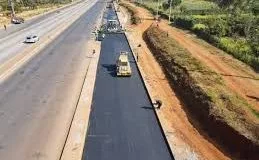
Thousands of young people are receiving Sh50,000 in direct start-up capital, money that goes straight into their enterprises and not through brokers. Critical corridors that carry the wealth of this nation, like Rironi to Mau Summit, are being dualled to cut travel time by hours and reduce accidents.
The standard gauge railway is being extended from Naivasha towards western Kenya, not as a prestige project, but as a deliberate move to open up the entire western region as a gateway to Uganda, our largest regional trading partner.
These may sound just like projects, but to ordinary people they are not projects. A road is not tarmac for a farmer in Malava, it is the difference between his tomatoes reaching the market and rotting on the farm.
A market is not a building for a trader in
Bungoma, it is daily income and safety for her children. A house is not a
statistic for a young mother, it is a place where her family can live with
pride.
That is what it means to choose development over division. And that is the shift that President William Ruto has been implementing under the Bottom-up Economic Transformation Agenda, putting hustlers, farmers, traders and young people at the centre, not as an afterthought, but as the main agenda.
Kenyan politicians may have been the same for many years. But Kenyans are not the same as they were 10 years ago. We are more aware, more connected, more impatient for change.
The final step is to turn that impatience into a standard, where every vote is a contract for development and every leader knows that the contract will be audited by the people themselves.





