The text book on the English legal system I used as a first year student 60 years ago commented that a spectator would be impressed by the care that goes into a criminal trial – provided one left before the sentencing stage.
This reflects the complexity of the issue. A person has been found to have committed a crime. They have done something, and almost certainly intentionally, or at least carelessly. But then the court has to decide what to do with them.
What sort of mental state did they have at the time? What motive did they have? Do they have a record of doing similar things? What have been the impacts of their action? Who were the victims - including whether these were particularly vulnerable? Have the accused shown any regret for what they did? Have they in the past been a responsible citizen? What is their state of health now? What will be the impact on other people (perhaps children) of the possible sentences?
The law says what the possible sentences are, but this may leave a wide range of choices for the court. An Act of Parliament may say, for example, that the punishment is 20 years in prison. This is understood to mean a maximum of 20 years (unless the Act says it is a minimum or even a fixed term).
The usual wording or understanding – a maximum of, say, 20 years - means anything between zero and 20 years in prison. Very probably the same law says the punishment may be a fine – a money payment – of up to a certain amount, instead of prison or in addition.
Other possibilities include community service, a probation order, a suspended sentence (the person will not serve the sentence unless they commit another crime), or compensating the victim or some specific order relevant to the particular crime, like losing a licence.
Influences on the court
There are at least four other types of influence on the court’s decision (or ought to be). First is the existence of previous court decisions involving similar offences and factors that should influence later courts’ decisions.
Second is a set of guidelines, revised in 2023, from the National Council on the Administration of Justice. This document you might say is a compilation of common sense.
It also sets out the traditional purposes of punishment: retribution (making the punishment fit the crime), deterring the person from re-offending, deterring other people from committing similar offences, “rehabilitation” (helping the offender to change their ways), restorative justice (somehow compensating victims and society), disabling the person from committing offences in future (most often by locking them up), denunciation (the court as the voice of society condemning what happened), reconciliation (improving the relationship between the offender and the victims and society), reintegration (bringing the offender back into society).
Third, I suggest, is - or should be - some level of understanding of the nature of criminal punishment, including some realism about what it can achieve. Justice Aburili said, “the regrettable thing is that there is no empirical evidence that harsher or longer sentences reform offenders or deter the would-be offenders.
If that were to be the case, then people would not be murdering others since punishment for murder is death. Similarly, we would not have nearly 95 per cent of convicts and therefore, inmates being sexual predators. Reformation depends on an individual’s will to change behaviour.”
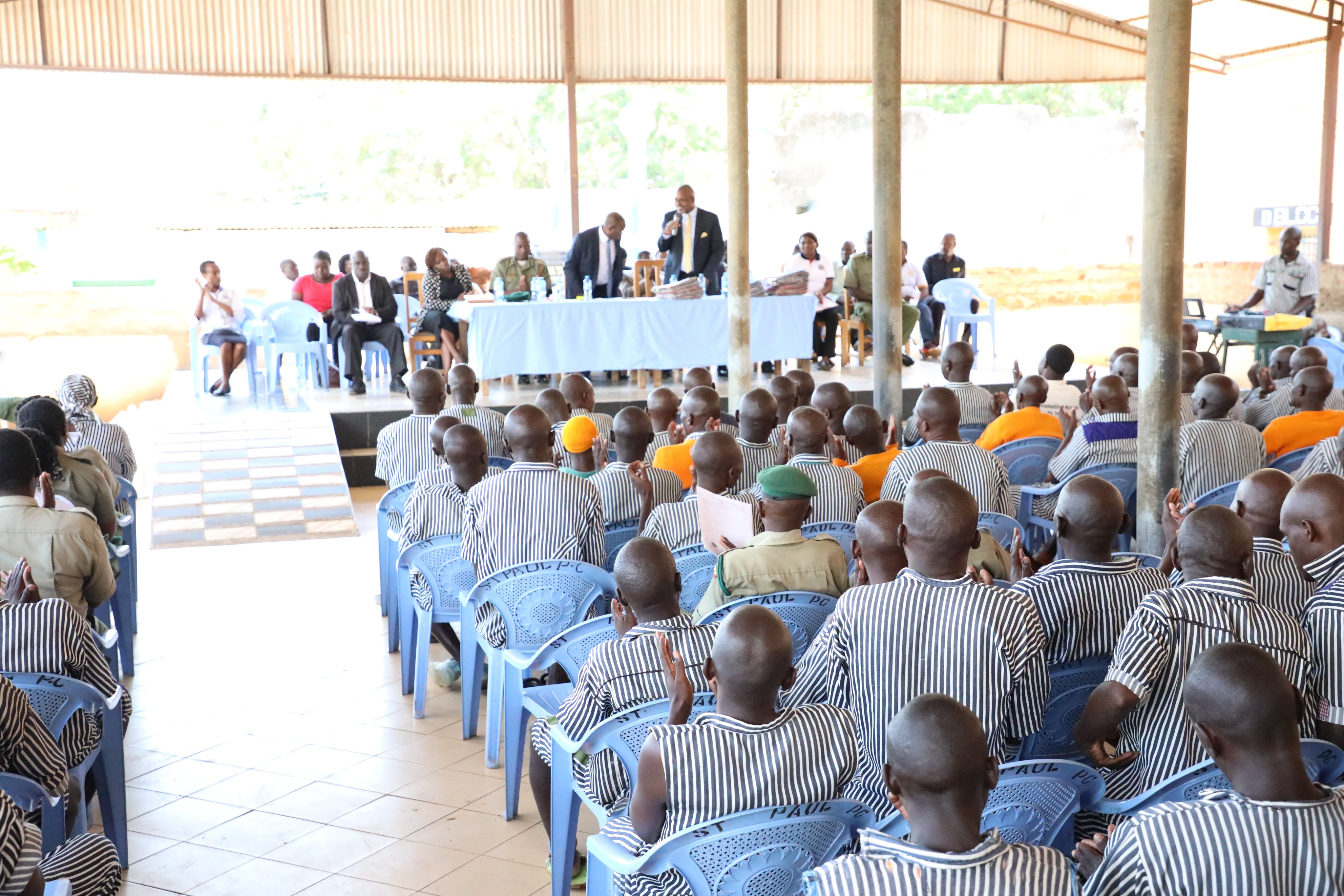
Something else the Judiciary should be aware of, it seemed to me, is the realities of the system in Kenya. Apparently the Maraga report said of the prisons, “The picture that has emerged is one of an appalling service characterised by overcrowding, rottenness, omission and commission, looting, grabbing, lethargy, indiscipline, diseases, squalor, ineptitude, and modern-day slavery”.
It is only right to say that the Prisons Services has plans for major improvement. Its Modernisation Strategy (2026-35) “provides a comprehensive framework for transforming the service into a modern, secure, humane, and rehabilitative correctional institution capable of meeting constitutional obligations and national development priorities.
The strategy responds to persistent and emerging challenges including overcrowding, ageing infrastructure, operational inefficiencies, limited use of technology, skills gaps, and constrained rehabilitation and reintegration outcomes.”
While some people are able to benefit from imprisonment, by studying or learning new skills, that quote from the Maraga report made me wonder how far the Judiciary actually thinks about what they are sentencing people to. Just as I wonder what they think happens when they sentence someone to death – which later will definitely be changed to life imprisonment.
Maybe sometimes such conditions might be “inhuman treatment”.
Prisons were not a traditional approach to penalising offensive behaviour. There has been encouragement recently, not only in Kenya, of alternative dispute resolution. This involves elements of negotiation, conciliation and reconciliation between the parties. Some people may feel it is more in accordance with their culture.
This usually happens before a decision of guilt so no question of sentence arises. However, sometimes an agreement may be made even at a later stage that the accused person will admit guilt in turn for something that might be a reduced sentence (a plea bargain).
The constitution
What does the constitution say about punishment? Under Article 29 there must be no “corporal punishment”. This phrase usually refers to beating and similar punishment, apparently not to the death penalty (which is anyway impliedly mentioned in Article 26 of the Constitution).
It also says there must be no “forced labour” (Article 30(2)). Kenyan courts have said that this does not include the sort of work that prisoners do – which they say is actually good for prisoners not an abuse or infringement of their dignity. This is in agreement with international law. Punishment for a few offences, according to law, can be imprisonment “with hard labour”.
Traditionally this has meant things like breaking rocks. Confusingly, in some Kenyan cases this has been assumed to be unconstitutional, in some to be lawful. The rather old Prisons Rules do not explain what it involves or even use the expression.
There must be no “cruel, inhuman or degrading punishment” (Article 29(f)). This maybe the best way of deciding whether work in prison is constitutional. A related provision is that “Everyone has the right to have their dignity respected” (Article 28).
Every imprisoned person retains their rights unless they are clearly not possible (Article 51) – so clearly freedom of movement is not available. There must be law providing for the humane treatment of prisoners, which must “take into account” international law – a phrase that suggests it does not necessarily have to comply 100 per cent.
The relevant law is the Persons Deprived of Liberty Act, an Act full of positive, perhaps over-optimistic, ideas passed a few years after the Constitution.
The constitution also removed the possibility of a presidential pardon, or reduction of sentence, by providing the “Committee on the Power of Mercy” (Article 133). The President cannot order any change unless that committee recommends it – though he “may” act – which means he does not have to accept the recommendation.
Something relevant though not specially related to punishments is equality. Every person is equal before the law. This, I suggest means that as far as possible where circumstances are similar (including the offence and the other issues) punishments should be similar.
That is the role of previous court decisions and the guidance. One thing I suggest is that one must not be able to buy oneself out from punishment. A larger fine than usual, or a “generous” offering to victims should not be used to escape imprisonment if that is the appropriate sentence.
Various Kenyan courts have made efforts to make the sentencing system more humane. Next week I plan to look at some of those cases.