`
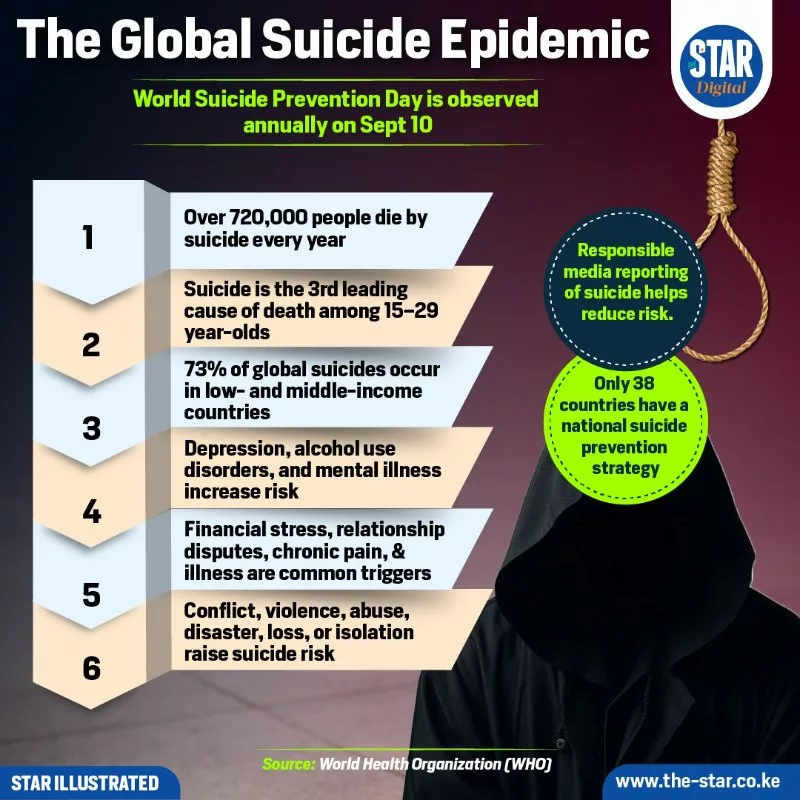
More than 720,000 people die by suicide every year worldwide, underscoring a critical global crisis observed annually on World Suicide Prevention Day, September 10.
According to data from the World Health Organization, suicide has become the third leading cause of death among young individuals aged 15 to 29.
The burden of this epidemic is overwhelmingly concentrated in developing nations, with 73 percent of all global suicides occurring in low- and middle-income countries.
Key medical factors significantly heighten vulnerability, as depression, alcohol use disorders, and mental illness directly increase the risk of suicide.
Beyond medical conditions, severe life stressors act as widespread common triggers. Financial stress, relationship disputes, chronic pain, and illness frequently precipitate suicidal crises.
Furthermore, experiencing conflict, violence, abuse, disaster, loss, or social isolation further raises overall suicide risk across populations.
Despite the scale of the crisis, systemic prevention measures remain severely limited. Worldwide, only 38 countries currently have a national suicide prevention strategy in place.
Mitigating this risk requires coordinated efforts across society, where public messaging also plays a crucial role—responsible media reporting of suicide actively helps reduce risk.