A man who wrote an article that was published in the New York Times in 2016 making the case why Donald Trump was unfit to be elected president when he first vied in 2016; a man who told a friend before Trump was elected that Trump could become a Hitler, a man who referred to Trump as "reprehensible", accused him of "fomenting fear and division," and wrote "my god what an idiot”; that man made an about turn and started singing praises of Trump shamelessly enough to be made Trump’s running mate and the rest is history.
A man who repeatedly warned that Trump was a con artist who “spent his career harming working people while pretending to champion them,” a man who said in 2016 that Trump was wholly unprepared to be president and possessed the "maturity and spelling ability of a 10-year-old,” and a man who read out loud Trump’s tweets at rallies to demonstrate how illiterate Trump was, that man made an about turn and started singing praises of Trump and is now serving as Secretary of State.
Shameless hypocrisy in politics in America or in history for that matter is not confined to these two men; rather, it is the norm rather than the exception and this paper will be filled completely line by line just listing examples from this decade alone.
When a politician makes an about-face and does something diametrically opposed to their previous stance for political gain, it is so common that its absence would render politics unrecognisable.
What these two American examples illustrate is not merely hypocrisy; it is the oldest currency in politics. But even within that currency, there is a crucial distinction that often gets lost: the difference between an about‑turn made for personal political gain, and an about‑turn made for the public good. The former is opportunism. The latter is statesmanship. And the two should never be confused.
Contrast that with Kenya in 2018.
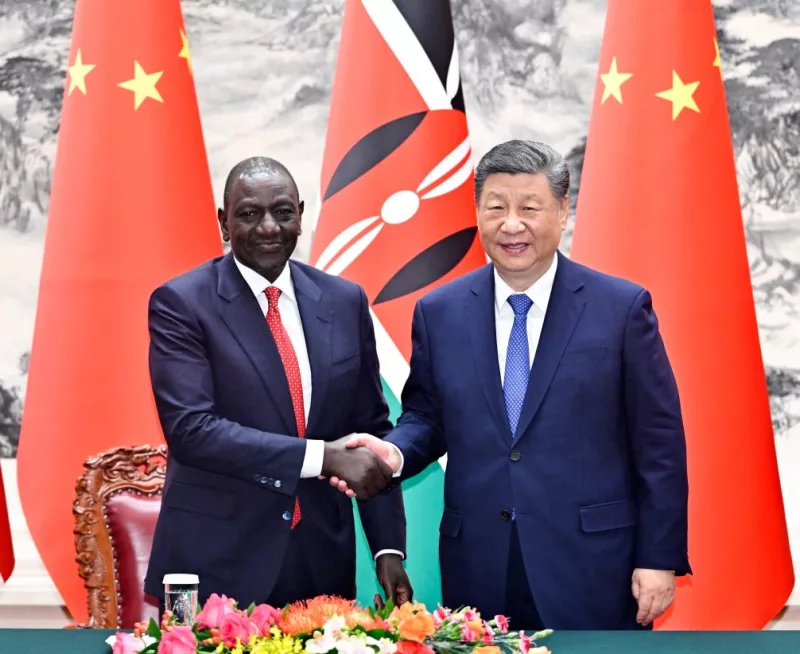
When Raila Odinga walked into Harambee House and shook Uhuru Kenyatta’s hand, it was not because he needed a job, a title, or a political lifeline. Raila had already built secured his place in Kenya’s political history. He had nothing left to prove and nothing left to chase. If anything, the handshake cost him politically among sections of his base who felt betrayed. Yet he did it anyway.
Why? For many reasons not to get into other than to say in the least because the post‑election tension had reached a dangerous boiling point. Which brings us to the question many Kenyans whisper today: could a Ruto–Gachagua handshake ever serve the same purpose?
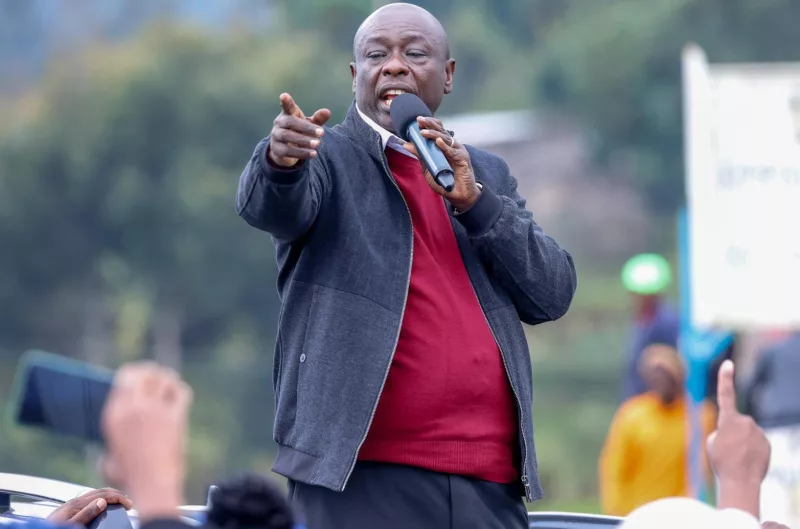
The answer is complicated but can be summed up like this: What Gachagua said in his latest national interview leads one to conclude were he to flip and have a handshake with Ruto, even he knows that will only benefit him personally (read: overstuffed cash in pocket), not politically as he himself correctly diagnosed, the mountain will not follow him.
Moreover, unlike Raila and Uhuru in 2018, the tension between Ruto and Gachagua is not existential for the country; it is existential for their political futures. Their rivalry is not about national stability; it is about succession arithmetic. A handshake between them would not be a statesmanlike act of national healing—it would be a tactical ceasefire between two men calculating their next move. And Kenyans know the difference.
A handshake will also entrench the very political behaviour Kenya needs to outgrow: elite bargains that prioritise political actors over citizens. It could reinforce the idea that national unity is something negotiated in boardrooms rather than built through institutions. While this has limited utility in certain contexts, the clamor for change and current mood in the country would not accept yet another boardroom deal that does not result in improving their lives.
There’s a simple formula to defeat Ruto in 2027 and everyone knows what that is; a handshake between Ruto and Gachagua is not it, but it can surprisingly become one if it happens.