

At Independence, the majority of the political and public service leaders were relatively young Kenyans. Except for President Jomo Kenyatta, the majority were aged 30 to 50.
Their advantage over latter-year politicians was that they were, comparatively, not only well educated but also had a strong sense of patriotism and firm commitment to nationalist ideals.
These Independence heroes took the reins of leadership from the departing colonial masters and guided the nation for decades.
They have been celebrated for having laid the foundations upon which the young nation took off and witnessed development that was the envy of the region. Similarly, they have also been accused of planting the seeds of discord that have been the bane of Kenya’s nationhood.
Principally, many key leaders of this generation later fell into the divisive tribal mobilisation that characterised the skewed national development agenda. They have also been held responsible for the introduction of modern corruption in government and private business.
This has led to pilferage and the accumulation of public resources into private ownership. Among themselves, some established cartels that manipulated government processes to divert public resources for personal aggrandisement.
Competition within this generation for the control of national leadership and the government system became so vicious that dominant groups pushed their colleagues completely out of government. Many times the losing groups were strategically denied opportunity for growth in the business realm.
When a group became dominant outside the ruling cartel and threatened the cartel’s very existence, assassination was not beyond the realm of possibility. This generation therefore provided both existential development and also threatened the country.
Those at the helm entrenched themselves so deeply that they ensured their self-preservation through internal and lineage succession. That largely explains why the country has had the Kikuyu community producing three out of the five presidents in more than 60 years.
Uhuru Kenyatta, the fourth president, is founding President Mzee Jomo Kenyatta’s son. Mwai Kibaki was the ruling party’s founding executive officer.
The University of London-trained economist later served in the inner circles as Minister for Finance and was a key adviser to the president. It is also not by coincidence that Kibaki was the godfather to Uhuru at his baptismal ceremony.
The Kalenjin community have gifted the country two presidents. The first, Daniel Moi, was a product of the networks of the Independence generation. He rose from the teaching fraternity through the patronage of the colonial government system that relied heavily on the missionary church leadership.
In his nascent leadership stages, Moi served as member of the Legislative Council for Kenya (Legco) for Rift Valley.
This gave him a vantage position owing to the vastness of the region together with the strategic economic interests controlled by the white settlers. While not quite vocal, he joined his colleagues in agitating for the release of Mzee Kenyatta together and others incarcerated for Mau Mau involvement in Kapenguria.
Later he would be a key player in the Lancaster conference negotiations for Independence. History records that he projected the person of one who would maintain the status quo and was also conservative.
These leadership qualities were crucial for the colonial government and white settlers who worried about the radicalism of the Kanu team who were considered extremists and anti-European. He remains the longest-serving president, occupying State House for 24 years.
The Luo community has consistently produced the de facto opposition leadership. It was never an intended outcome but a product of the intense internal competition within the generation for control of government and public resources.
Jaramogi Oginga Odinga, the doyen of the opposition, started off as a key ally of Mzee Kenyatta. He had the resources from his personal businesses that he used to influence the early politics of the nation.
He had been elected to Legco from the business community of the Luo Union of East Africa. Previously, he had taught at Maseno High School and belonged to the pioneering elite Makerere group.
In Legco, he was the undisputed leader of the radical movement and coined cultish slogans to push for the release of Kenyatta and other Mau Mau associates. However, fate conspired with his aggressive political strategies to push him to other side of the political divide.
Jaramogi was jettisoned from mainstream government but found comfort without competition in the opposition. He continued to influence national policy through his direct activities or the government’s transgressions against him.
These accorded him the rare opportunity to access the national leadership system at strategic positions. His comrades in the early opposition days, such as Masinde Muliro and Bildad Kaggia, remained steadfastly at his side, while his protégés in the labour movement had remarkable impact on trade union leadership.
However, the most significant success in Kenyan opposition politics is attributed to his son, Raila Odinga. He served as an academic during Mzee Kenyatta’s regime at the University of Nairobi and later in the early Moi government.
He left government at the comparatively senior and influential level of deputy director of quality and standards at the Kenya Bureau of Standards. Raila was one of the most influential political leaders outside of government.
To ensure tight control of the levers of national leadership, this generation ensured that they built deep and strong business and diplomatic networks within Kenya and across the globe. These networks enabled them to enjoy the best quality life available as individuals and family.
They ensured that relationships among their offspring were tightly controlled and, more often than not, marriages were closely knit. Leadership succession in business always followed theirs interests and followed the same script as in political leadership.
When Moi famously declared that Kanu would rule for a hundred years, he meant more than the ruling Jogoo Party.
He anointed Uhuru to succeed him in the full knowledge and confidence that his own favourite son, Gideon Moi, would follow soon after.
Once again it was, therefore, no coincidence that the young Moi succeeded him as Baringo Central MP as well as a director in many companies of his vast business empire. Wealth and power circulated and rotated within this elite generation of Independence heroes.
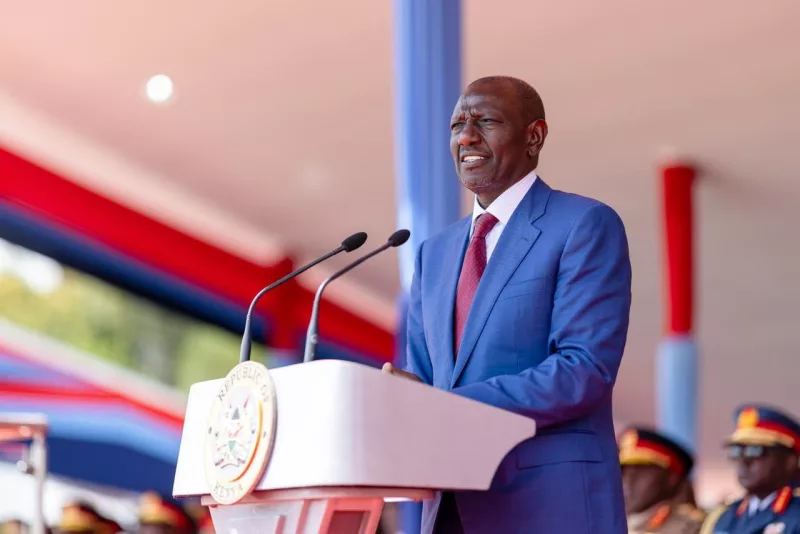
Then, unexpectedly, William Ruto arrived stealthily but with rare determination. He worked his way around and within the system without raising eyebrows. He learnt and understood the power system within this circle of oligarchs. He was unassuming yet he was easy to underestimate.
He lacked many characteristics of the scions of the national leaders being inducted into the world of politics and business. What he lacked in pedigree, he developed through the sweat of his brow.
His parents were never mentioned in discussions about the fight for uhuru, yet Ruto was able find strategic seats at such tables. None of his relatives were ever known to be in the corporate world, yet he deftly built his own version that successfully competed with the more established enterprises.
Ruto never had a religious background in the more established mainstream churches but he used his leadership of the Christian union at university to showcase his piety.
In undergraduate studies, he was just one among the students, yet he has history as the first president of the republic with an earned doctorate degree from the premier University of Nairobi. Every effort to curtail his rise and clip his wings flopped and collapsed due to his Machiavellian stratagem.
Ruto has successfully broken the grip that the Independence generation had on national leadership, both in politics and business. Now, there is an opportunity for a rank outsider to work his or her way upward and rise to the pinnacle of national leadership.
Most importantly, it is nearly impossible for any of the older generation of presidential candidates to succeed him. The cast of Kalonzo Musyoka, Rigathi Gachagua, Martha Karua, Eugene Wamalwa and James Orengo can at best play supporting roles in politics.
In government, the future is with Gladys Wanga, Hassan Joho and John Mbadi and team. In the opposition, it belongs to Edwin Sifuna, Babu Owino and George Natembeya.





