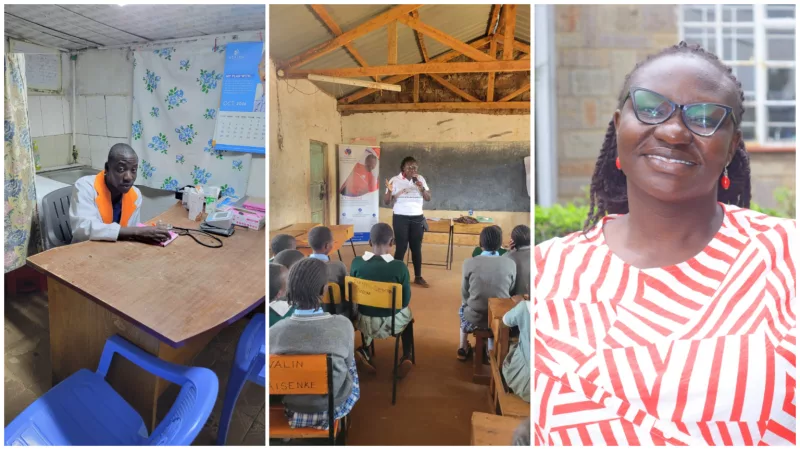
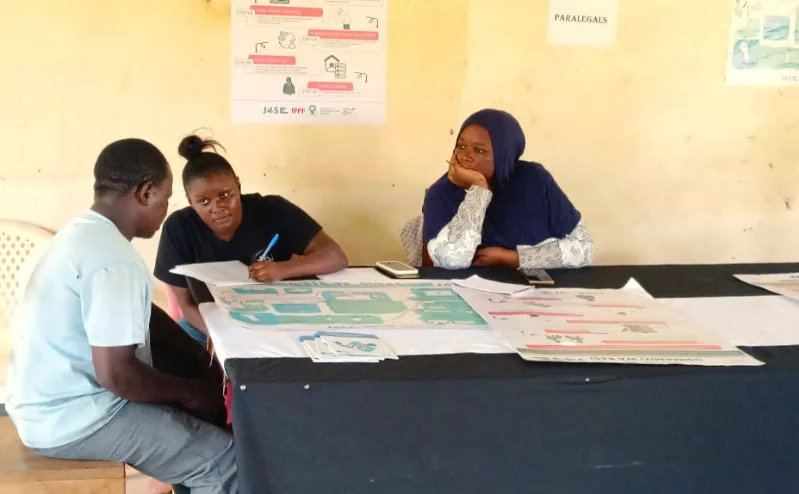
 ENYE network members Janice Mbingu and Biasha Jasho offer legal aid services at Jego in Vanga in Kwale county.
For generations, girls and young women in parts of Kwale county have grown up in communities where tradition and deeply rooted patriarchal beliefs often determined what they say, do or aspire to become.
Leadership was largely seen as a man's domain, while women had limited opportunities to influence decisions affecting their families and communities.
That narrative is slowly changing.
In Msambweni and Lunga-Lunga subcounties, a growing network of young women is challenging cultural stereotypes, confronting gender-based violence (GBV) and encouraging survivors to seek justice.
The movement brings together about 120 young women, mostly aged between 18 and 24, through the Empower Nurture Young Women through Empowerment (ENYE) network.
The network comprises young women-led community-based organisations supported by Youth for Sustainable World (YSW).
Through the network, members share experiences, educate communities about GBV and mobilise survivors to speak out against abuse.
ENYE leader Biasha Jasho said the initiative was created to help girls and young women overcome social and cultural barriers that continue to limit their participation in community affairs.
“The initiative seeks to give young women the confidence and skills to speak for themselves, participate in community affairs and demand accountability when their rights are violated,” she said.
Jasho said discriminatory cultural practices continue to deny many young women opportunities while keeping them away from leadership and decision-making spaces.
She said ENYE has also created platforms where GBV survivors can break their silence and access support.
The network holds monthly awareness and advocacy forums focusing on justice, legal rights and community-based support.
So far, about 360 young women who have experienced different forms of GBV have been reached through the initiative. They have received counselling and have also been linked to referral services for additional psychosocial and legal support.
For some women, the first step towards seeking help has been simply understanding that what they experienced was abuse.
ENYE member Janice Mbingu said lack of awareness and entrenched social norms had led some women enduring violence without identifying it as GBV.
“You realise some women experience GBV but do not know until they attend such forums, where they are enlightened,” she said.
The campaign is also changing how communities respond to cases of sexual and physical violence.
ENYE member Gladys Mweri said some communities previously relied on kangaroo courts to deal with cases involving defilement, rape and assault.
A kangaroo court is an unofficial legal proceeding that often ignores fair standards of law and lacks proper authority.
Such approaches, she said, often denied survivors access to formal justice while allowing perpetrators to escape accountability.
However, community sensitisation has encouraged more survivors and their families to report cases to the police, courts and other relevant institutions.
Beyond GBV, the network has also intervened in cases involving early and forced marriages.
Community member Saumu Luvuno said the initiative had helped rescue girls from forced early marriages while supporting teenage mothers to rebuild their lives.
Several girls, she said, have received legal and psychosocial support, with some eventually returning to school.
The transformation is being driven not only through awareness campaigns but also by equipping young women with practical skills.
YSW director Evelyne Samba said ENYE is central to the organisation's efforts to promote gender equality, increase awareness of GBV and strengthen access to justice for survivors.
Many young women have been trained as paralegals, giving them basic legal knowledge and enabling them to support survivors within their communities.
The paralegals work alongside YSW to provide legal aid and guide survivors through referral and justice systems.
Samba said the programme was also deliberately designed to prepare young women to take up leadership roles and become agents of change in their communities.
“They are empowered to engage in transformative leadership to change their lives and that of the community,” she said.