Africa must strengthen leadership capacity in the public sector if governments are to translate policy and technical reforms into better services and lasting institutional change, the African Capacity Building Foundation (ACBF) has said.
The foundation said many African countries have sound policies and ambitious public financial management (PFM) reforms but continue to struggle with implementation because of leadership gaps, institutional fragmentation and resistance to change.
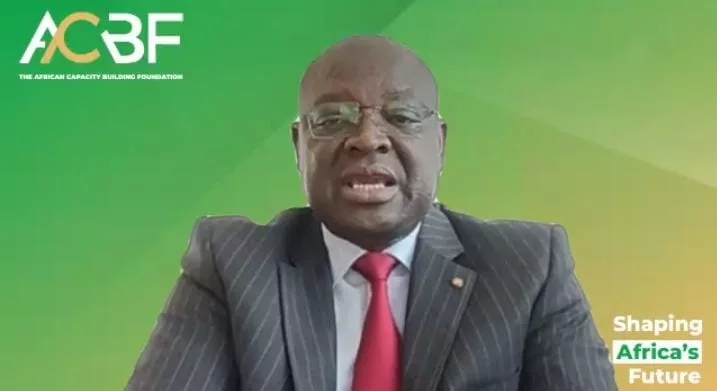
Speaking during a virtual meeting on Leading Public Sector Transformation in Africa: Leadership Lessons from the LEAPS Programme, ACBF Executive Secretary Mamadou Biteye said technical expertise alone was not enough to deliver sustainable reforms.
“Public sector reform is rarely held back by a lack of good ideas. More often, the real challenge is our ability to lead change by bringing people together, building trust, overcoming resistance and sustaining momentum,” Biteye said.
The meeting brought together government officials, public finance practitioners, development partners and alumni of the Leadership Excellence in Africa’s Public Sector (LEAPS) programme.
The programme is implemented by ACBF with support from the Gates Foundation under an initiative aimed at enhancing leadership and governance in public financial management across Africa.
Biteye said reforms in public financial management were particularly important as governments seek to mobilise domestic resources, improve public investment, strengthen budgeting and enhance expenditure management.
He said the success of such reforms ultimately depended on the people responsible for implementing them.
“Systems do not reform themselves. Budgets do not implement themselves. Digital platforms do not transform institutions by themselves, and policies do not deliver results by themselves. People do,” he said.
Biteye said LEAPS was designed to equip senior public officials with leadership skills that go beyond conventional technical training.
The six-month programme combines online leadership training, personal development plans, individual and group coaching, peer learning, technical seminars, mentorship and practical case studies based on real public financial management challenges.
The programme has been piloted across nine countries and institutions, including Kenya, Ghana, Senegal, Zimbabwe, The Gambia, Côte d’Ivoire, Ethiopia, Nigeria, Tanzania and the African Union Commission at different stages of implementation.
ACBF Economic and Social Governance head Rodolphe Bance, said the foundation's African Capacity Report had consistently identified leadership as one of the continent's major capacity gaps affecting policy and reform implementation.
“Policies are well designed, but when it comes to implementation, the level is not very satisfactory. It is the same for PFM reform strategies or agendas,” Bance said.
He said technical competence did not necessarily translate into the ability to manage institutions, teams and competing interests.
“You can be strong in debt management or debt sustainability analysis, but not be strong in managing a debt management office. You can be good in audit, but not be able to manage the office of the Auditor-General,” he said.
Bance said LEAPS seeks to help public officials navigate challenges at individual, team, institutional and wider public finance ecosystem levels.
The programme uses leadership assessments, including 360-degree feedback, to identify areas for improvement before participants develop personal leadership development plans with support from coaches.
The Gates Foundation, which supports the initiative, said the programme was based on the recognition that public sector reforms were fundamentally about people.
Adil Ababou, a senior programme officer at the foundation, said technical capacity was essential but could not guarantee lasting reform.
“People lead reforms. Institutions are not abstract; it's all about people,” Ababou said.
He said officials must be able to build consensus around difficult reforms, manage resistance, work across institutional boundaries and maintain momentum during challenging political and economic periods.
Ababou also stressed the importance of country ownership, saying LEAPS does not impose predetermined reforms on participating countries.
“The approach instead starts with understanding the capacity needs of participating institutions,” he said.
The programme has so far graduated 179 participants in its first cohort, while 88 completed the second cohort. Another 116 participants are currently undertaking the third cohort, according to ACBF.
Participants cited Kenya as an example where people-centred leadership has complemented technical expertise in advancing digital public financial management reforms and securing stakeholder support.
Experiences from Senegal, Ghana and Zimbabwe also showed improvements in delegation, communication, accountability, collaboration and the ability of officials to navigate complex reforms.
The foundation said the next challenge was to ensure the lessons and leadership gains extend beyond individual participants.
Biteye said alumni should become mentors, reform champions and catalysts for wider changes in institutional culture.
He said ACBF was expanding the initiative through the LEAPS Executive Programme under its Ubora Academy to reach more public sector officials across the continent.
The foundation said it would also seek to strengthen alumni networks, embed coaching and mentorship in government training institutions and undertake longer-term assessments of leadership outcomes.
The discussions also examined emerging issues such as artificial intelligence, inter-institutional collaboration and domestic resource mobilisation.
Participants argued that revenue authorities should increasingly adopt people-centred approaches, with leadership helping staff and taxpayers build trust and improve compliance.
Participants also called on African governments to treat leadership development as a core institutional competence rather than a one-off training opportunity.