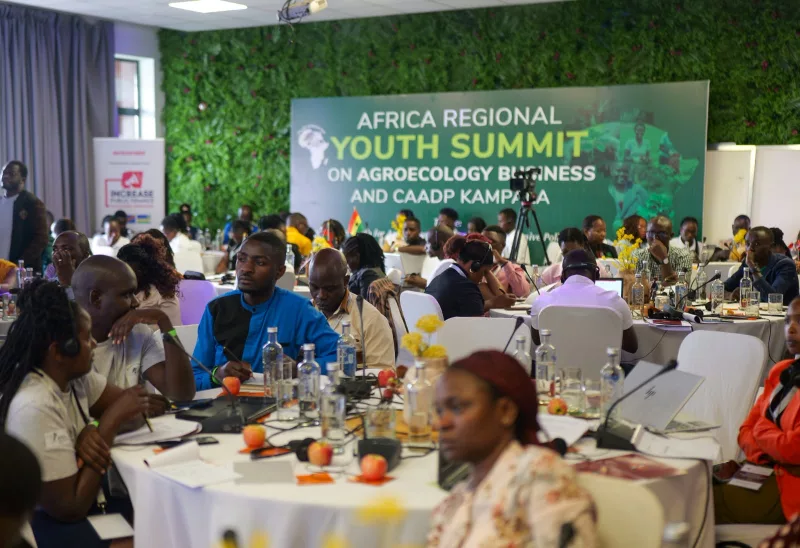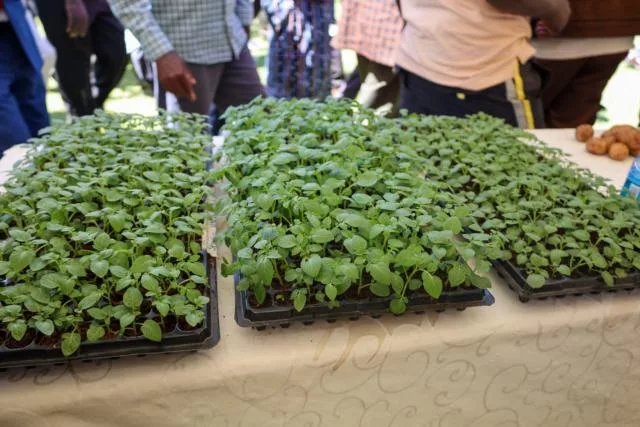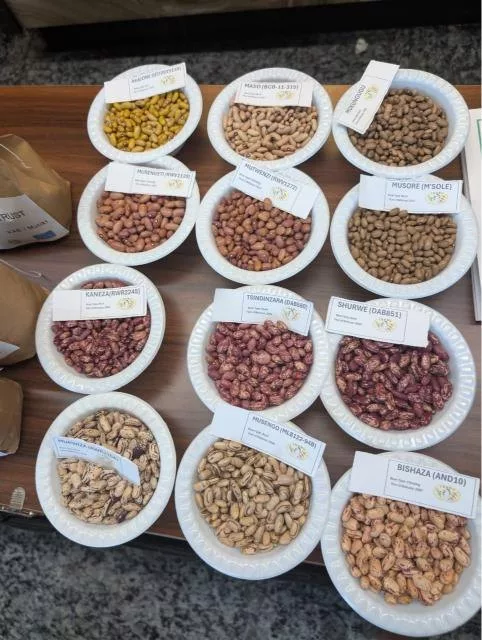
Some of the bean varieties displayed at the Africa Food Systems Forum 2026 in Kigali, Rwanda./HANDOUT.
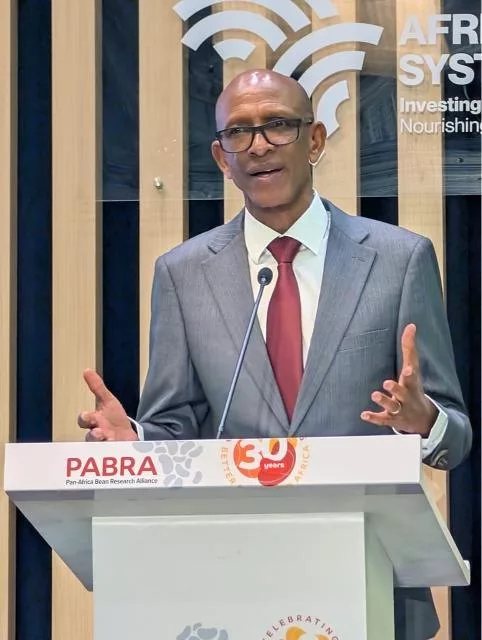
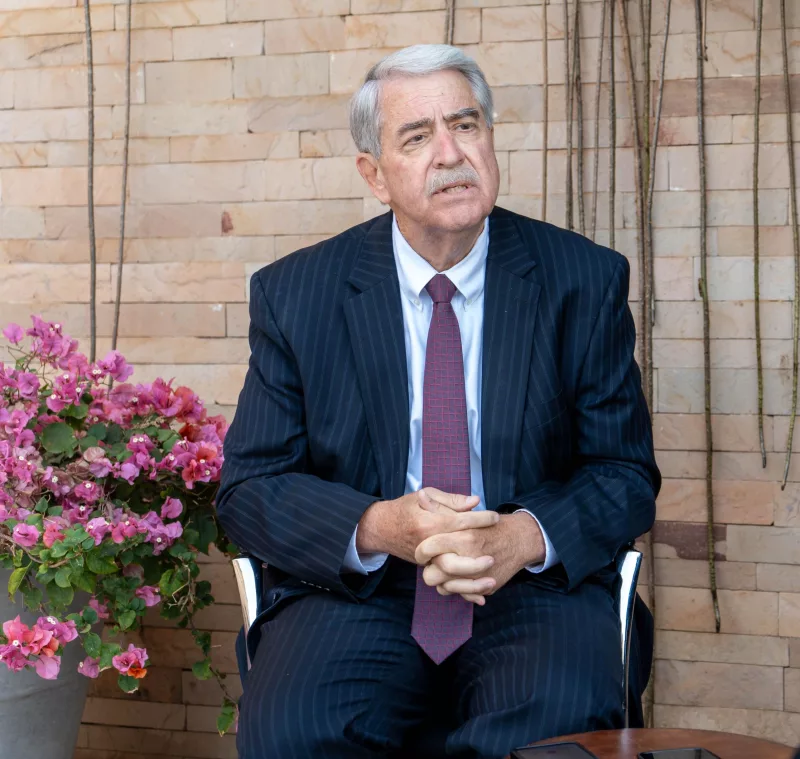
Jean Claude, director, Pan-Africa Bean Research Alliance (PABRA) addresses stakeholders at the Africa Food Systems Forum 2026 in Kigali, Rwanda./HANDOUT.
Improved bean varieties help farmers fight climate change and cut costs
Many Kenyan households rely on beans as an affordable source of protein and an alternative to meat. But growing the crop is becoming increasingly challenging for farmers due to erratic weather, pests, diseases and the high cost of production.
Kenya produced an estimated 759,000 tonnes of beans in 2024, a 13.4 per cent decline from 861,000 tonnes the previous year, according to the Kenya National Bureau of Statistics (KNBS).
The area under the crop, which is grown in most parts of the country, however, increased slightly to about 1.23 million hectares.
The decline in production was attributed to reduced short rains and excessive long rains that caused flooding in some bean-growing areas. The value of bean production also fell from Sh88.1 billion in 2023 to Sh70.4 billion in 2024.
To address these challenges, the Pan-Africa Bean Research Alliance (PABRA) has worked with African national agricultural research systems and other partners to develop bean varieties suited to farmers' needs, including varieties designed for higher yields, improved nutrition and greater resilience to climate stresses.
Jean Claude Rubyogo, Global Bean Program Leader and Director, PABRA, Alliance of Bioversity International and CIAT, said more than 600 improved bean varieties have been released across 31 countries, including high-yielding, nutrient-rich and climate-resilient options.
He spoke while marking PABRA’s 30th anniversary during the opening of the Africa Food Systems Forum 2026 in Kigali, Rwanda.
“The improved varieties have raised yields by an average of 36 per cent, while stronger seed and commodity corridors connect production with consumer demand and structured markets,” said Claude.
Other impacts have been on nutrition and public services, where iron- and zinc-rich beans are contributing to healthier diets, including through home-grown school meal programmes.
Claude noted that there has also been growth in inclusive enterprises, with women and young people increasingly participating as producers, scientists, seed entrepreneurs, processors and agribusiness leaders.
According to the Ministry of Agriculture, beans are the country's second most important food crop after maize and provide protein, energy and micronutrients, including iron and zinc.
This nutritional role has driven research into biofortified bean varieties containing higher levels of iron and zinc, nutrients that are important in addressing deficiencies, particularly among vulnerable groups.
PABRA said its network has supported the development and release of hundreds of improved bean varieties across Africa, including varieties bred for nutritional quality, disease resistance and climate resilience.
Claude said PABRA's emerging 2027–2037 strategy will seek to deepen bean research while expanding the network's contribution to resilient food systems.
“Priorities under discussion include faster delivery of farmer- and market-preferred varieties, stronger African scientific capacity through the PABRA Academy, increased opportunities for women and young people, and closer links among research, finance, processing and markets,” he said.
The celebration concluded with a call for predictable, long-term investment in African-led research and partnerships capable of moving proven innovations to scale.