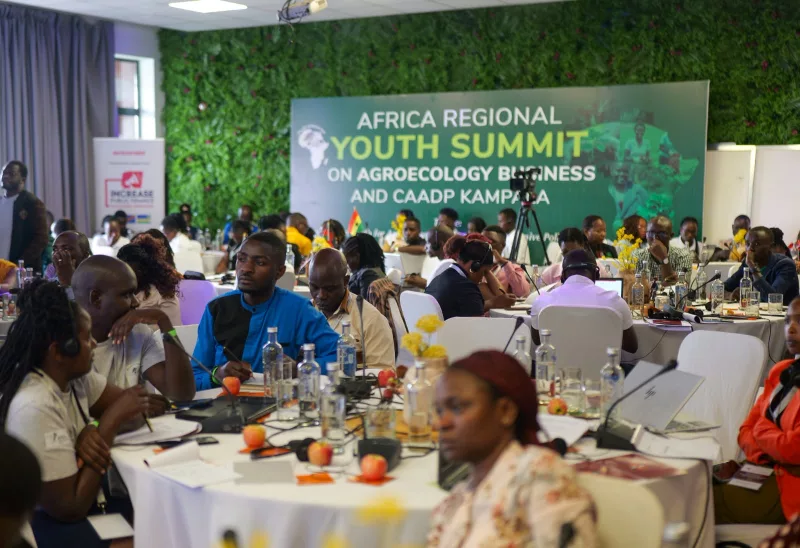
 Youths from across African countries taking part in the African regional youth summit on Agroecology business and CAADP, Kampala/HANDOUT
African youths from different countries converged in Kampala, Uganda, for a regional summit seeking to boost agroecology businesses, promote knowledge exchange and create opportunities for young people to participate in sustainable agri-food systems.
The Africa Regional Youth Summit on Agroecology Business and Comprehensive Africa Agriculture Development Programme (CAADP) Kampala was organised by Participatory Ecological Land Use Management (PELUM) under the theme, “Investing in Youth for Agroecology Enterprises and Inclusive Policy Change.”
Speaking to the press at the summit, Medius Bihunirwa, Head of Programmes at PELUM, said the meeting had brought together young people and stakeholders from across Africa to share experiences, explore business opportunities in agroecology and discuss policies that can create a more enabling environment for youth-led enterprises.
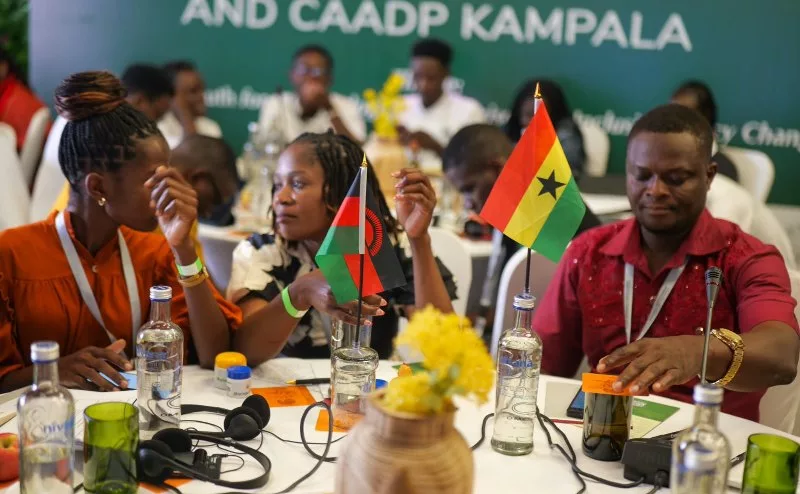 Youths from across African countries taking part in the African regional youth summit on Agroecology business and CAADP, Kampala/HANDOUT
She said the PELUM Association is a network of about 300 civil society organisations working in 14 African countries and reaching more than 12 million small-scale farmers across the continent.
“At our organisation, we focus on different thematic areas, and one of them is youth in agroecology. This summit is organised under the youth and women thematic area of our association,” Bihunirwa said.
She said PELUM, together with other partners working in the agroecology space, organised the summit under an initiative dubbed Youth in Agroecology Business Learning Track Africa (YALTA), a continental initiative focusing on young people.
“At YALTA, we do mentorship and enhance youth involvement in policy formulation processes,” she said.
Bihunirwa said the summit focused on two key areas: agroecology businesses and CAADP Kampala commitments, with the latter seeking to promote inclusivity and empower young people to take a more active role in Africa’s agri-food systems.
She said the summit also provided young entrepreneurs with an opportunity to showcase their agroecology products and share experiences on how they are building businesses through sustainable farming practices.
“As a network, we are working with 1,450 youths across the globe. Therefore, we have brought up this summit as a forum for sharing experiences, with youths showcasing their agroecology products,” she said.
Bihunirwa said Africa’s youthful population presents a major opportunity for the continent to transform its agricultural sector, particularly at a time when many young people continue to face unemployment and limited economic opportunities.
However, she said agroecology can provide young people with opportunities to create businesses while contributing to healthier food systems, environmental conservation and resilient livelihoods.
“Over 60 per cent of Africa’s population is youth, but at the same time, as a continent, we are struggling with high unemployment rates among young people, yet we have the potential of agriculture,” she said.
“This summit also looks at how we can harness the potential of our agriculture as Africa, especially the young generation taking the driving seat to start their agroecology businesses and contribute to meaningful policies that can be useful for them,” she added.
She said agroecology is important in promoting sustainable food production because it encourages farming practices that work with natural ecosystems, conserve soil and water, protect biodiversity and reduce dependence on harmful agricultural chemicals.
Bihunirwa argued that agroecological practices can also help farmers build resilience to climate change while producing safe and nutritious food and reducing production costs through the use of locally available resources.
She, however, identified limited access to finance as one of the major barriers preventing young people from actively participating in agroecology.
“Access to finance by youths remains one of the greatest barriers to their active participation in agroecology,” she said, calling for increased investment and financial support to enable young entrepreneurs to establish and expand their businesses.
She said greater investment in youth-led agroecology enterprises could help address unemployment while strengthening local food systems and creating sustainable livelihoods.
Irene Gitau, a youth participant from Kenya, applauded PELUM for organising the summit, saying it had provided young people with an opportunity to learn, network and exchange ideas with their peers from across Africa.
“We have met here youths from over 14 countries in Africa. We have visited some of the agroecology farms in Uganda and we have seen what should be done in the agroecology space,” she said.
Gitau said participants were expected to take the knowledge and experiences gained at the summit back to their communities and apply them to improve agricultural practices and youth-led enterprises.
Sharon Bundi, another youth participant from Kenya, said the summit had demonstrated that young people can play a central role in advancing sustainable agriculture and shaping policies affecting the agri-food sector.