As a woman dragon fruit farmer, Dr Monicah Waiganjo is demonstrating how research, innovation and determination can open new opportunities for women in agriculture.
After working for 40 years as a researcher and administrator at the Kenya Agricultural and Livestock Research Organisation (KALRO), Dr Waiganjo transitioned to full-time farming in October 2022, turning her interest in dragon fruit into a business venture.
Her fascination with the tropical fruit began in April 2021 when she encountered it in a friend's garden. Curious about its potential, she researched its suitability for Kenyan conditions and began promoting it as a high-value crop with opportunities for farmers seeking to diversify their agricultural enterprises.
Today, she operates a model dragon fruit orchard in Kithimani, Yatta Sub-County, Machakos County, Kenya, where she grows approximately 1,500 trees on a three-acre farm.
Through her company, Sungreen Harvest, she propagates and sells dragon fruit cuttings, offers advisory services to prospective growers and cultivates other high-value horticultural crops, including Hass avocados, paw paws and pomegranates.
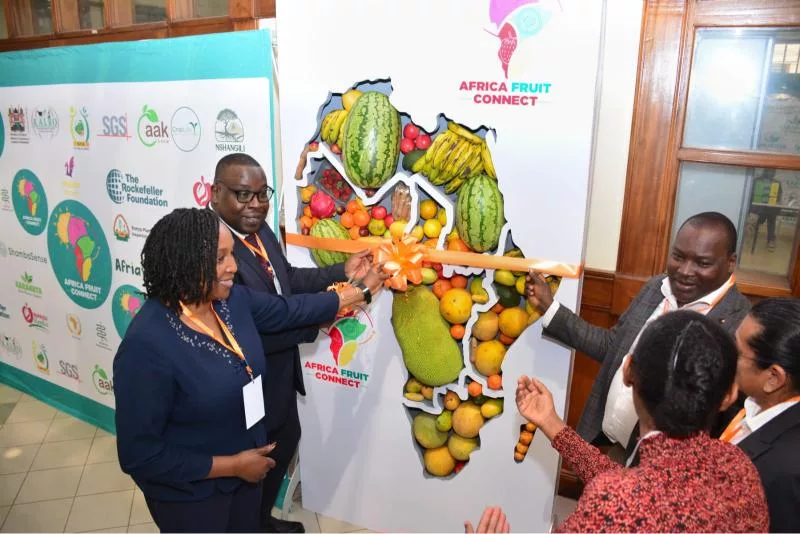
“I am a certified nursery producer, and at Sungreen Harvest we have an integrated crop system whereby we grow dragon fruit intercropped with other high-value horticultural crops like pineapple, avocado and paw paws,” Dr Waiganjo stated as we caught up with her at the inaugural African Fruit Connect 2026 expo and conference in Nairobi.
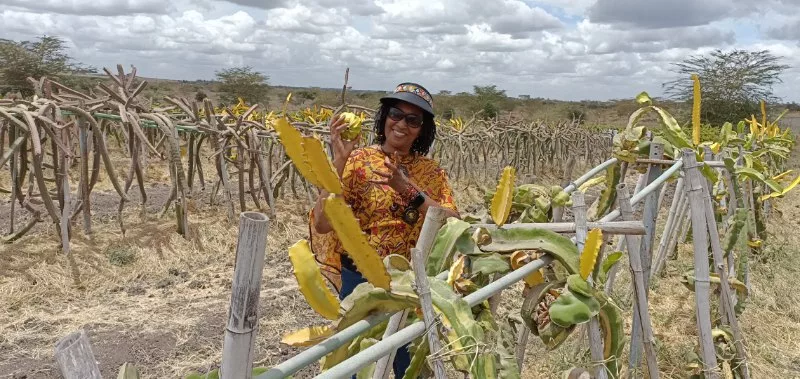
Her integrated farming approach demonstrates how farmers can diversify production rather than depend on a single crop. This technology also helps her to maximise the use of available land while creating opportunities for additional income.
“Dragon fruit impacts positively on other fruits since it does not have wide penetrating roots; hence, you can intercrop comfortably. However, as we intercrop, we focus on low crops that do not have a lot of shade that can prevent adequate sunlight,” she explained.
The dragon fruit farmer also keeps bees to support pollination on her farm, highlighting the potential benefits of integrating beekeeping with horticulture.
“I have put up a bee house that accommodates up to 200 bee hives. The integration of beekeeping and horticulture helps me keep the bees for pollination of my dragon fruits and other fruits on my farm,” she said.
“The dragon fruit is rich in pollen grains, and this attracts bees that, in turn, help other crops in cross-pollination, resulting in high yields and even having sweeter fruits,” she added.
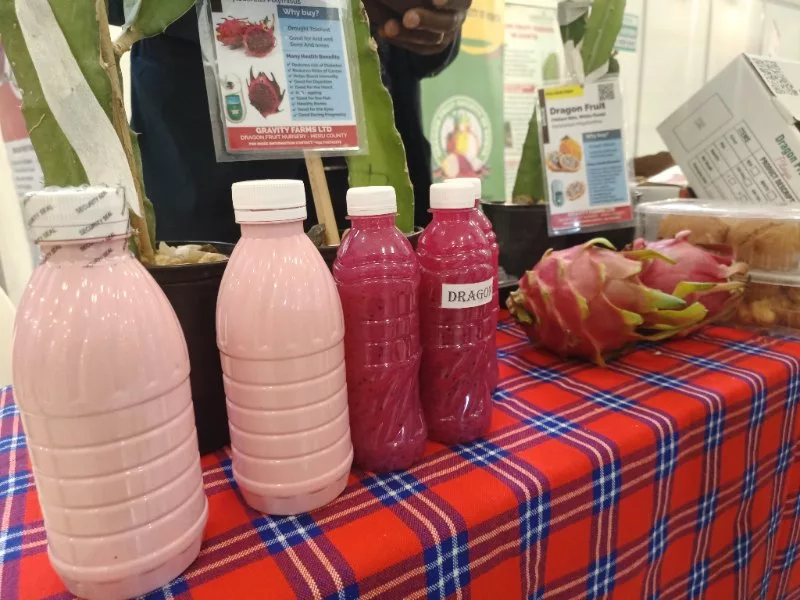
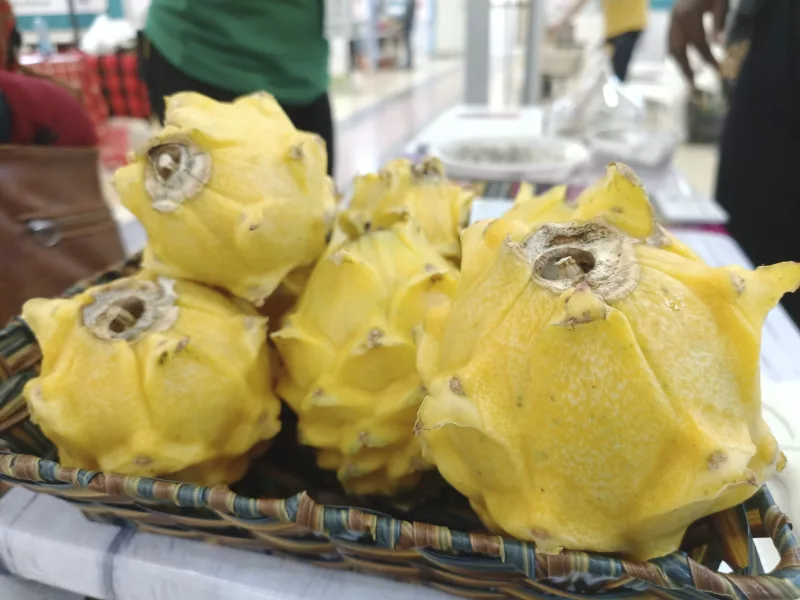
The dragon fruit is appreciated worldwide and is commonly referred to as ‘a super fruit’ due to its positive health benefits and high nutritional value.
It is low in calories but packed with essential Vitamins and minerals. The fruit helps to fight chronic diseases as it contains antioxidants; it is loaded with fibre, promotes a healthy gut, strengthens the immune system and is a good source of magnesium.
The fruit’s high nutritional value contributes to its premium market price in Kenya, where a kilogram of dragon fruit sells for between Sh300 - Sh600 (USD 2-5 ) wholesale price, to Sh600 - Sh1,500 retail price (USD 5-12), depending on seasonal availability.
The dragon fruit, also known as Pitaya or Pitahaya, belongs to the cactus family, specifically the plant family Cactaceae. It has great potential as a new climate-smart crop which adopts well to the local climate with high temperatures and consumes little water.
“Dragon fruit adapts well to most conditions found in Kenya and can produce an average of 5-8 tons per acre per season. It prefers a dry tropical climate with an average temperature of between 21-30 degrees Celsius and rainfall of 500- 1500 mm per annum. The plant can tolerate any kind of soil; however, they grow best in well-drained soils that are rich in organic matter, Dr Waiganjo mentioned.
Dr Waiganjo's transition from research to farming illustrates how scientific knowledge can be translated into practical agricultural solutions. Her experience also challenges the perception that retirement marks the end of professional contribution, showing how years of research and technical expertise can be applied to entrepreneurship.
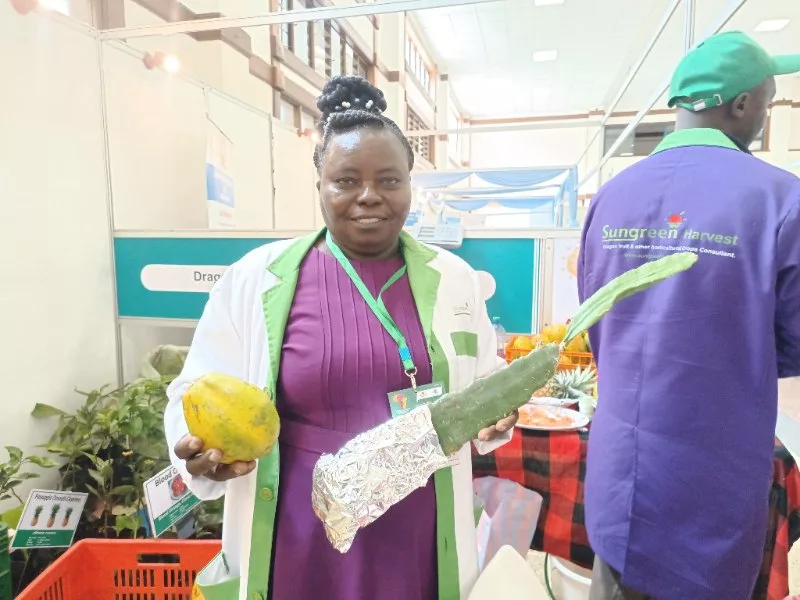
Her journey offers a useful example of women's contribution to agricultural innovation. It demonstrates how women can draw on professional expertise to explore new crops, develop enterprises and share knowledge with other farmers.
As the world marks the International Year of the Women Farmer, CGIAR gender experts say even though women make up nearly 40% of the agricultural workforce globally, and up to half in parts of Africa and Asia, the story of women in agriculture is not just about contribution. It is about visibility, power, and missed potential.
“When women have access to resources, markets, and decision-making power, they thrive. Across Africa, Asia, Latin America and beyond, women are moving from farming into entrepreneurship, seed enterprises, processing, and market leadership when given the right support. But success does not come from isolated interventions like seeds or training: It comes from systems that work together, combining technology, finance, market access, and social change,” says CGIAR in their report, Fact check: What does it mean to be a woman farmer in 2026, published in October.
However, another publication, Advancing equality, transforming futures: a path to resilient and productive food, land and water systems in 2050, states thatwomen in low-income countries are at greater risk of being left further behind than men by the impact of the polycrisis on global food systems, unless governments, donors and development partners improve inclusion.
The study, by CGIAR GENDER Accelerator, calls on governments, funders, NGOs, researchers and the private sector to address the gender gap as food systems evolve between now and 2050.
A MESHA Features publication 2026