Kenyans have been asked to take more tea as a cleanser and detoxifier for their bodies.
Currently, the country’s tea consumption is less than 10 per cent.
“We have increased from five per cent and we are heading to nine per cent,” Lilian Kerio, directorof Tea Research Institute at Kenya Agricultural and Livestock Research Organisation Kericho.
She said the country is not yet there and needs to increase local consumption to also boost and stabilise internal revenue generation.
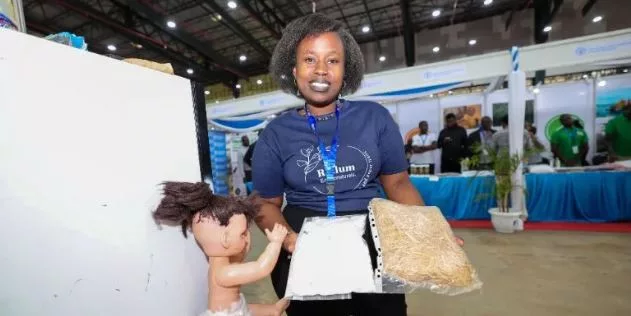
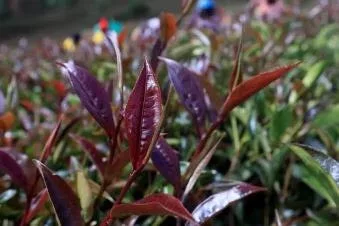
“As tea research, through the crop improvement that we are undertaking, we have developed new tea varieties for value addition that are suitable for processing orthodox green tea, black orthodox tea, white silvery tips and even purple tea.
“So, continuous research has enabled us to also enable the tea industry to have the right raw material for the right product,” she said.
The institute carries out research and innovation and develops technologies for the sustainability of the tea industry. One of the research technologies, she said, is the development of value-added tea products.
“We
have the purple tea innovation, which is an innovation from tea research
registered in Kenya and granted plant breeders’ rights,” she said.
Kerio said they are promoting purple tea because of its health properties. She added that many Kenyans are now health conscious because of the rise in non-communicable diseases.
“Even the current consumer of tea is different from the consumer of yesterday. They don't like milk and sugar in their tea, so we have developed products suited for them, that they can consume without milk and sugar,” she said.
“That is why we have gone ahead from the same green tea that we have, we have developed black orthodox tea and green orthodox tea. We also have white tea from the tip of the tea.”
Keriosaid that tea is usually plucked as two leaves and a bud, making this a high-value tea product known as silver needles. It is high in polyphenol content and antioxidant activity.
Purple tea is a specific tea product
that has a pigment called anthocyanins.
“If you have seen purple cabbage, this is the pigment that is in purple cabbage. If you have seen the red grapes, the red apples, and you know there is an adage that says, one apple a day keeps the doctor away.
It is because of these anthocyanins which are highly antioxidant, hence high health benefits. The anthocyanins can now be found in our tea,” she said.
Kerio assured consumers that the tea is grown naturally without any additional pesticides or chemicals, so they can be assured that they are consuming a healthy tea product.
She added that they have developed technologies for processing purple tea in order to retain its bioactive components.
Due to fluctuations in tea prices, the institute is developing these high-value products for niche markets, either within the country or outside the country.
“We have done quite a lot of research on the health benefits of tea. We have seen that the more you take purple tea or green tea or black tea or white tea, the more it reduces reactive oxygen species that cause a lot of health problems in our bodies,” Keriosaid.
Purple tea is grown in the same tea-growing regions as other teas. She told farmers that purple tea is a high-value tea product and is also resilient to drought, pest and disease infestation.
“It is widely adaptable to all tea-growing regions. To support value addition in the tea industry, I would ask more farmers to build volumes by adopting and getting high-quality seedlings from tea research institutes,” Keriosaid.
“Purple tea has higher income, and if you get a specialty processing facility, that is why the government is supporting value addition. And that is why the government is supporting factories to modernise their tea machinery so that they can go into orthodox processing. And now, this purple tea will be of higher value. We expect it to be of higher value than the normal green tea.”
She said there is a market within the country and even outside, including China and Japan, because it can be extracted to form capsules or tablets or can even be used in cosmetic products.
She urged farmers to adopt purple tea in order to build volumes to meet demand, which is sometimes high yet there are not enough volumes. Farmers can get seedlings from TRI in Kericho, with one seedling selling at Sh10.
She called on Kenyans to take purple, green, white and black tea produced in Kenya and adopt a habit of consuming tea in a healthy manner without milk and sugar.
“When you add milk and sugar, you mask the antioxidant activity of tea. But when you take these value-added products, these high-value orthodox tea products, then you will now experience the antioxidant activity from tea.
“It's a health and wellness product and it is natural and we don't use pesticides to grow. No chemicals are even used when it is being processed,” she said.
“We are not getting new tea-growing areas. The only thing happening because of climate change is that the tea-growing regions are now going into protected areas like the forest. Climate change is shifting the brown line for growing tea, so we are going into protected areas, which is very sad. But all the same, what we need to do is that as tea research, through research and innovation, we want to increase the productivity per bush.
“Instead of increasing the area of production, we want to increase the production per unit area.”