 Maria
Aloo, the founder of Rallum Eco Diaper, uses sugarcane waste to make biodegradable
diapers /HANDOUT
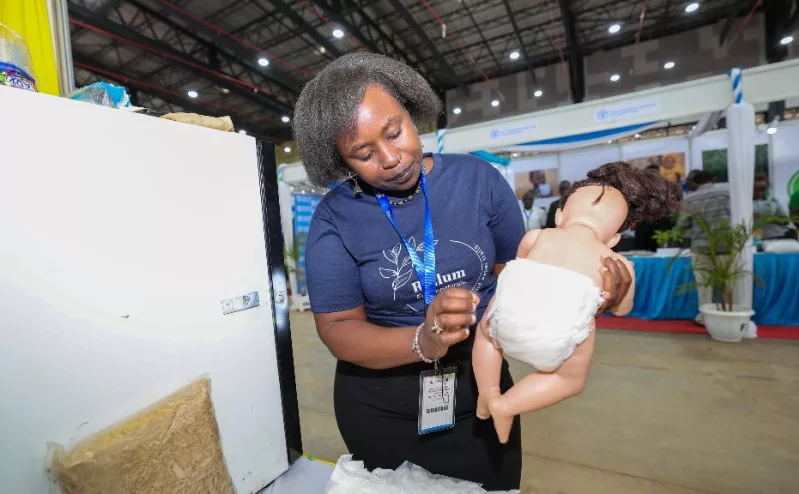
Maria Aloo, the founder of Rallum Eco Diaper, uses sugarcane waste to make biodegradable diapers /HANDOUT
A 30-year-old Kenyan innovator is
turning sugarcane waste into biodegradable diapers to tackle disposable diaper
pollution while offering parents and caregivers an affordable alternative.
Maria Aloo, the founder of Rallum
Eco Diaper, uses bagasse, the waste left after sugarcane is crushed, to make
diapers that she says are comfortable, absorbent and less harmful to the
environment.
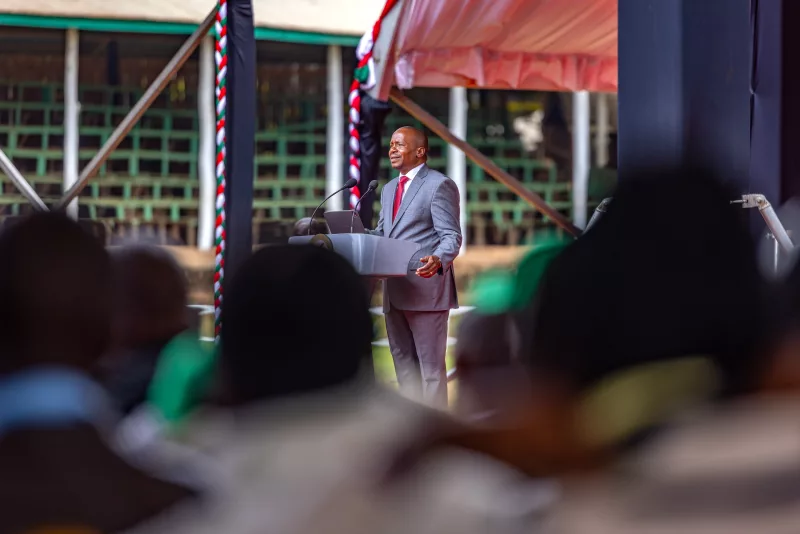
Aloo, who spoke to the Star during the Agriculture and Food Systems Transformation Summit (AFSS 2026) at Jamhuri grounds in Nairobi, said the idea was born from seeing heaps of discarded diapers and her interaction with children while working in Kajiado.
“I used to work in Kajiado and there were lots of diapers that used to just sit there in heaps. That’s where the idea came from,” she said.
Her experience working with children also made her more aware of the challenges faced by families who have to buy diapers regularly.
She said the problem is even greater for children living with disabilities, including cerebral palsy, who may need diapers for much longer than other children.
“These are children who are bound to always use diapers. They don’t have an option but to keep using them,” Aloo said.
She spent the past four years experimenting with different materials before settling on bagasse as the most suitable raw material.
The innovation has also been supported by the Kenya Sugar Board, which regulates the country’s sugar industry.
Aloo said she won an innovation symposium organised by the board last year, giving her an opportunity to work more closely with sugar mills and access the waste material.
“Kenya Sugar Board regulates all the sugar mills in Kenya. There is also an inclusion part where they are trying to build capacity around waste, and that made it easier for me to penetrate the sugar mills and get my raw materials,” she said.
She explained that the process begins with collecting bagasse or waste from sugar mills.
Aloo said the material is heated, cooked and softened before being subjected to further processing to produce a soft material known as pulp. “It takes about three to three-and-a-half days to get the pulp,” she said.
The pulp is then used in making the different components of the diaper, that is the top sheet, absorbent core and back sheet.
Aloo said her product has undergone quality control and research and has been tested for absorbency.
“The prototype has shown 43 per cent higher absorbency than conventional diapers, although the product is still undergoing further development and certification. The bagasse fibre also holds moisture well, helping improve the comfort of the diaper,” she said.
She has also incorporated a mosquito-repelling substance into the diaper, creating what she describes as a two-in-one product that could help reduce mosquito bites among children.
The pilot diaper currently sells for Sh20, although Aloo expects the price to fall once production is scaled up.
She is waiting for machinery expected to arrive this month, after which she plans to start manufacturing the diapers on a larger scale.
Aloo said the next step will be to test the diapers in a hospital before taking them to the wider market.
“We are waiting for the machinery, which is about to come in October. Then we will be able to make good diapers and release them for a small case study in a hospital,” she said.
She is also pursuing certification from the Kenya Bureau of Standards, alongside other regulatory requirements.
Aloo said one of her main motivations is to reduce the environmental burden created by disposable diapers.
She estimates that diapers account for about four per cent of solid waste in landfills, while babies can use between six and eight diapers a day.
Unlike conventional diapers, she said her product is designed to break down after disposal.
“It is fully biodegradable. Once it is released into the soil, within about four months it goes back to the soil,” she said.
The product has taken about three-and-a-half years to develop to a stage where she can confidently present it as a biodegradable alternative.
The innovation has also involved working with the Kenya Industrial Property Institute, including training on intellectual property and product development.
Aloo said the technology has been patented, while she is also working through environmental and other regulatory requirements before commercialising the product.
Before becoming an innovator, Aloo worked as an adherence counsellor with the Kenya Red Cross in Kajiado and has also worked at Shamiri health centre, a mental health intervention centre.
She has a background in psychology and says her work with children has influenced the innovation.
“I believe I am the voice of kids because there’s no baby that ever addresses issues of discomfort when they are struggling with diapers,” she said.
“We are trying to be the voice of children and give them a safe product.”
She said her biggest challenge over the past four years has been securing a reliable supply of raw materials. “You can’t make diapers without raw material. That was the greatest challenge I had,” she said.
She hopes to launch the product commercially by March next year, once the necessary machinery, testing and certifications are in place.
Aloo urged young people, to simply identify a problem and find a way of solving it. “Everywhere you are, there is always a problem and you can always find ways of solving it. Dream big. Don’t give up. Push as much as you can,” she said.
INSTANT ANALYSIS
According to the Agriculture Ministry, bagasse accounts for about 33–36 per cent of every tonne of sugarcane crushed and is mainly used by mills to generate power. Kenya delivered about 5.55 million tonnes of sugarcane to mills in 2023, according to the Agriculture and Food Authority. This means large volumes of bagasse are generated each year. The Kenya Sugar Board is encouraging greater value addition of sugar by-products, including bagasse. Turning the waste into products such as biodegradable diapers could therefore create new markets while reducing pressure on waste disposal.