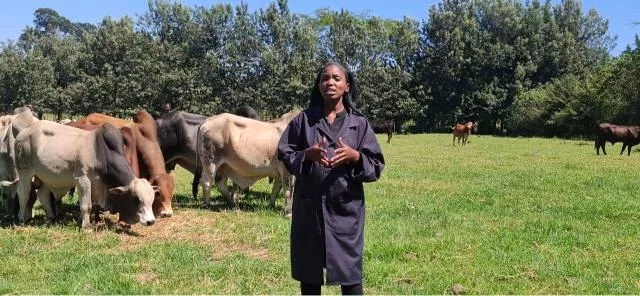
 Catherine Ndung’u, a research scientist at the Beef Research Institute of the
Kenya Agricultural and Livestock Research Organization (KALRO) in Lanet, Nakuru
County./AGATHA NGOTHO.
Catherine Ndung’u, a research scientist at the Beef Research Institute of the
Kenya Agricultural and Livestock Research Organization (KALRO) in Lanet, Nakuru
County./AGATHA NGOTHO.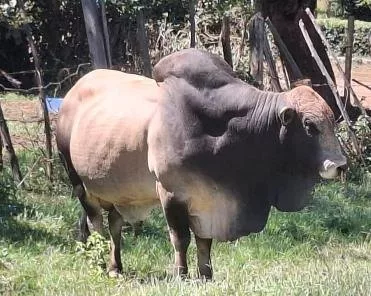
Improved boran bull at the Beef Research Centre in KALRO Lanet./AGATHA NGOTHO.
Beef research targets Kenya’s meat deficit through improved Boran breed
Kenya’s growing demand for meat is driving researchers to develop beef cattle that can withstand the country’s harsh climatic conditions while producing more and better-quality meat.
Scientists at the Beef Research Institute of the Kenya Agricultural and Livestock Research Organization (KALRO) in Lanet, Nakuru County are improving beef breeds, feeds and production systems as part of efforts to increase productivity and help address the country’s meat deficit.
The research comes as Kenya hosts the 5th Edition of the Kenya Meat Expo, running from August 26 to 28, 2026, at the Kenyatta International Convention Centre (KICC) under the theme “Accelerating Sustainable Growth: Empowering the Next Generation in the Meat Value Chain.”
For butcher John Njoroge, the work being done at KALRO has translated into a reliable source of quality animals.
Njoroge, who owns Oasis Meat Centre in Lanet, says he has been buying cattle from the Beef Research Institute for the past two years because of the quality of the animals and meat.
“I knew about it from an advert I saw in the newspapers and on social media that they were selling their beef animals. Normally, I buy between 10 and 20 animals and stock them as we wait for the next window for buying other animals at the research institute,” he says.
Njoroge says the quality of the meat has helped his business attract customers, despite selling beef at a higher price than other butcheries in the area.
He sells a kilogramme of beef for about Sh780, compared with around Sh700 charged by some other butcheries.
“Besides selling to customers at the butchery, I also supply meat to prisons, hospitals and schools nearby. Once the veterinary officer inspects the meat in the morning, we make the deliveries to these facilities,” he says.
He adds that demand for the meat has enabled him to expand his business to three additional branches.
“Consumers are keen on quality meat, and our business is to ensure we provide this to them,” says Njoroge, who sells between 100 and 200 kilogrammes of beef on a good day.
While traders are responding to consumer demand for quality meat, researchers at KALRO are working to ensure farmers have cattle capable of producing it efficiently.
Catherine Ndung’u, a research scientist at the institute, says Kenya has an annual meat deficit of about 300,000 kilogrammes, making increased beef production a priority for the sector.
One of the breeds at the centre of this research is the Improved Boran, which is valued for its ability to adapt to arid and semi-arid areas and convert available pasture into meat.
Ndungu says the breed is particularly suited to areas where farmers face high temperatures, water shortages and declining pasture, challenges that are being compounded by climate change.
“The Improved Boran is one of the best breeds that a farmer can rear to improve meat production, particularly because it is well adapted to the local environment,” she says.
The breed comes in different colours, including white, grey, red and light red. Its lighter colours are considered advantageous in hot and dry environments because they help the animals tolerate high temperatures.
Improved Boran cattle are also able to walk long distances in search of food and water and convert pasture available in dry areas into body weight.
Under good management, bulls can reach up to 900 kilogrammes, while females can weigh between 450 and 500 kilogrammes. Calves can be born weighing between 25 and 27 kilogrammes and reach about 170 to 200 kilogrammes at weaning.
The breed also has a relatively high dressing percentage, the proportion of the animal that remains as carcass after slaughter. According to Ndungu, Improved Boran can achieve between 55 and 60 per cent.
For farmers, another advantage is its ability to perform largely on grazing. Researchers say the breed requires minimal supplementation when adequate pasture is available, although additional feed may be necessary during prolonged dry periods.
They however caution farmers against rushing cattle to market or using inappropriate methods to accelerate weight gain.
At KALRO Lanet, finishing is carried out over about 90 days using feed and water formulated according to the animals’ nutritional requirements. The target is an average weight gain of about one kilogramme per day during the finishing period.
The right feed must provide adequate energy, protein and minerals. She points out that beef cattle have different nutritional requirements from dairy animals, meaning farmers need feeds formulated specifically for beef production.
The research at Lanet therefore goes beyond breeding. Scientists are also working to improve feed conversion efficiency, body weight and adaptability so farmers can access animals suited to their environments. Improved animals are subsequently made available to farmers, particularly those in arid and semi-arid areas where beef production is important.
Ndungu says beef production can also be a profitable agribusiness. Farmers can specialise in producing breeding stock, finishing cattle for the market or raising breeding bulls, which are in demand. “But choosing the right animal is critical,” she says.
Researchers advise farmers to consider body structure, height, ability to gain weight, walking ability, stomach capacity and the shape of the back and hindquarters when selecting beef cattle. For bulls, reproductive characteristics are equally important because they determine the animal’s breeding potential.
KALRO is also conducting crossbreeding research involving Improved Boran and Orma Boran cattle. The aim is to combine the Improved Boran’s strong body-weight characteristics with the Orma Boran’s tolerance to diseases such as trypanosomiasis.
“The breeding work is becoming increasingly important as climate change alters livestock production conditions and puts pressure on pasture and water resources,” says Ndung’u.
“For farmers seeking to turn beef production into a profitable enterprise, researchers say the foundation is the right breed, supported by proper nutrition, breeding and animal management,” she adds.