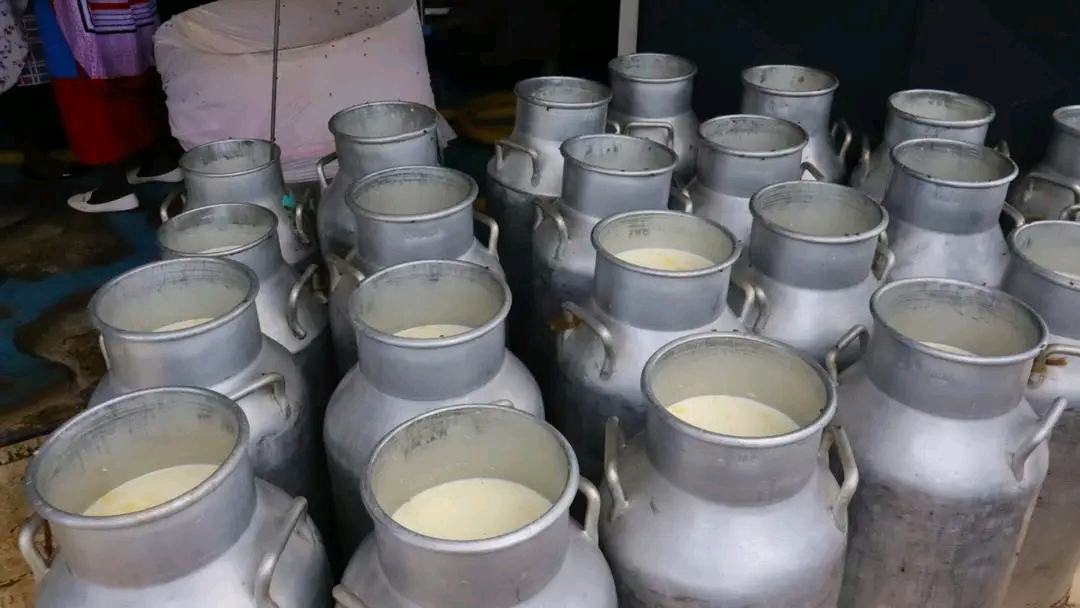
 Milk in dairy containers. Photo courtesy.
Milk crisis deepens as drought reduces production
Milk consumers across the country are facing shortages, with some supermarkets rationing supplies as drought affects milk production and processors struggle to secure adequate raw milk.
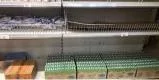
A spot check at several supermarkets in Nairobi found empty or sparsely stocked shelves, with retailers limiting the amount of milk customers can purchase amid concerns over reduced supplies.
In some supermarkets, only a few milk brands were available. Long-life milk was retailing at between Sh54 and Sh65, while the few brands of fresh milk available were selling at between Sh61 and Sh65.
At some outlets, consumers are being limited to as little as one litre of milk from dispensers, while some wholesalers are restricting purchases of packaged milk to fewer than five packets per customer instead of a carton.
The shortage comes as dairy farmers grapple with declining production due to deteriorating pasture and reduced water availability brought about by the ongoing drought.
The Consumers Federation of Kenya (COFEK) has called for immediate and coordinated government measures to restore normal milk supplies and stabilise prices.
COFEK Secretary-General Stephen Mutoro said the continuing decline in formal milk intake was putting further pressure on milk supplies and retail prices.
He said data from the Kenya National Bureau of Statistics (KNBS) showed that formal milk intake fell from 88.89 million litres in May 2026 to 84.44 million litres in June.
The June intake was 6.4 per cent lower than the 90.24 million litres recorded in June 2025. February 2026 recorded the lowest monthly intake so far this year at 74.43 million litres, pointing to a volatile and weakening supply trend in the first half of the year.
However, formal milk intake between January and June 2026 stood at 513.32 million litres from the 516.34 million litres recorded during the same period in 2025.
Mutoro said the decline in milk production was also being felt at farm level, with smallholder farmers, who supply about 80 per cent of Kenya's milk, reporting low yields.
He said some farmers were producing four to five litres per cow per day, down from between seven and nine litres, as poor pasture following delayed rains and rising feed costs take a toll on dairy production.
According to Mutoro, commercial feed costs have risen by about 45 per cent, making it increasingly difficult for farmers to maintain their herds.
He said the Kenya Dairy Board had also acknowledged that some farmers could be exiting dairy production and selling cows they could no longer afford to feed.
“This shortage was foreseeable and, in material part, avoidable. New KCC and the Kenya Dairy Board did not adequately mop up the milk surplus recorded in 2025, and the milk powder from that surplus was not built into the country's strategic food reserves as had been anticipated,” said Mutoro.
“Had these buffers been in place, today's supply shock would have been substantially cushioned,” he added.
Mutoro said the government should act urgently to prevent the situation from worsening, including supporting farmers with fodder and subsidising feed in drought-affected dairy-producing counties.
He called on the Ministry of Agriculture to publish, within seven days, a transparent recovery plan setting out monthly milk intake targets and measures to restore production.
He also urged the Kenya Dairy Board to publicly account for the disposition of the 2025 milk surplus and clarify the status of milk powder reserves.
“The Kenya Dairy Board should account publicly for the disposition of the 2025 milk surplus and the status of milk powder reserves; and institute a standing surplus-absorption and strategic reserve mechanism to prevent recurrence,” said Mutoro.
He further called on the National Treasury to waive import duty and VAT on yellow maize, soya and other key dairy meal inputs to immediately lower feed costs and prevent more farmers from abandoning dairy production.
Nairobi retailers have already started rationing milk purchases, while fresh milk prices at outlets such as Waithaka Dairy Centre have risen from Sh70 to Sh80 per litre. Branded packaged milk has also become intermittently scarce on supermarket shelves.
“COFEK will closely monitor compliance and reserves the right to pursue further advocacy and legal action should these urgent measures not be actioned within the stipulated timelines,” said Mutoro.