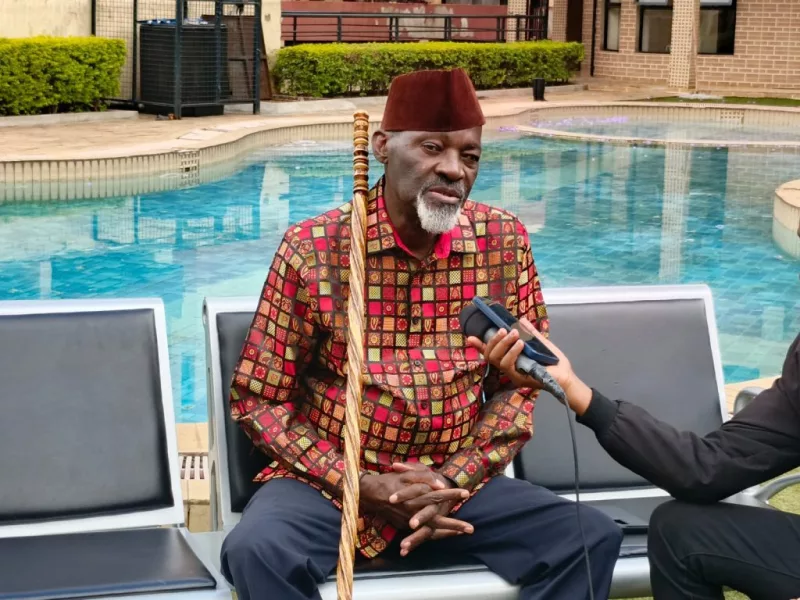
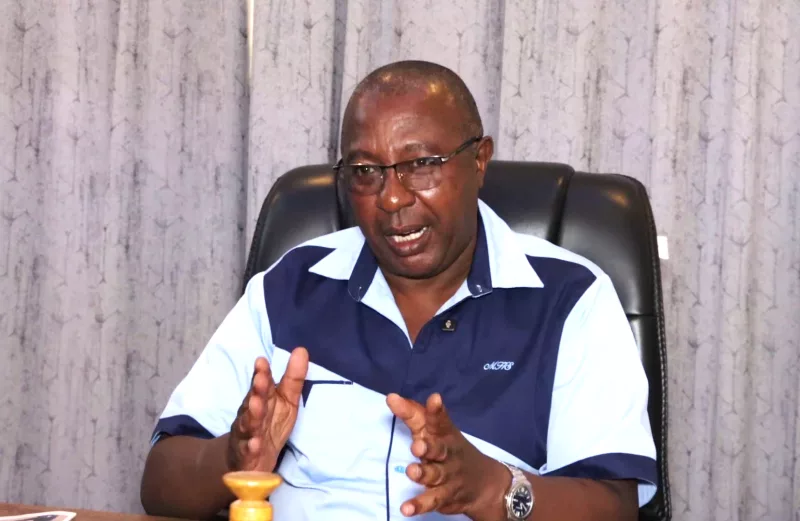
 KESSHA chairperson and Murang'a high school principal Willie Kuria in his office in Murang'a on August 31, 2026/ ALICE WAITHERA
Public secondary school heads are facing a funding shortfall of about Sh8,000 per learner despite the government disbursing Sh18.5 billion in capitation for the third term.
The Kenya Secondary Schools Heads Association (KESSHA) says the amount reaching schools remains below the Sh22,244 annual allocation per learner, leaving institutions struggling to meet operational costs at a time when they are preparing learners for national assessments and the Kenya Certificate of Secondary Education (KCSE) examinations.
The government disbursed Sh10.96 billion to senior secondary schools for learners in Grades 10 to 12, Sh6.14 billion to junior secondary schools for Grades 7 to 9 and Sh1.40 billion for primary school learners.
Education Cabinet Secretary Julius Ogamba said the funds were intended to facilitate smooth operations and prevent disruptions to learning across the different levels of basic education.
But KESSHA chairperson Willie Kuria said the amount announced by the ministry does not fully translate into funds available to secondary schools.
“This year, what has landed in school accounts is Sh14,050 per student,” Kuria said.
He said ministry records indicate that Sh16,141 has been released per learner for secondary schools, but part of the allocation is retained at the ministry to finance other education-related expenses, including textbooks.
“We say that Sh16,141 has been released per student but it's not all that money that arrives in school account. This year, although that money has been released, Sh2,000 has been retained at the Ministry of Education,” he told the media at his office on Monday.
Kuria said other portions of the allocation are retained to cater for vote heads including co-curricular activities and the Strengthening of Mathematics and Science in Secondary Education (SMASSE) programme.
The deductions and statutory obligations, he said, have left schools with an outstanding deficit of about Sh8,000 per learner.
The funding gap is placing additional pressure on school heads, who must meet day-to-day operational costs while also preparing candidates for national assessments and the KCSE examinations scheduled for later in the year.
Kuria said the current shortfall is also a continuation of a funding problem that has affected schools in previous years, leaving many institutions with accumulated pending bills owed to suppliers.
“Last year, the ministry released Sh15,383 per learner. The ministry retained Sh811, so it means last year what landed in accounts was Sh14,572.”
He said schools were left with a deficit of Sh6,560 per learner last year, adding that the shortfall was not subsequently compensated after the academic year ended.
“There's no compensation that you didn't get this, you get this succeeding year.”
The accumulated deficits have left school heads facing a difficult balancing act as they seek to keep institutions running without imposing additional charges on parents.
The pressure has been heightened by a warning from Ogamba against unauthorised levies, with the Cabinet secretary saying the ministry would take action against schools found charging parents illegal fees.
“As a ministry, we will deal firmly with any verified cases of misappropriation of resources and the imposition of unauthorised levies,” he said.
The warning leaves school heads with limited room to raise additional funds to cover operational gaps, even as schools continue to face mounting financial obligations.
The third term is the shortest and among the most demanding periods of the academic year, with schools required to complete the syllabus, administer internal assessments and prepare candidates for national examinations.
For school heads, the combination of inadequate capitation, accumulated pending bills and restrictions on additional levies has created a financial squeeze that threatens to complicate operations during a critical phase of the academic calendar.