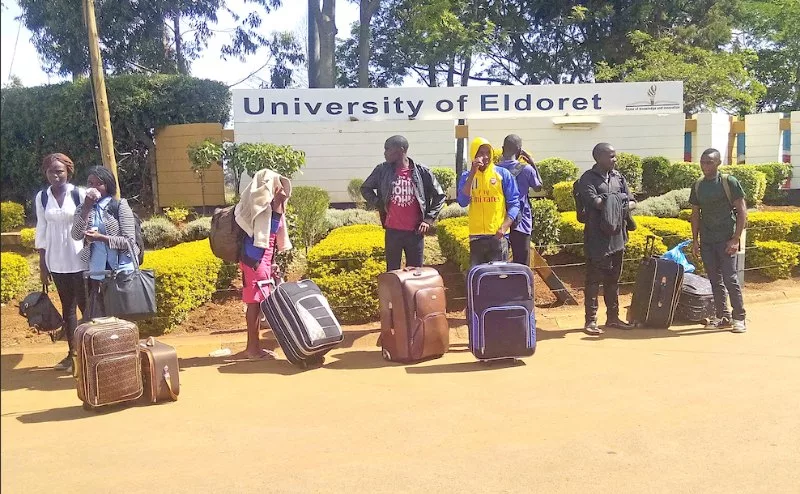
This week, beginning on Monday the 24th, thousands of freshmen and freshwomen have been streaming into Kenya’s universities to begin one of the most important journeys of their lives.
Across campuses, parents have accompanied excited students, orientation programmes are underway, hostels are filling up and new friendships are being formed.
Next week, continuing students will return, restoring the familiar energy and bustle that define university life.
But amid the excitement of new admissions and returning students, we must confront an uncomfortable question: who will teach this growing university population, supervise their research, mentor them and sustain the intellectual life of our institutions?
This question lies at the heart of a growing crisis in Kenya’s public universities: understaffing, increasing dependence on part-time lecturers and the retirement of experienced academics without an adequately visible succession and recruitment plan.
Recent debate around the staffing of public universities has focused on these issues separately. That is a mistake. They are deeply interconnected and point to a larger policy failure.
Kenya has expanded access to higher education and continues to admit thousands of students every year, yet the growth of the academic workforce has not always kept pace with the demands placed on universities.
The contradiction is becoming increasingly difficult to ignore. As new students enter universities, some institutions are struggling with inadequate numbers of permanent academic staff. Experienced lecturers are retiring, resigning or leaving for other opportunities.
Those who remain often face heavier teaching loads, growing postgraduate supervision responsibilities, research expectations and administrative duties.
A senior academic cannot simply be replaced by advertising a vacancy after they leave. Academic expertise takes years, often decades, to develop.
A professor represents accumulated teaching experience, research expertise, postgraduate supervision, mentorship, professional networks and institutional memory. When such academics leave without adequately prepared successors, universities lose more than employees; they lose intellectual capital.
This makes the current debate around the retirement of lecturers particularly important. The policy question should not simply be: at what age should a lecturer retire? It should also be: Who is ready to take over, and what has been done to prepare them?
Unfortunately, the immediate response to staff shortages has increasingly been the hiring of part-time lecturers. Part-time academics have an important place in higher education. They can bring specialised knowledge, industry experience and flexibility.
The problem begins when part-time employment becomes a substitute for investing in a stable, permanent academic workforce.
A university is not merely a collection of lecture rooms requiring someone to stand before students for a few hours. Lecturers develop curricula, assess students, supervise dissertations and theses, provide consultations, mentor young people, conduct research, publish, participate in academic governance and build departments.
An overreliance on part-time lecturers may solve an immediate timetable crisis while creating a longer-term institutional problem. It can produce fragmented academic engagement and weaken continuity in teaching and supervision.
It also risks creating a precarious academic workforce, where highly qualified scholars move from one institution to another on uncertain terms, sometimes facing delayed payments and limited opportunities for professional growth.
The irony is particularly painful because Kenya continues to produce master's and PhD graduates who could form the next generation of academics.
Yet many struggle to find permanent positions, even as universities complain of staffing shortages. We risk having highly qualified young scholars circulating through insecure part-time engagements — or leaving academia altogether — while experienced lecturers retire and gaps widen.
This is why Kenya urgently needs a national higher education human resources policy. Such a policy should be based on evidence, not crisis management.
Every public university should have clear projections showing how many academic staff will retire over the next five and 10 years, the disciplines most affected, expected student enrolment and the number of academics required to maintain quality teaching, research and supervision.
Recruitment must be linked to these projections. Succession planning should begin years before retirement, not after a professor walks out of the office for the last time. Young academics must be deliberately developed through doctoral and postdoctoral opportunities, mentorship, research support and clear career pathways.
Students do not enrol merely to occupy classrooms. They come to encounter knowledgeable teachers, mentors and researchers capable of guiding their intellectual and professional development. Kenya's universities are welcoming a new generation full of hope.
The question for government and university leaders is whether our higher education policy has made adequate provision for the people who will turn that hope into knowledge, skills and innovation.
Part-time lecturers should complement a strong permanent workforce, not replace it. Retirement should facilitate a planned transfer of knowledge, not create an academic vacuum. And recruitment should be recognised not as an expense to be postponed, but as an investment in Kenya's intellectual future.
As the academic year begins and campuses come alive again, perhaps this is the policy question we should be asking most urgently: Are we expanding higher education without adequately investing in the human resources required to sustain it?
The writer teaches Globalisation and international development at Pwani University and is a programmes associate at DTM, a Media CSO |[email protected]