Rules – in a constitution or elsewhere – may look clear, and create expectations of their working in a certain way, perhaps like somewhere with similar rules. But the realities of a particular society may mean that the rules operate in a very different way – or don’t operate, perhaps.
I was reminded of this by an article in last Friday’s Star, by Gordon Osen, called “How midterm elections can hold presidents to account”.
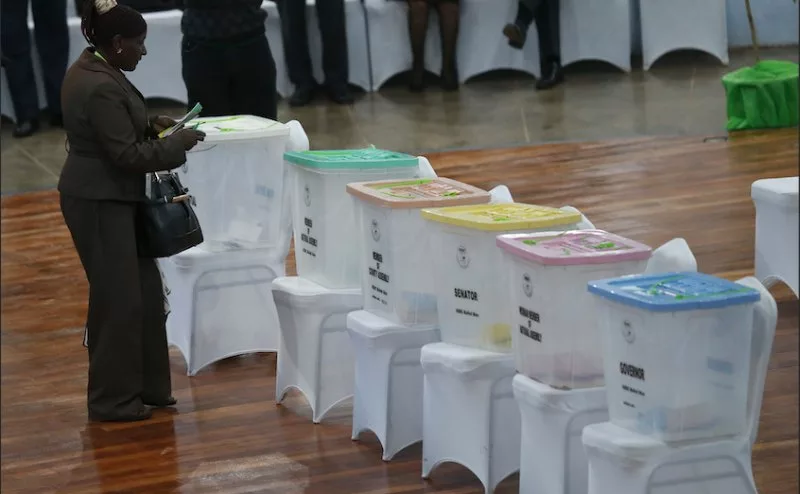
He commented that elections like those taking place in the US in November this year – in which all the House of Representatives and one-third of the Senate will be elected – may lead to the President no longer having a majority in one or both houses, and thus being unable, or finding it harder, to get his hoped-for legislation or budget allocations through Congress.
Osen seems to regret that Kenya does not have such a rule. Alternatively, he seems sorry that Kenya did not opt for a parliamentary system – which, he believes, makes it easier to remove the head of government (usually called the prime minister).
He believes that in our system the president would never be successfully impeached.
Kenya’s realities
Osen is right about parties in Kenya: “political parties are the perfect reflection of the personalities leading them.” And the constitution drafters wanted to change them. Article 91 is intended to ensure that parties are national, not based on “a religious, linguistic, racial, ethnic, gender or regional basis”, and are internally democratic. And other provisions try to support party discipline, including by saying that MPs who leave the party for which they were elected lose their seats.
You will be aware that these provisions do not reflect today’s realities – or, rather, today’s realities do not respect the constitution.
Politics in Kenya is to a considerable extent about the individual politicians – and the ethnic group – not about the party. Why should people be suggesting that Ndindi Nyoro should join DCP instead of forming his own party? It’s not about policies or ideology but about an assumption that what will decide the next election (as elections before it) is how the various ethnic communities line up.
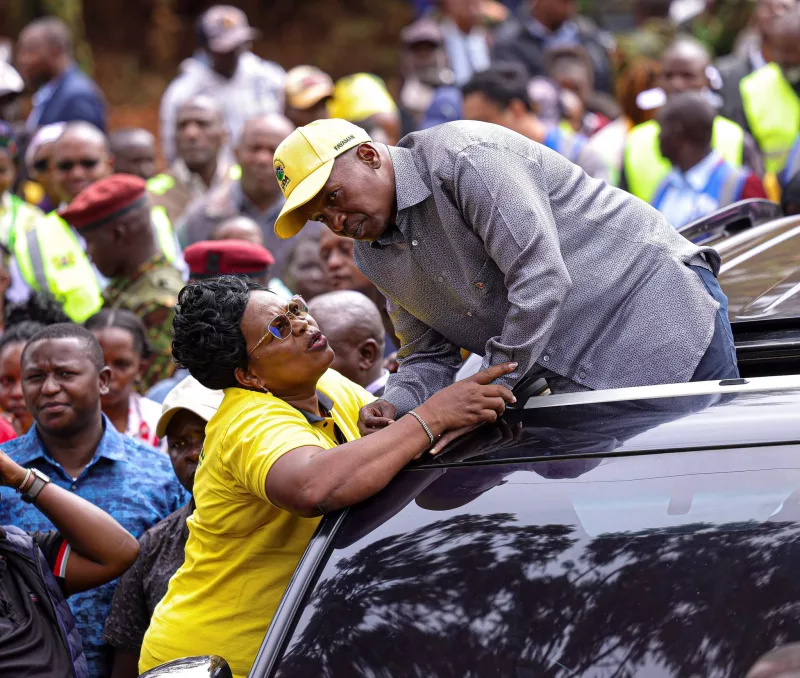
And, once elected, the focus of all too many MPs is on their own positions and benefits. We can see this from the way so many have supported the government – although they were not elected for UDA or its allies. We see it in how Parliament becomes an auction house where members accept bribes to pass laws, or for other decisions.
Parliamentary system better?
Generally, it is true that it is easier to get rid of a prime minister by a vote of no confidence (VNC) than to get rid of a president by impeachment. The first may involve only one vote, and require only a simple majority (more people voting for it than against). Impeachment will require several stages and a vote quite often of two-thirds of the body that hears the impeachment case (here the Senate).
In fact, these days, changes of prime minister are in many countries rarely brought about by a VNC. The prime minister’s party may decide they have had enough of their leader and lean on him or her to make way for someone else. The UK has had five prime ministers in the last six years and none has gone through a VNC.
In South Africa – which has a hybrid parliamentary/presidential system and the possibility of both impeachment and VNC – two presidents have left office after basically being pushed by their party. Is this necessarily desirable? Such a process may be less damaging to the party, but less open and less accountable.
Is VNC preferable to impeachment? While in some ways I would prefer a parliamentary system, an aspect that worries me is that parliament might be constantly not about policy but about politics in the Kenyan sense (that is, who is in office), with constant efforts to remove the head of government.
I recall the experience of Papua New Guinea, a parliamentary system. Efforts to get rid of prime ministers became so common that the constitution was amended to limit the window during which this could be done. And adjournments of Parliament have been common to avoid VNCs.
Currently, the law is that no VNC may be moved within 30 months after a prime minister takes office. No motion may be moved within 18 months of an unsuccessful previous motion. And if a VNC is passed within the last year of the five-year term, a general election must be held (ensuring there will be none – MPs don’t want to go home early).
VNCs do not have to be based on a serious breach of the law or constitution. The issue is loss of confidence. The fact that impeachment – as opposed to a VNC – requires a solid basis and evidence has something to recommend it.
We also know that decisions in Parliament are not always based on their content but on who is paying MPs to accept certain decisions.
Would mid-term elections be better?
I shall be personally delighted if the November elections in the US result in a loss of Republican majority in one or both houses of Congress, which would cramp President Trump’s style a good deal.
Would they be a useful mechanism in Kenya? Clearly the drafters of the constitution decided that they did not want a situation in which conflict was built into government because different bits were elected on different days. We have seen how difficult it is in France for government to function when the President and the Prime Minister – with a majority in Parliament – are from very different parties.
Might we find that a Kenyan president was able to bribe enough MPs, even from the opposition, to support him? Or would the whole objective of the legislature become the removal of the president – as happened in Nigeria in 1979 when the Governor of Kaduna State and the State Assembly were elected a few days apart but were from very different parties. Impeachment took place in 1981.
Another element is whether it is really reasonable to cripple a head of government after only two and a half years, by changing the makeup of Parliament. It might of course just be a matter of forcing a more collaborative style. But it might also create a lame duck President – in fact, ineffective government as a whole. Is this really accountability?
Presidential impeachment possible?
Osen thinks so. I have, however, wondered whether impeachment of the deputy president suggests that impeaching a president might actually be possible. It would be an ironic side-effect!
In theory a President’s party could abandon them and participate in impeachment. Maybe they could be bribed to impeach!
Incidentally, one possible disadvantage of impeachment is that if successful, it would leave the deputy as president! That might not be thought an improvement. A VNC leaves the choice of successor prime minister more open.
What we really need
If Members of Parliament, whether or not in the majority, took their job of government oversight seriously, and rejected financial or other overtures to support the government, this would be a better solution than mid-term elections and the risk of a stalemate.
And, I suggest, we must hope that the people of Kenya think more for themselves, not accepting their ‘kingpins’’ advice, or bribes. Under Constitution Article 1, the people delegate sovereign power to the various arms of government. Too many Kenyans have delegated their votes and abandoned their sovereign power. This is not really about traditional community centredness but about politicians capitalising on poverty.
Finally, I suggest that we also need to focus on implementing the constitution we have, rather than wishing it were different in some respect.
Retired law teacher and member of the Katiba Institute Board