East African education leaders have called for the region to move from policy commitments to measurable results, proposing an education implementation compact and scorecard to track progress over the next two years.
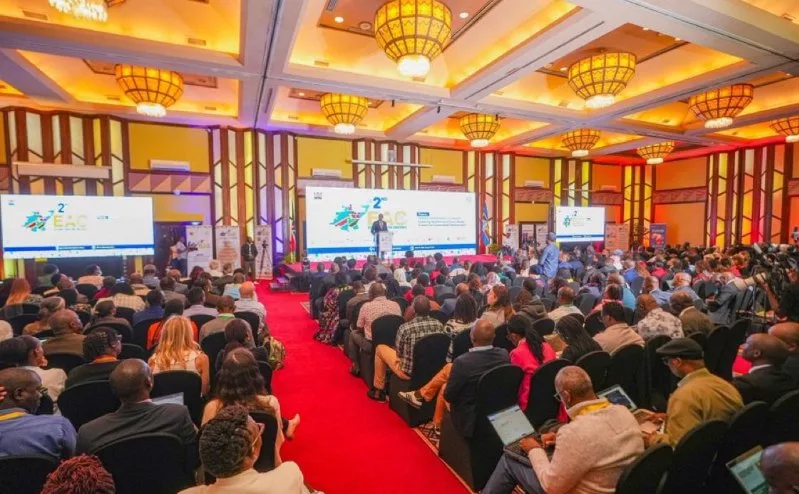
The proposal was made on the final day of the 2nd EAC Regional Education Conference in Nairobi, where delegates from member states agreed that regional cooperation must become more practical, continuous and focused on shared education challenges.
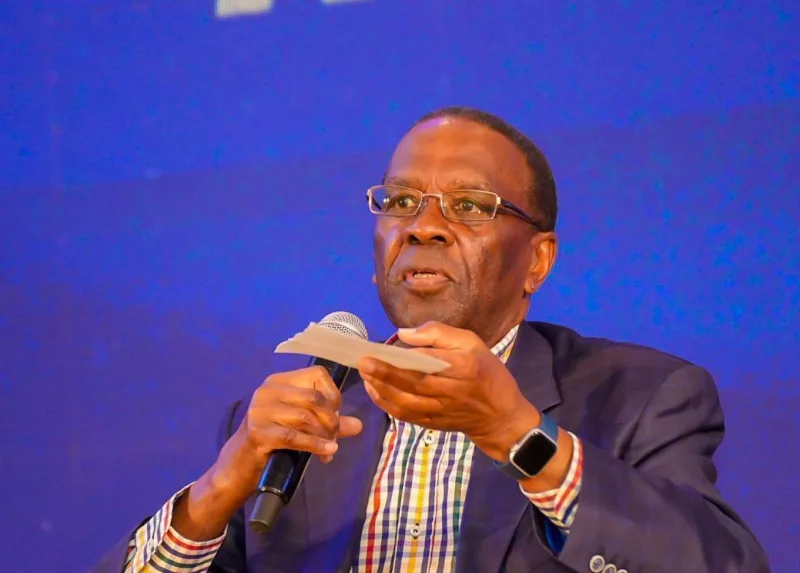
Tanzania's Deputy Permanent Secretary in the Ministry of Education, Science and Technology, Professor Daniel Elias Mushi, said the region should develop an EAC Education Implementation Compact identifying a few priority areas that can be addressed before the next conference in 2028.
“The biggest challenge we do have as a regional bloc is to turn commitment into measurable result. We are not short of commitment,” Mushi said.
He proposed an EAC education scorecard that would objectively measure how each partner state is implementing agreed priorities, saying the tool should not be used to shame countries but to track progress towards improving education across the region.
Mushi also called for permanent secretaries responsible for education to meet at least twice a year, virtually or physically, to assess what has changed and what remains unresolved.
He said regional commitments must also be incorporated into national education plans and budgets.
“If we do not link regional commitment to national plans and budgets, we will end up with a long list of commitments without realizing results,” he said.
Mushi's proposals came as delegates identified foundational learning, teacher shortages, education financing and skills mismatches among the challenges confronting education systems across East Africa.
Uganda's Commissioner for Basic Education and Standards, Cleophas Mugenyi, called for greater harmonisation of competency frameworks and qualifications to allow graduates to work more easily across the region.
He said learners from Uganda, Kenya, Tanzania and other EAC states should acquire common competencies such as digital literacy, green skills and entrepreneurship.
“We should be focusing on what every graduate should be able to acquire,” Mugenyi said, arguing that education systems should prepare young people for employment across East Africa rather than limiting opportunities to their home countries.
He also proposed joint digital education infrastructure that would provide learners with access to educational resources, particularly in foundational learning and science, technology, engineering and mathematics.
For South Sudan, Undersecretary in the Ministry of General Education and Instruction Omot Okony Olok said countries should not wait for the next regional conference to learn from each other's successes and challenges.
“Why should South Sudan wait until 2028 to form a teacher development model that is working in another partner state?” he asked.
Olok called for continuous peer learning and cooperation in areas including teacher development, education data, digital transformation, skills, education financing and resilience.
Zanzibar's Permanent Secretary in the Ministry of Education, Khamis A. Said, similarly urged member states to establish practical relationships that enable countries to support one another beyond conferences.
He singled out foundational learning as an urgent priority, saying expanding access to schools and recruiting teachers would mean little if children were still not acquiring basic skills.
“We need to ask ourselves: are our children learning? Are they prepared to achieve the competencies needed at the lower grades?” Said posed.
The second EAC Regional Education Conference brought together education policymakers and stakeholders under the theme, “Transforming Education in East Africa: From Commitments to Impact, Fostering Resilience and Future-Ready Systems for Sustainable Development.”
The deliberations placed particular emphasis on ensuring that regional commitments translate into national action, stronger learning outcomes and tangible improvements for learners before the next conference in 2028.
The Conference brought together partners and stakeholders including UNICEF, GIZ EAC, RELI Africa, the Association for the Development of Education in Africa (ADEA), Mzizi Elimu Afrika, PAL Network, EASTECo, IUCEA, FAWE and the Association of African Higher Education Financing Agencies (AAHEFA), among others.