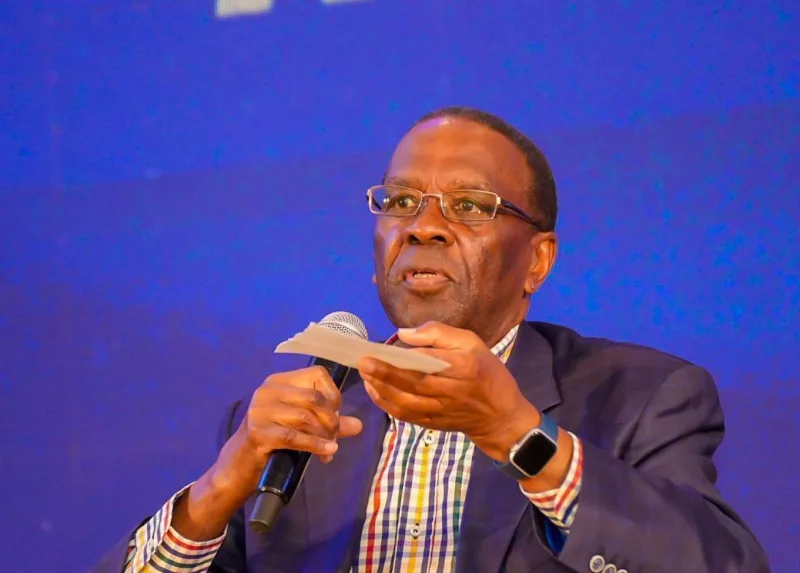
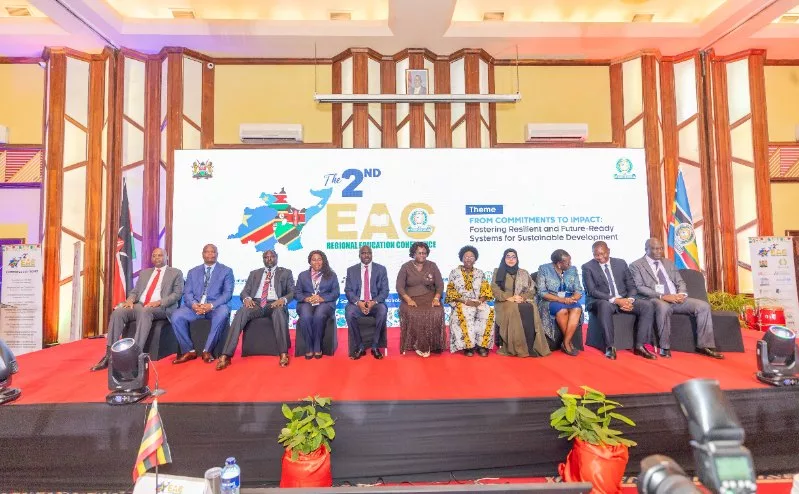
 Delegates at the 2nd EAC Regional Education Conference at Safari Park, Nairobi on August 26, 2026/FELIX ASOHA
East African governments have been challenged to move beyond education policies and commitments and demonstrate measurable improvements in what children learn, the skills young people acquire and their ability to participate productively in the economy.
Cabinet Secretary for East African Community Affairs and Regional Development, Beatrice Askul said the region must now shift from commitments to implementation, results and, ultimately, impact at scale.
Speaking at the 2nd EAC Regional Education Conference in Nairobi, CS Askul said East Africa has made significant progress in expanding access to education, but learning outcomes have not kept pace.
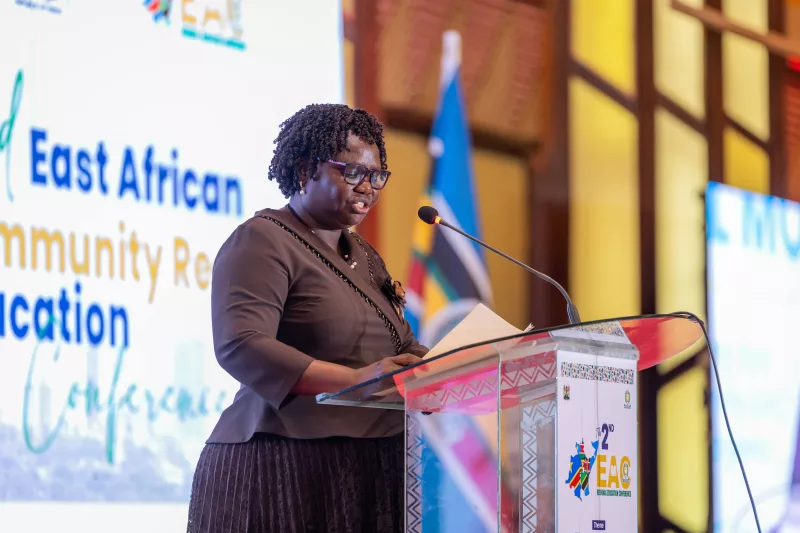 Cabinet Secretary for East African Community Affairs and Regional Development, Beatrice Askul addressing the 2nd EAC Regional Education Conference in Nairobi
She said East Africa must also address the growing mismatch between education and the needs of a changing economy, particularly as artificial intelligence transforms the workplace.
“Education policy must be judged not by the elegance of our policy documents, but by what learners can know, do, and access,” she said.
The CS said the region, which has a population of more than 300 million and one of the world's youngest populations, must convert its demographic strength into human capital, productivity and prosperity.
CS Askul said governments should focus on taking successful education innovations beyond individual schools and districts and scaling them up across education systems.
Her concerns were echoed by Association for the Development of Education in Africa Executive Secretary Albert Nsengiyumva, who challenged participants to identify what they will do differently after the conference.
“Being the second conference shows that we are committed to change and we have a great potential that we need to tap into,” Nsengiyumva said.
Executive Director – Uwezo Uganda, Regional Education Learning Initiative Africa Board Chair Mary Goretti noted that achieving equitable and quality education will require resilient systems and genuine partnerships capable of translating commitments into measurable learning outcomes.
The EAC Deputy Secretary-General Andrea Aguer Ariik Malueth said education and skills development remain central to regional integration, with the EAC Treaty providing for cooperation in education and training.
Minister of State for Education and Sports, Uganda Phyllis Chemutai said governments must critically assess what is working, what is failing and what needs to change to deliver measurable impact.
The four-day conference, running from August 25 to 28 in Nairobi, is being held under the theme, “Transforming Education in East Africa: From Commitments to Impact, Fostering Resilience and Future-Ready Systems for Sustainable Development.”
It comes as education systems across the region grapple with persistent inequalities in access and quality, weak transitions between education levels, skills mismatches and limited links between technical and vocational training and industry.