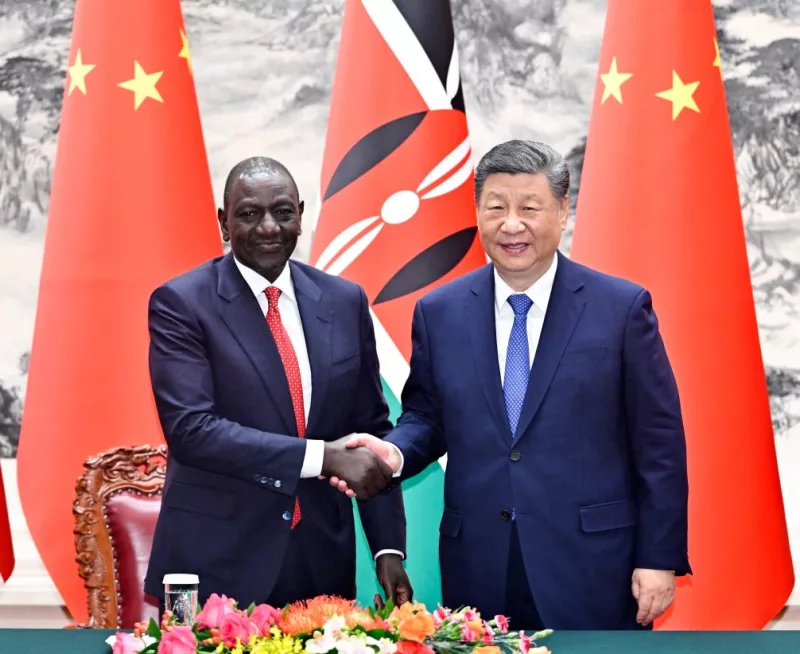
Critics cite what
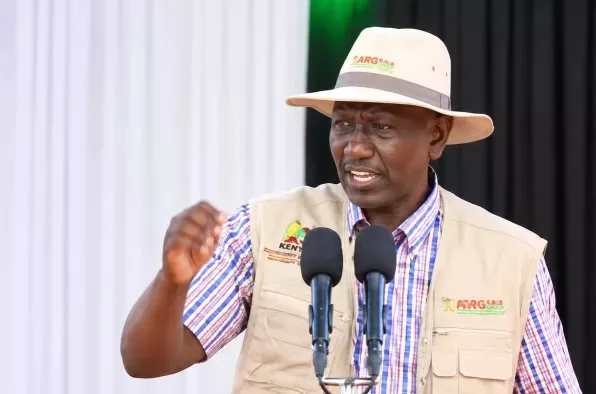
they call President William Ruto’s widespread unpopularity and talk about
introducing a provision in law for removing a president, which now is virtually
impossible, except through impeachment. It requires a constitutional amendment.
In the US
presidential system, impeachment is the only route of removal, but midterm
elections that loom in America on November 3 can weaken a president’s numbers
in Congress, thus rendering his or her political agenda difficult or impossible
to realise. Midterms are vital for holding the presidency responsible to the
electorate.
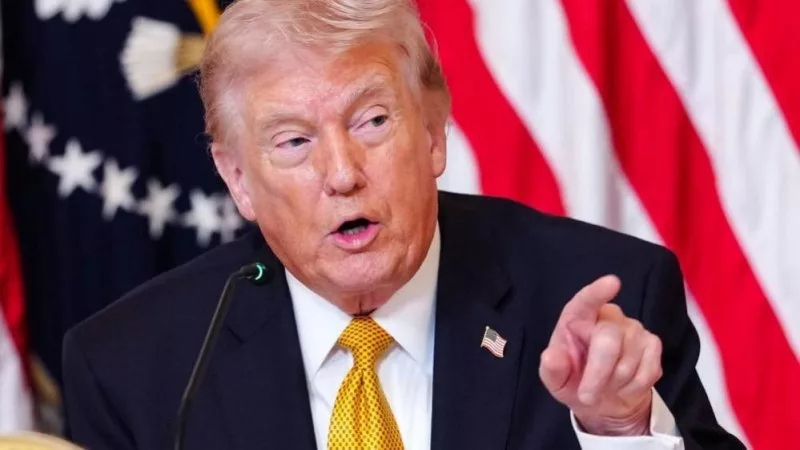
At this time, US President Donald Trump’s popularity ratings have plummeted to an unprecedented 33 per cent and his Republican supporters up for reelection fear they will lose. And by extension, so will Trump, although he will still occupy the Oval Office until his second and final term ends.
There is no such provision for midterm voting to curb presidential power in Kenya.
The grounds for impeachment are physical or mental incapacity, a gross violation of the constitution or any other law, a crime under national/international law, or gross misconduct. Then there’s a parliamentary investigation and the National Assembly and Senate are involved. It’s complicated and has never happened.
Only in states with a parliamentary system can the prime minister be forced out of office prematurely, either through a vote of confidence by Parliament or when his or her party removes him or her as the party leader.
It is worth noting that ODM has long championed a parliamentary system in Kenya to make it easier to hold the Executive accountable, remove him or her and to hold ministers’ feet to the fire in the Parliament in the public interest.
Many countries in Europe such as the UK, Italy, Spain, Germany and Belgium have this arrangement. Even Ethiopia, our next-door neighbour, has a parliamentary system.
One thing both presidential and parliamentary systems have in common in established democracies is the entrenched and professional running of political parties that in theory have the backbone to tell off their leaders if they veer from the public interest.
Back to America. In the 1970s, it took the Republican Party to remove President Richard Nixon over the Watergate scandal. The House Judiciary Committee had adopted articles of impeachment in 1974 but he resigned before a full vote.
Nixon was the party leader but although the Democrats had majorities in both the House of Representatives and the Senate, they needed Republicans to vote with them to reach the two-thirds threshold in the Senate to have him removed.
A few Republicans confronted Nixon and urged him to resign honorably because some Republicans were ready to vote with Democrats to convict and impeach him.
Here in Kenya, political parties are the perfect reflection of the personalities leading them. That is why Kanu lived and died with President Daniel Moi, PNU with Mwai Kibaki, TNA and Jubilee going down with Uhuru Kenyatta. Today, ODM seems to be going through the burial rites not long after the sudden passing of its founder, former Prime Minister Raila Odinga.
In America, the major midterm elections are another way of holding the president accountable without depending on parties to confront their leader. In America, voters get to change or retain their national lawmakers every two years in a four-year presidential and House term.
If the president and his party are unpopular due to their unfavorable policies, probably many lawmakers aligned to him or her will go home and power in the legislative chambers will change hands to the opposition party.
The opposition uses midterms as a weapon to rein in the administration, weaken and delay policies or force it to change course. The midterm results tend to awaken the ruling administration from what are often the eco-chambers of its supporters, and force it to change policy direction.
It happened with every president in recent memory, starting with Bill Clinton in the ’90s, George Bush Jr in the early 2000s, Barack Obama and Trump.
In Trump’s first term, Democrats seized control of the House in the midterms, along with many governorships and other offices. This outcome checked his power.
In the US, the most important part of the midterms is the election of the House of Representatives and the Senate. All 435 House seats are up for election every two years, while roughly one-third of Senate seats are contested.
The results can change which political party controls Congress, affecting the president’s ability to pass laws and approve government spending.
Many states also hold elections for governor, state legislators, judges, and other offices during midterm years. Voters may also decide ballot measures, such as proposed changes to state or local laws.
Before the general election, political parties usually hold primaries or caucuses to select their candidates.