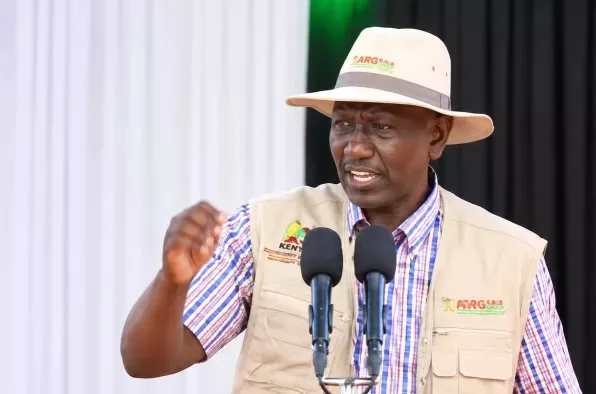
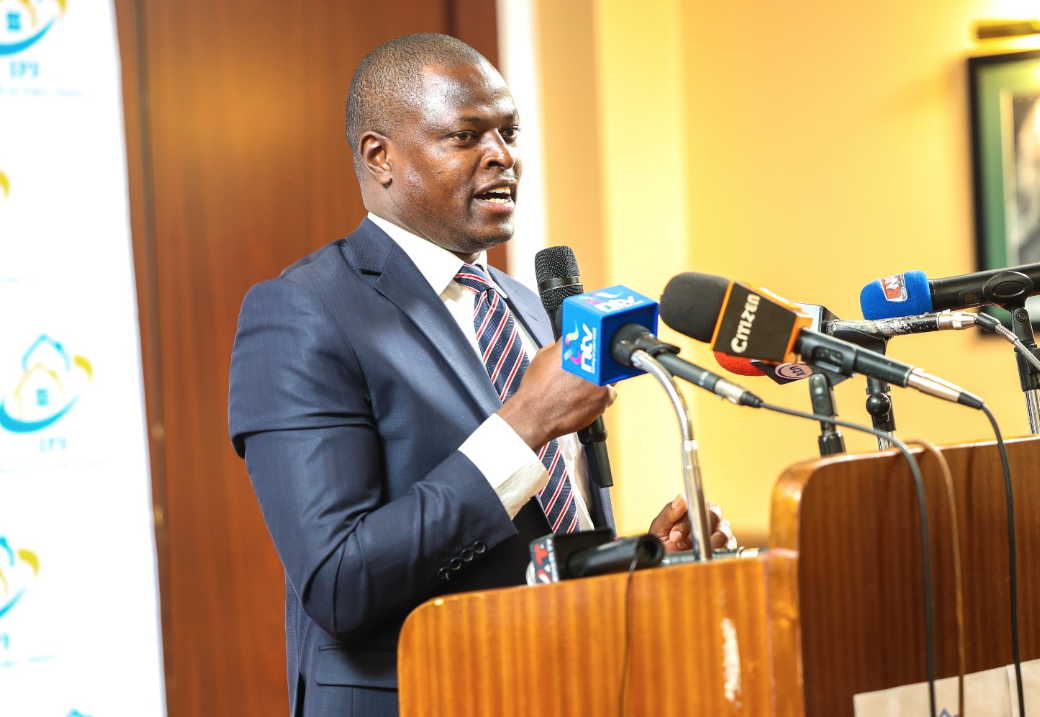
 Kiharu MP Ndindi Nyoro at an economic forum hosted by the Institute of Public Finance at the Sarova Stanley Hotel in Nairobi /HANDOUT
Politics in Mt Kenya has long operated on an unwritten bargain: the mountain backs its own, and in return expects a meaningful say in who governs the country.
Former President Mwai Kibaki understood this political instinct. He came to power in 2002, served two terms and, in 2013, handed the political baton to Uhuru Kenyatta.
For many in the region, that transition represented continuity, influence and the reassurance that having one of their own in State House mattered.
That is why 2022 left a deep political wound. Many in Mt Kenya felt that Uhuru Kenyatta broke an established pattern when he chose to support Raila Odinga rather than a successor from the region.
For voters who had supported Uhuru and the Jubilee coalition for a decade, the decision was interpreted not simply as a political choice, but as a failure to return the political favour. The sentiment was straightforward: we gave you our votes for two terms, why did you not give us the same consideration?
Three years on, that disappointment is increasingly becoming a political calculation. And it is within that space that the name of Ndindi Nyoro is gaining traction.
Nyoro does not fit the traditional image of a Mt Kenya kingmaker. At 40, the Kiharu MP belongs to a younger generation of politicians. An economist by training, he has built his profile largely through Parliament, particularly around budgets, public expenditure, debt and the cost of living.
His appeal is less about inherited political networks and more about presenting himself as a politician who understands the numbers behind the issues affecting ordinary households.
That is increasingly relevant in 2026. Across the mountain, political conversations are often grounded in economic realities: coffee earnings, tea bonuses, milk prices, the cost of credit, small businesses and the price of fuel.
The question is becoming less about political symbolism and more about who can effectively articulate the region’s economic interests when national priorities are being decided.
Nyoro has positioned himself in that space. He can discuss the deficit and public debt, then connect those questions to what they mean for a farmer, trader or small business owner. He also carries less of the baggage associated with the older political establishment.
He was not at the centre of the handshake politics and was not among those who negotiated the political arrangements that shaped the last decade.
That gives him room to present himself as a politician building his own political identity rather than waiting to inherit someone else's.
But there is a counter-force that should not be underestimated.
Any attempt to establish a new political centre in Mt Kenya will inevitably encounter resistance from the opposition networks taking shape around former Deputy President Rigathi Gachagua.
Gachagua has already established himself as a powerful voice in the region, and his political camp is unlikely to surrender the mountain’s political space to another emerging figure without a fight.
Nyoro's rise would therefore present an obvious political challenge. The opposition could seek to portray him as a government project, an establishment candidate or, more bluntly, as a “mole” being positioned to divide the region and weaken the opposition’s hold on Mt Kenya. Whether that label sticks is another question. But politically, it is an accusation Nyoro would have to confront.
His response cannot simply be to deny it. He would have to demonstrate that his politics is rooted in issues, performance and a clear national agenda rather than being a vehicle for another faction.
There is, however, a bigger question that Mt Kenya itself must confront.
The region's desire to produce the next president is understandable within the logic of Kenyan politics. But the continued obsession with who comes from which community and whose turn it is to occupy State House risks becoming a problem for the country.
Kenya cannot build a stable political order if every election is reduced to a contest over which community should control the presidency. Leadership should certainly be inclusive, and communities should expect representation and a voice in national affairs.
But development, competence, national cohesion and the interests of all Kenyans cannot permanently be secondary to the question of where the president comes from.
This is where the Mt Kenya debate needs to mature.
There is nothing inherently wrong with the mountain producing a presidential candidate. In a democracy, any Kenyan who meets the constitutional requirements has the right to seek the presidency. The problem begins when political mobilisation becomes principally about reclaiming State House for a particular community.
That approach may produce short-term bargaining power, but it can also reinforce the very ethnic competition that has repeatedly complicated Kenya's democratic politics.
For Mt Kenya, therefore, the more consequential question may not be whether Nyoro can become president. It is whether the region can produce a political leadership that pursues its interests without making the presidency the measure of its political success.
The argument for a Mt Kenya candidate remains powerful within the region. Such a candidate can set the agenda rather than merely negotiate for a share of someone else's agenda.
They can force presidential contenders to address issues affecting farmers, businesses, young people and households in the region. They can also give voters a sense that their political choices are being made on their own terms.
But bargaining power does not have to mean ethnic isolation.
Nyoro, if he chooses to pursue the presidency, will ultimately have to answer questions that go far beyond Mt Kenya. Meru and Embu will demand inclusivity within the broader mountain bloc.
Other regions will want to know what his national vision means for them. Voters in Western, Rift Valley, Coast, Nyanza and the northern counties will not vote simply because a candidate is popular in Kiambu, Murang'a or Nyeri.
That is the real test.
Nyoro's advantage is that he represents a younger generation and can potentially speak the language of policy, economics and opportunity rather than relying entirely on the politics of inheritance. But he will have to prove that his ambition is bigger than the mountain.
The same applies to Mt Kenya.
The region may indeed be ready to run its own race again. But if it does, the race should not simply be about taking back State House. It should be about presenting a national proposition that persuades Kenyans beyond the mountain that its leadership can serve the whole country.
That would be a more consequential political evolution than simply producing another Mt Kenya presidential candidate.
Kenyan politics has always been about coalitions. The mountain does not have to abandon its interests to build national alliances, just as other regions should not have to surrender theirs. But the next generation of political leadership will be judged increasingly by its ability to turn regional influence into a national vision.
That is where Nyoro's real test lies. And it is also where Mt Kenya's political future will ultimately be decided.